Vintage 3-Speed Bluetooth Record Player with Speakers
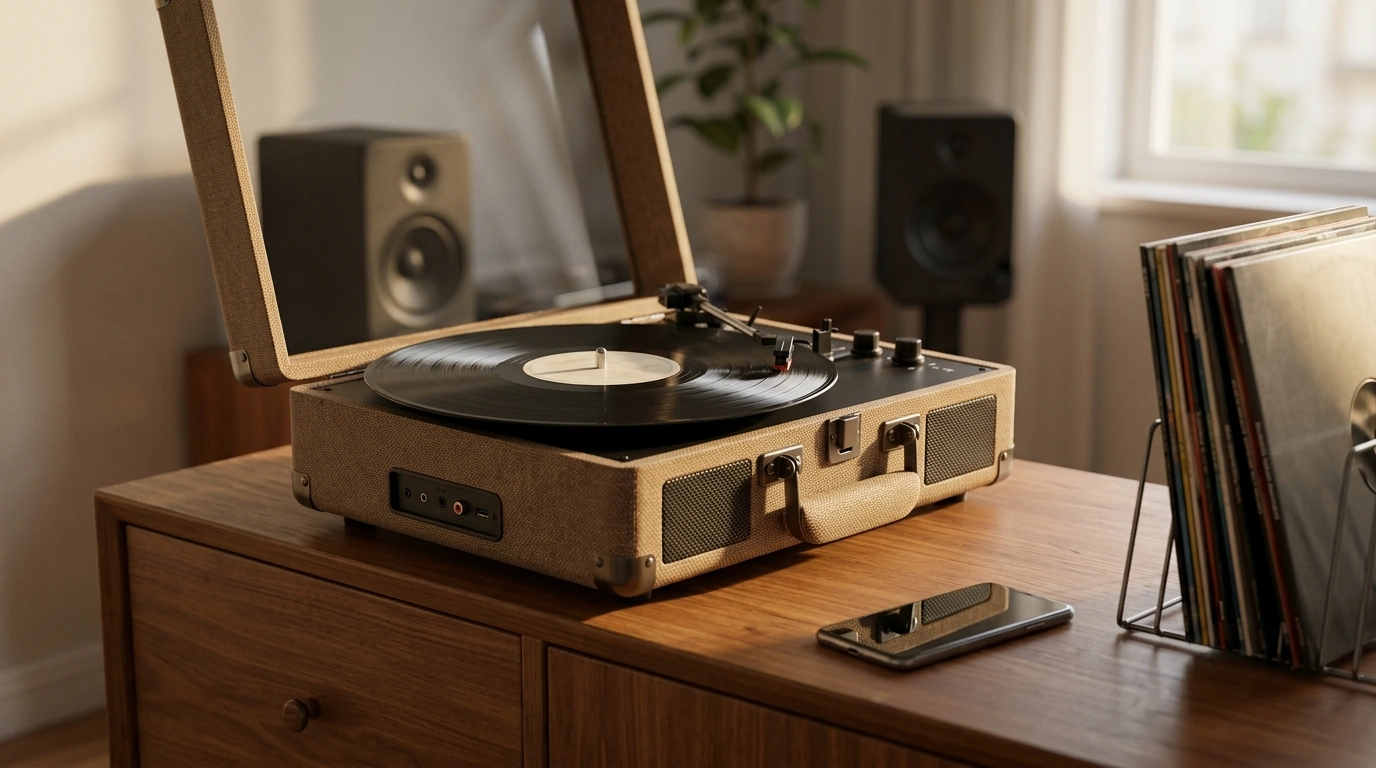
Vintage 3-Speed Record Player with Bluetooth, RCA, USB, AUX-in, and Built-in Speakers
A vintage-style turntable can be the easiest way to enjoy vinyl without building a full hi-fi setup. This model combines three playback speeds with built-in speakers and multiple connection options—Bluetooth, RCA, USB, and AUX-in—so it can fit into modern listening spaces while keeping a classic look.
What Makes This Record Player a Practical All-in-One
For apartments, dorm rooms, bedrooms, offices, and smaller living rooms, an all-in-one record player keeps the setup simple while still offering enough flexibility to grow. The vintage-inspired exterior looks at home on a shelf or credenza, but the day-to-day experience is designed for quick listening sessions, not complicated tweaking.
- Vintage-inspired design paired with everyday usability for bedrooms, dorms, offices, and small living rooms
- Three-speed playback supports common vinyl formats for flexible listening
- Built-in speakers allow immediate playback without external gear
- Multiple inputs/outputs simplify switching between vinyl and other audio sources
Speeds, Formats, and Everyday Playback
One of the biggest convenience features in a starter-friendly turntable is true 3-speed support. With 33⅓, 45, and 78 RPM available, it can handle most collections without requiring separate equipment.
- 3-speed operation for 33⅓, 45, and 78 RPM records to cover most collections
- Best results come from keeping records clean and stored vertically to reduce noise and wear
- Use the correct speed setting for each record to avoid pitch issues and reduce stylus stress
- Place the unit on a stable, level surface to minimize vibration and skipping
For long-term care, basic habits matter more than fancy accessories: handle records by the edges, keep them dust-free, and store them upright. The Library of Congress has a solid, practical overview of storage and handling that applies to nearly any home collection: Library of Congress: Caring for Your Sound Recordings.
Connectivity Options for Modern Listening
This record player is built for mixed listening—vinyl one moment, streaming the next. The included connection types cover the most common ways people play audio today, whether that’s wireless from a phone, wired from a laptop, or routed into a bigger speaker setup.
- Bluetooth support helps pair with phones and tablets for casual wireless playback
- RCA connections enable routing audio to powered speakers, an amplifier, or a receiver when a bigger sound is needed
- AUX-in is useful for quick wired listening from phones, laptops, or portable players
- USB can be used for convenient playback/transfer workflows depending on the device’s supported functions
Bluetooth performance can vary depending on distance and obstacles, so keeping the source device nearby usually produces steadier playback. For technical background on Bluetooth as a standard, the official spec hub is a helpful reference: Bluetooth Core Specification.
Built-in Speakers: When They’re Enough (and When to Upgrade)
Built-in speakers are the “press play and relax” option. They’re especially convenient for near-field listening—working at a desk, reading in bed, or putting music on in a small room without turning the space into an audio project.
- Built-in speakers are convenient for near-field listening and smaller rooms
- For fuller bass and wider stereo separation, connect to powered speakers or a receiver via RCA
- Keep the turntable away from subwoofers or heavy vibration sources to reduce feedback
- If using external speakers, start with low volume and increase gradually to avoid distortion
If the goal is room-filling sound, upgrading to external speakers is usually the most noticeable improvement—more low-end weight, clearer dynamics, and better stereo spread. RCA output makes that step straightforward: connect to powered speakers, or run into an amp/receiver that drives passive speakers.
Quick Specs and Feature Overview
| Feature | What it does | Best for |
|---|---|---|
| 3-speed turntable | Plays 33⅓ / 45 / 78 RPM records | Mixed-format vinyl collections |
| Bluetooth | Wireless audio pairing with compatible devices | Streaming music without cables |
| RCA output | Connects to external speakers/amps/receivers | Upgrading sound beyond built-in speakers |
| USB | Supports USB-based playback/transfer workflows (device-dependent) | Convenient digital use cases |
| AUX-in | Wired input for phones/laptops/players | Simple plug-in listening |
| Built-in speakers | Plays audio without extra equipment | Quick setup in small spaces |
Setup Tips for Cleaner Sound and Longer Record Life
Product Options Available Now
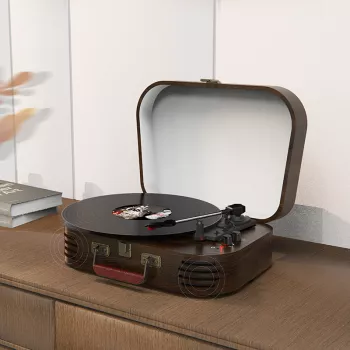
- Vintage 3-Speed Record Player with Bluetooth, RCA, USB, AUX-in, and Built-in Speakers — an all-in-one option for vinyl plus everyday audio connections
- Cute Apple House Kitten Plush – Soft Detachable Cat Plush Toy — a cozy add-on for a reading nook or music corner
- Elegant Structured Crocodile Pattern Leather Shoulder Bag – Soft Texture — a giftable accessory pick when you want something timeless alongside a vintage-styled home item
FAQ
Can Bluetooth be used with this record player?
Yes—Bluetooth lets you pair a compatible phone or tablet for casual wireless playback. For best stability, keep the source device relatively close and reduce obstacles or interference that can weaken the connection.
Do built-in speakers sound good enough for daily listening?
They’re typically good for near-field listening in smaller rooms, like a bedroom or office. If you want stronger bass, wider stereo separation, or more volume headroom, connecting powered speakers or a receiver via RCA is a noticeable upgrade.
What’s the difference between RCA and AUX-in on a record player?
RCA is commonly used as an audio output to send sound from the turntable to external speakers, amps, or receivers. AUX-in is an audio input that lets you plug in another device—like a laptop or phone—so the record player’s system can play that source.











Leave a comment