Bamboo Wide-Tooth Comb for Wigs & Natural Hair
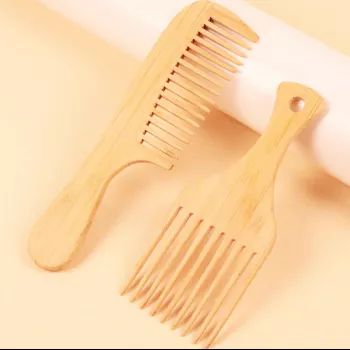
Natural Bamboo Wide-Tooth Comb for Real Hair & Wigs: Gentle Detangling That Respects Every Strand
Knots happen—especially with real hair wigs, protective styles, curls, and textured hair that needs patience more than pressure. A wide-tooth comb is one of those everyday tools that can make detangling feel calmer: less pulling, less snagging, and more control with every pass. Our team chose a natural bamboo wide-tooth comb because it’s comfortable to hold, easy to guide through sections, and simple to add to your wig care and wash-day routine without overcomplicating things.
If you’re rebuilding healthier habits (or you’re just tired of hearing that “snap” mid-detangle), this is the kind of small upgrade that can help you stay consistent—whether you’re caring for your own hair, a real hair wig, or both. For general hair-care best practices, you can also reference guidance from the American Academy of Dermatology Association.
What makes a wide-tooth bamboo comb a smart choice
When detangling is the goal, spacing matters. A wide-tooth design helps you loosen tangles without compressing hair into tighter knots. That’s especially useful when you’re working with curls, waves, or wig hair that can tangle at friction points like nape areas and ends.
- Wide spacing helps release knots instead of packing them tighter.
- A comb (vs. a fine brush) can be kinder to wig knots, wefts, and delicate zones like lace edges when you use it with a light hand.
- Bamboo is lightweight, making it easier to keep pressure gentle and consistent—important when you’re detangling slowly in sections.
- Great for curls and waves where you want separation and definition, not shredding or frizzing from over-brushing.
Where a wide-tooth comb fits best
| Hair/Wig situation | Why it helps | Best moment to use it |
|---|---|---|
| Real hair wigs (everyday wear) | Detangles with fewer snags, supports a softer touch on lengths | Before styling, and after taking the wig off |
| Curly or coily natural hair | Separates curls with less disruption than tighter teeth | In-shower with conditioner or on damp hair |
| Wavy hair prone to frizz | Encourages gentle detangling without over-brushing | On damp hair before air-drying |
| Protective styles (ends and leave-out) | Helps manage tangles at exposed sections without aggressive pulling | Light detangle before re-braiding or re-twisting |
| Post-wash routine | Works through slip from conditioner for easier knot release | During rinse-out or right after towel-blotting |
How to detangle a real hair wig without stressing the hair
Wigs can be durable, but the most vulnerable points—lace, knots, and cap construction—don’t respond well to yanking. The best results come from stabilizing the wig, controlling your section size, and letting “slip” do most of the work.
- Start with the right setup: place your wig on a stand or hold it firmly at the cap so you’re not tugging against the knots.
- Detangle from ends to roots: work the tips first, then move upward in small sections.
- Use slip, not force: a light mist of water or a wig-safe detangler/conditioner helps the comb glide instead of snag.
- Support the base: hold hair near the root area while combing the lengths to reduce tension on the cap.
- Go extra gentle near lace and parting: minimal pressure, shorter strokes.
If you wear wigs due to hair loss or medical reasons, the American Cancer Society’s wig and hairpiece resource offers practical, supportive considerations around comfort and wear routines.
Simple detangling checklist for wigs
| Step | What to do | What to avoid |
|---|---|---|
| 1. Prep | Secure wig on a stand, separate into 2–4 sections | Detangling while the wig is sliding around |
| 2. Add slip | Light mist or wig-safe product on lengths | Saturating the cap or soaking lace unnecessarily |
| 3. Ends first | Work the last 2–3 inches until smooth | Starting at the roots and pushing knots down |
| 4. Move up | Increase the section length gradually | Long, forceful passes through dense tangles |
| 5. Finish | Light smoothing pass, then store properly | Stuffing the wig into a drawer unprotected |
Using a wide-tooth comb on natural hair: less breakage, more definition
If your hair tends to knot on itself, the biggest lever you can pull is friction control. Detangling with slip (conditioner, leave-in, or a dampening spray) helps the comb glide so you’re not “fighting” your texture.
Quick guide: damp vs. dry detangling
| Approach | Best for | Tip for better results |
|---|---|---|
| Damp + conditioner/leave-in | Curls/coils, post-wash, frizz-prone hair | Finger-detangle first, then comb through in sections |
| Dry (light touch only) | Pre-shampoo sectioning or quick smoothing before styling | Use short strokes and stop if snagging increases |
Care and cleaning: keep the comb smooth and hair-friendly
Everyday routines that pair well with a wide-tooth comb
Shop our in-stock picks
- Natural Bamboo Wide-Tooth Comb for Real Hair & Wigs
- 4 in 1 Nail Rhinestone Gel
- Cute Apple House Kitten Plush – Soft Detachable Cat Plush Toy
FAQ
Can a wide-tooth comb be used on a real hair wig every day?
Yes—daily use is fine when you detangle gently from ends to roots. Keep the comb moving in short strokes, add a light mist for slip, and avoid tugging around lace and knot areas.
Should real hair wigs be detangled wet or dry?
Lightly damp hair with a detangling product is often the easiest to manage. Soaking-wet hair can stretch, while fully dry hair can snag more, so aim for controlled moisture and small sections.
How do you clean a bamboo comb used with leave-ins or styling products?
Remove shed hair first, then wash the comb quickly with mild soap and warm water. Rinse well, dry completely, and avoid prolonged soaking so the comb stays smooth and hair-friendly.













Leave a comment