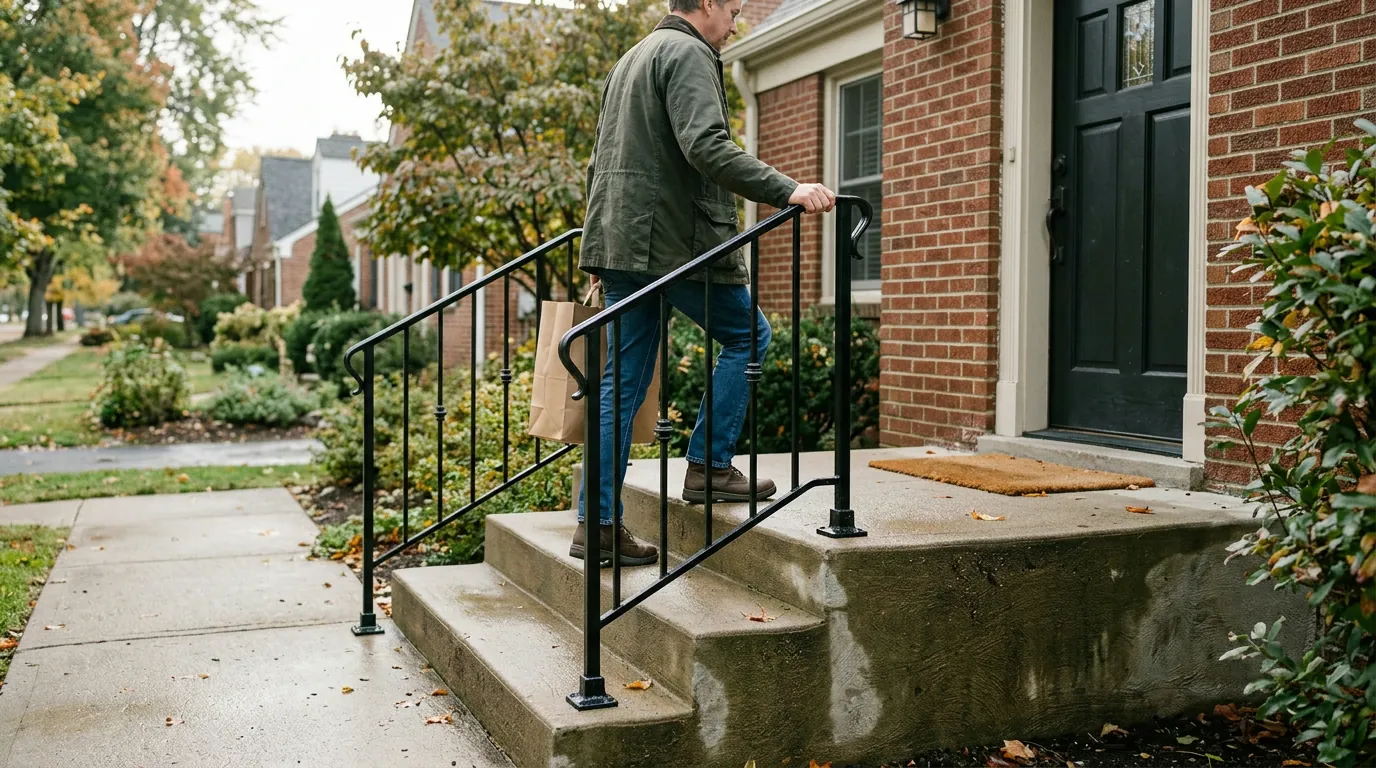
Slippery mornings, uneven steps, and heavy packages are when an outdoor handrail proves its value. Our adjustable wrought iron stair railing is built for everyday use on 1–5 steps—adding steady support, a finished look, and a more confident path up to the door.
If your steps don’t have a nearby wall, you can still add a dependable handhold. An outdoor stair railing gives you a consistent grab point right where footing changes—at the edge of the stair run.
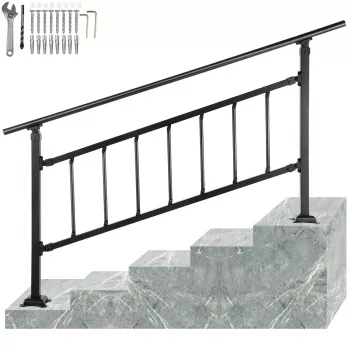
Not every stoop is built the same. Even “simple” short stair runs can vary in rise height, tread depth, and landing spacing, which changes the angle a railing needs to follow. An adjustable stair handrail is designed to match the slope of different stair counts so your grip feels natural from the first step to the landing.
| What to measure | How to do it | Why it helps |
|---|---|---|
| Number of steps (risers) | Count the vertical rises from ground to landing | Confirms the 1–5 step range is a match |
| Stair width | Measure clear walking space side-to-side | Helps choose left/right placement without narrowing the path |
| Landing/edge clearance | Check space at the top and bottom where posts will mount | Avoids interference with doors, trim, planters, or rail caps |
| Surface material | Note concrete, brick, wood, or composite | Determines the right drill bits/anchors for installation |
| Door swing path | Open the door fully and mark the arc | Prevents the railing from crowding entry/exit |
For a railing you’ll actually rely on, stiffness matters. Wrought iron is chosen for its rigidity and solid feel, which helps reduce the “give” that can make short stair runs feel sketchy—especially when you’re turning at the top landing or stepping down while holding a bag.
If you’re planning around code or accessibility needs, it also helps to reference established guidance on handrails and stair safety, such as the 2010 ADA Standards for Accessible Design, the International Residential Code (IRC) resources, and OSHA’s overview of stairways and ladders.
Most homes have at least one “small” set of steps that still sees big daily use. A 1–5 step adjustable rail is ideal in those in-between areas where a full balcony rail system feels like overkill but going without support isn’t comfortable.
The handrail assembly is designed to be set to different slopes so it lines up with your stair rise and run. Measure by counting risers first, then align the posts and rail to your stair angle before fully tightening the hardware.
Yes—these railings are commonly installed on concrete using the appropriate masonry drill bit and anchors. For the most secure result, mount into solid, crack-free areas and avoid placing anchors too close to weak or crumbling edges.
Wash it periodically with mild soap and water, then inspect seasonally for chips or scratches. Touch up any damaged spots promptly to protect the finish and reduce the chance of corrosion.




Leave a comment