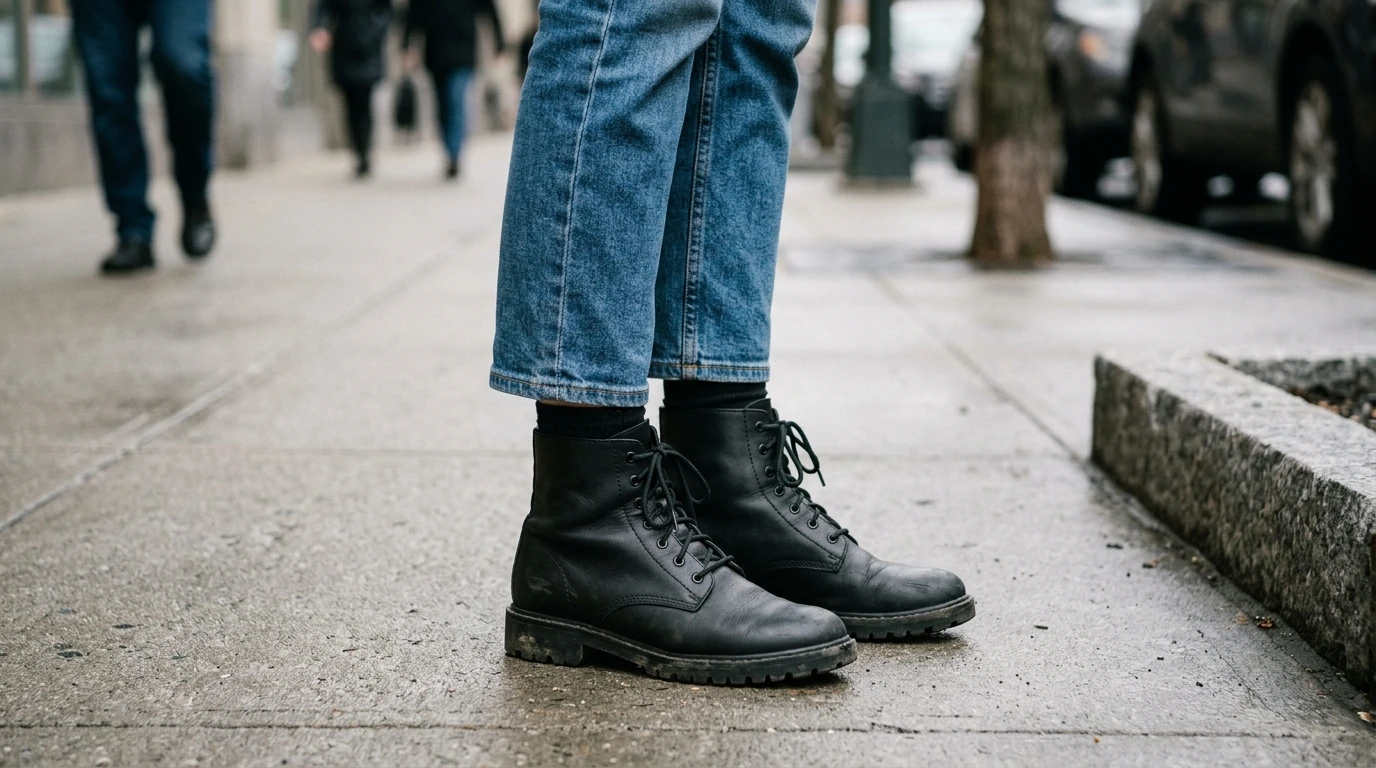
Ankle boots earn their spot when they can handle busy weeks, unpredictable weather, and outfits that shift from work to weekends. Dr. Martens women’s ankle boots are a go-to choice for shoppers who want a boot with attitude that’s also practical—supportive underfoot, easy to style, and tough enough to stay in rotation season after season.
When you’re buying an ankle boot to wear often (not just “occasionally”), a few traits matter more than hype. Our team sees shoppers come back to Dr. Martens ankle boots because they’re consistently versatile and built for repetition.
If you want a dependable pair to anchor your closet, start here: Shop Dr. Martens Women’s Ankle Boots.
Fit is where ankle boots either become your daily default or end up sitting by the door. Start by deciding what you’ll actually wear them with: everyday socks, thicker winter socks, or tights. That single choice changes how the boot feels more than most people expect.
| Checkpoint | What to look for | Quick fix |
|---|---|---|
| Heel | Minimal lift when walking | Re-lace tighter at the top or add a thin heel grip |
| Toes | Comfortable space without sliding forward | Try thicker socks or adjust lacing tension |
| Instep | Secure but not painful pressure | Loosen mid-eyelets; re-tighten gradually |
| Ankle | No sharp rubbing at the collar | Wear taller socks; soften with short, at-home wears |
For all-day wear, stability matters. You want an ankle boot that feels planted on pavement—confident underfoot rather than wobbly or “tippy.” If you’re commuting, traveling, or on standing shifts, consider adding an insole for extra cushioning or arch support, especially once you’ve confirmed the size is right.
For general guidance on healthy shoe fit and foot comfort, you can also reference the American Podiatric Medical Association (APMA).
The easiest way to get more value from ankle boots is to style them across “types” of outfits—clean, relaxed, dressy, and cold-weather—without needing a full closet overhaul.
A little maintenance goes a long way with any everyday boot. The habits that matter most are simple and consistent—especially through wet or salty seasons.
For brand-specific care steps, Dr. Martens maintains a helpful guide here: Dr. Martens — How to Care for Your Docs.
They can be a strong all-day option when the fit is right and you give them a short break-in period. Supportive socks and (if you want more cushioning or arch support) a quality insole can make long days noticeably easier.
Your heel should feel secure with minimal lift, and your toes should have enough room to wiggle without sliding forward. If anything feels like a sharp pressure point, adjust lacing and socks first—persistent pinching usually means the size or shape isn’t right for you.
Wipe them down quickly after dirt, rain, or road salt, and let them dry at room temperature away from direct heat. Using the right protector/conditioner for the material and rotating wear when you can helps them hold their shape and finish longer.


Leave a comment