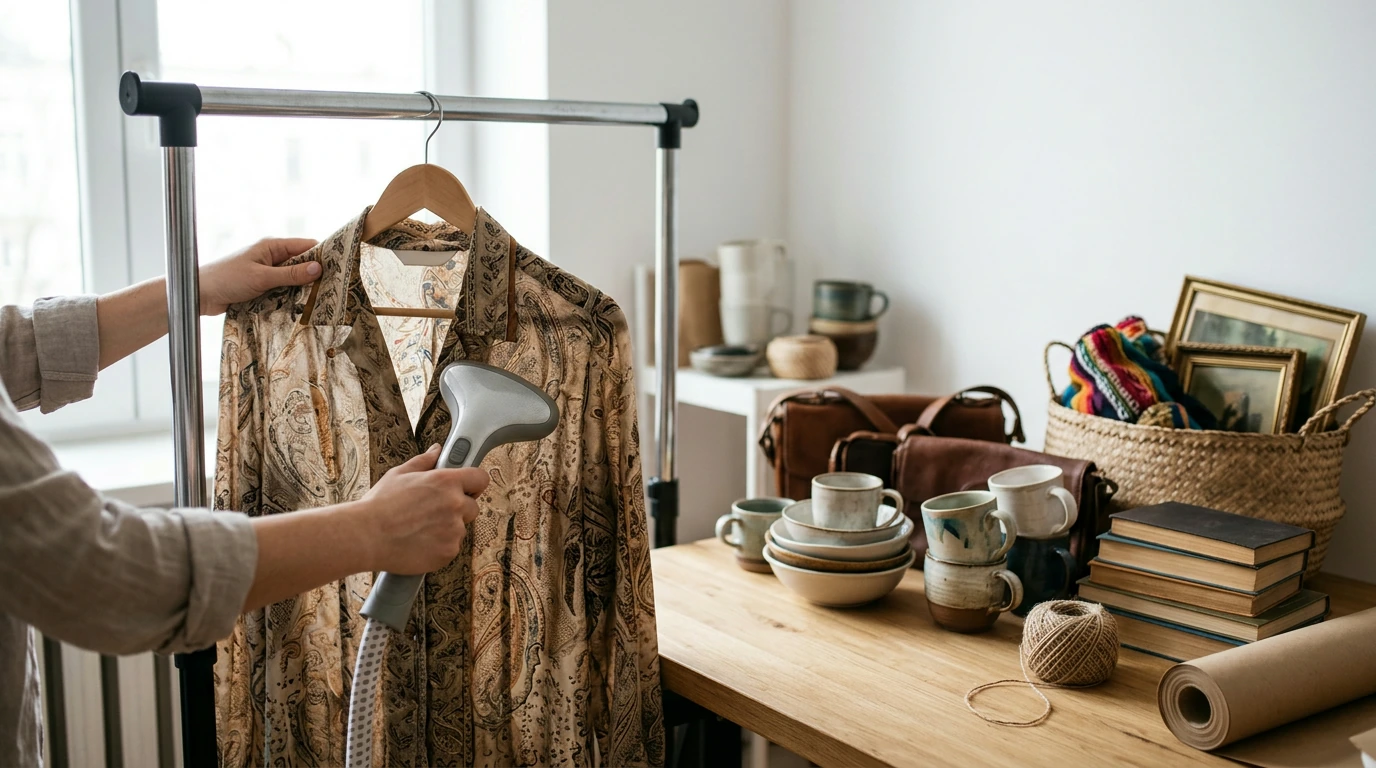
Thrift-store shelves turn over for a mix of practical basics and one-of-a-kind finds. If you’re wondering what tends to sell the most, clothing is a strong answer: it’s widely donated, easy to browse, and useful in every season. Demand still varies by store, neighborhood, and time of year, so popular categories aren’t a guarantee that every item will sell quickly.
Clothing is often one of the highest-volume categories. Everyday pieces such as jeans, shirts, sweaters, coats, and shoes appeal to shoppers looking for affordable wardrobe staples. Clean condition, recognizable brands, current styles, and seasonal timing can make individual pieces more appealing. For example, warm coats are more useful to shoppers as colder weather approaches.
Small housewares, furniture, books, toys, and home décor also draw steady interest. Kitchen tools and dishes meet everyday needs, while lamps, mirrors, baskets, and accent pieces help shoppers refresh a room without buying everything new. Compact items that are easy to carry and use can be especially practical purchases.
Furniture can be a standout find, but buyers usually weigh condition, function, and transport. Sturdy tables, chairs, and storage pieces have clear uses; wobbly joints, strong odors, or major damage may require more work than the price justifies. Books and media are often inexpensive, though interest depends on the title, format, and condition.
Start with what your room needs, then look for pieces that suit its colors, scale, and purpose. For décor, inspect surfaces, seams, hardware, and stability before you buy. A solid wood frame or well-made ceramic piece may offer lasting value, while a small flaw can be acceptable if it’s easy to repair and the price reflects it. Avoid bringing home items with mold, pest evidence, or damage that affects safe use.
Mixing a few distinctive secondhand accents with pieces you already own can make a room feel collected rather than crowded. For more ideas on choosing and combining finds, visit our guide to thrift-store decorating and curated secondhand style.
Choose a simple color palette and repeat a few materials or shapes across the room. Balance distinctive vintage finds with useful, quieter pieces so each item has space to stand out.





Leave a comment