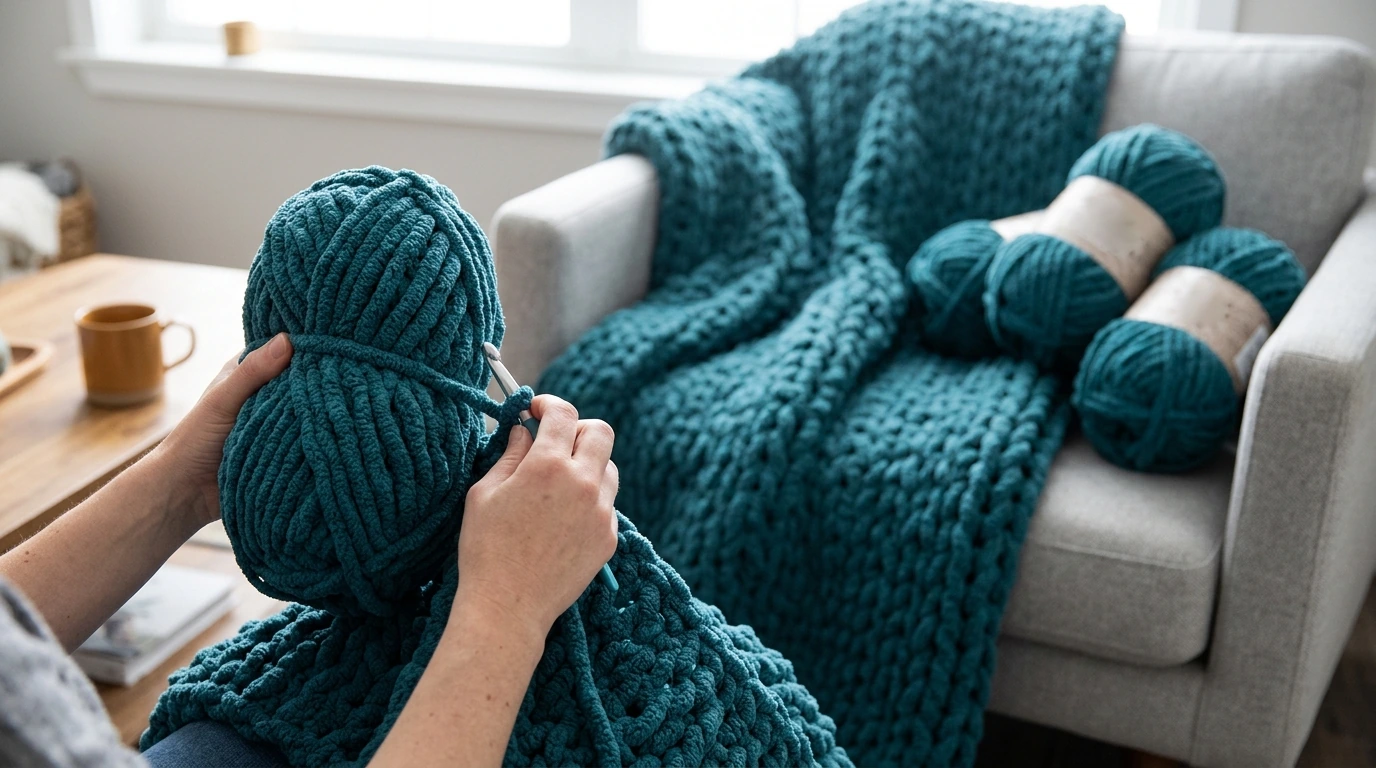
For a hand-knit throw measuring about 40 by 60 inches, plan on roughly 200 to 300 yards of chunky chenille yarn. If each skein contains 40 yards, that works out to about 5 to 8 skeins. Buy an extra skein if you want a generous margin for swatching, finishing, or adjusting the size.
The number of skeins is only a starting point: chenille skeins come in different lengths, and the amount you use depends on your stitch size and how tightly you knit. Our team recommends planning by yardage first, then converting that total to skeins.
Divide your estimated total yardage by the yards in one skein, then round up to the next whole skein. For example, if you plan for 250 yards and your yarn has 40 yards per skein, divide 250 by 40. The result is 6.25, so you would need at least 7 skeins.
Here are a few examples using that same 250-yard estimate:
For our step-by-step approach to making a throw, see our 40-by-60-inch hand-knit chunky chenille throw blanket guide.
Blanket dimensions make a difference. A wider or longer throw needs more yarn, while a smaller lap blanket needs less. Your stitch pattern matters, too: a dense or textured design generally uses more yarn than an open, simple stitch.
Your loop size also affects the finished fabric. Larger, looser loops can create a more open blanket, while smaller, tighter loops can produce a denser fabric. If you change your tension partway through, your yardage may change as well.
If you have a skein on hand, make a small swatch using the loops and stitch pattern you plan to use. Measure the swatch and note how much yarn it takes. You can use that information to make a more personalized estimate for your blanket, with extra yarn set aside for finishing.
We recommend buying the yarn for your project together when possible. Choosing skeins from the same dye lot helps keep the color consistent across your throw.
Many chenille throws can be washed gently, but care depends on the yarn’s fiber content and construction. Follow the yarn’s care instructions, and support the blanket when wet to help prevent stretching.




Leave a comment