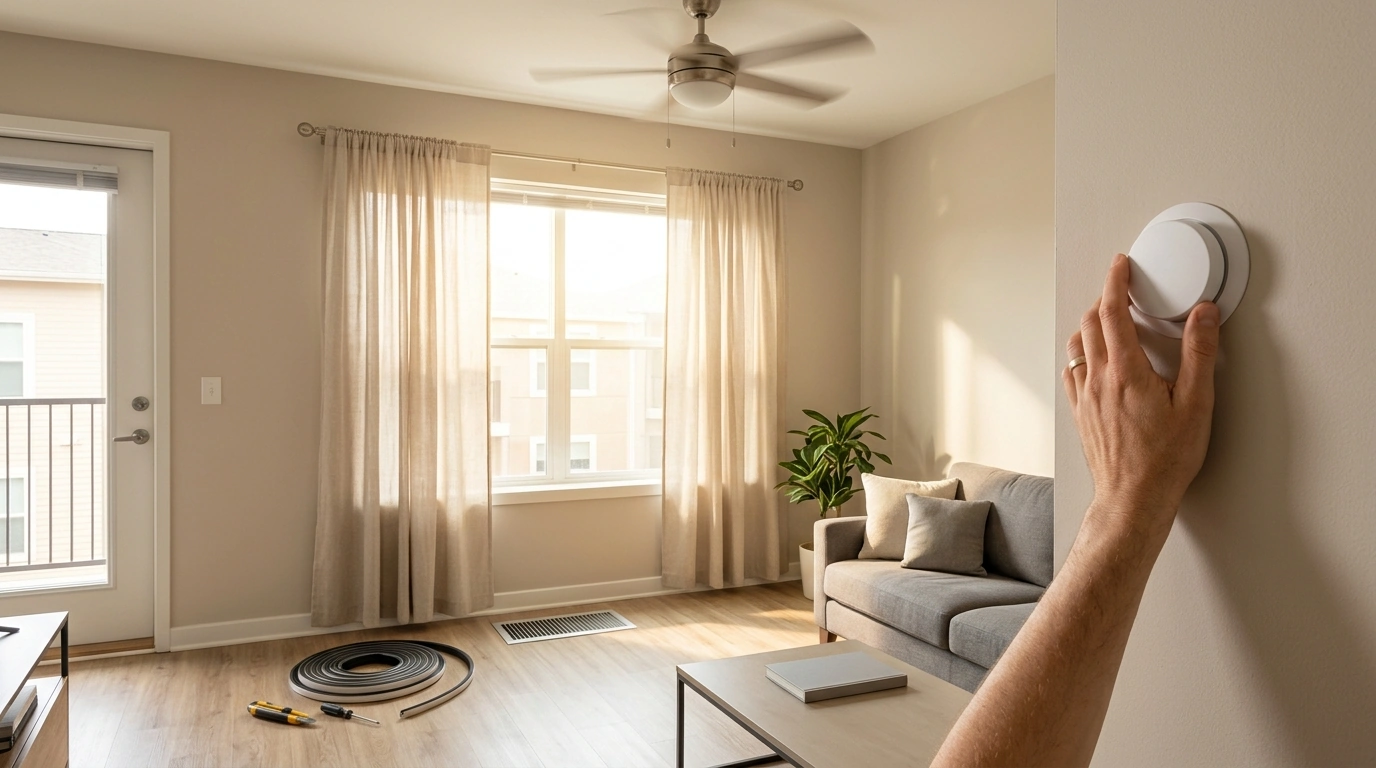
Start with the equipment that uses the most electricity, then confirm what changes your bill. For many homes, that means heating and cooling, water heating, and clothes drying. We recommend comparing your last two bills before you buy anything: note the kilowatt-hours (kWh) used, the number of billing days, and your rate. A higher bill caused by a rate increase needs a different response than one caused by higher usage.
Set your thermostat closer to the outdoor temperature when you can do so comfortably: a little warmer during cooling season and a little cooler during heating season. Use a programmable or smart thermostat to make adjustments automatically when you’re away. Replace or clean HVAC filters as directed, keep vents clear, and close blinds on sunny windows during hot afternoons. If you use a window AC, seal gaps around the unit so conditioned air stays inside. For a focused starting routine, follow our 7-day plan to cut your AC bill.
Shorter showers, cold-water laundry loads, and full dishwasher loads can lower the energy used to heat water. Repair dripping hot-water faucets promptly. When weather and space allow, air-dry some laundry instead of running the dryer; otherwise, clean the lint filter before each load and avoid overdrying. If you’re considering a new water heater or appliance, compare its estimated energy use with your current model before replacing equipment that still works.
Look for lights left on, an extra refrigerator you rarely use, and electronics that remain powered when no one needs them. LEDs are a practical upgrade for frequently used fixtures. A plug-in electricity meter can help you identify power-hungry devices that use a standard outlet, but don’t use one with an appliance beyond the meter’s rated capacity.
Finally, ask your utility about time-of-use rates, budget billing, and income-qualified assistance or efficiency programs. Moving flexible tasks, such as laundry or EV charging, to cheaper hours may help if your plan has peak pricing. Track kWh—not just dollars—over the next full billing cycle so you can see which changes actually reduce use. Our team would prioritize low-cost habits and maintenance before a major purchase.
Unplugging rarely used electronics can reduce standby power, but it usually matters less than managing heating, cooling, and hot-water use. A switched power strip makes it easier to turn off a group of devices without unplugging each one.






Leave a comment