Top-to-Bottom Cleaning: Dust-Free Home in Less Time
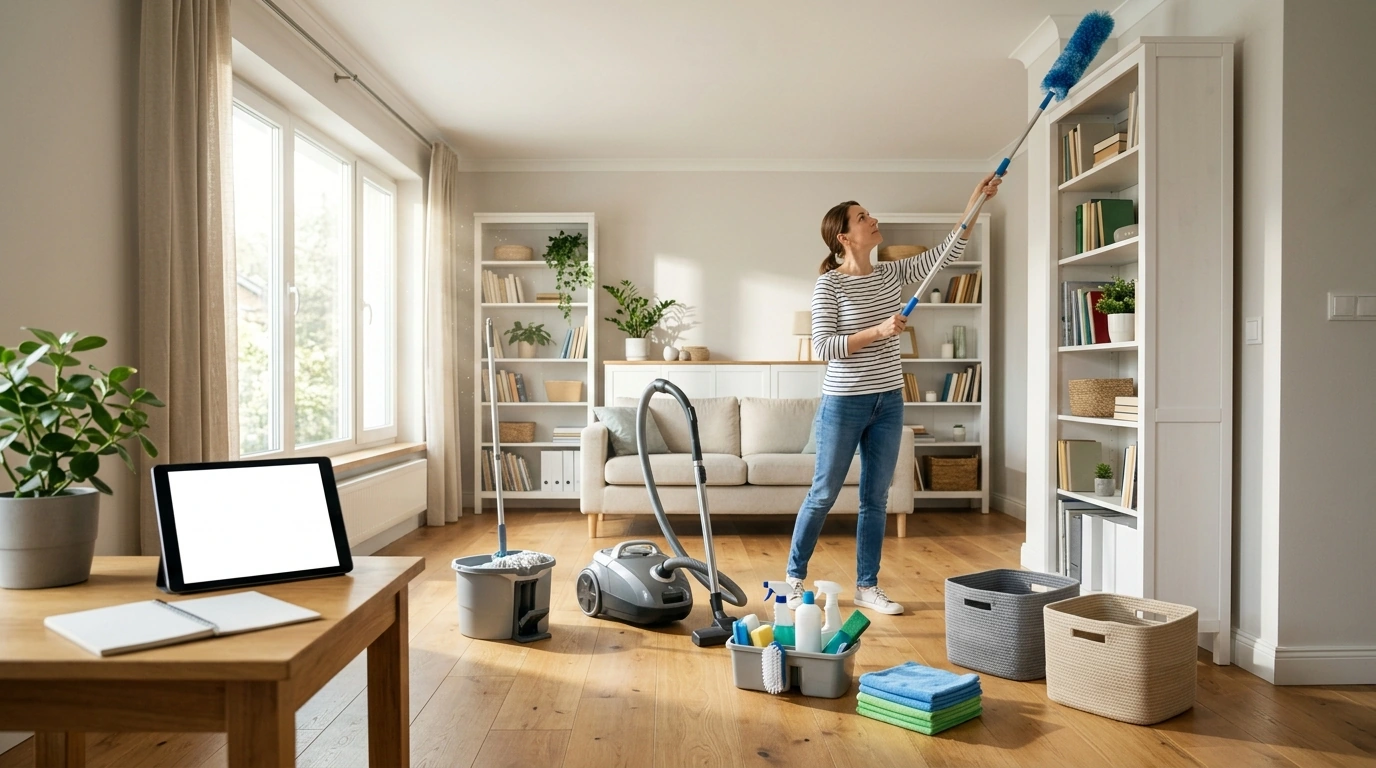
Top-to-Bottom Tips for Effortless Home Cleaning and Dust-Free Living
A reliable cleaning routine feels easier when the order is right: start high, finish low, and prevent dust from resettling on freshly cleaned surfaces. A top-to-bottom workflow keeps you from redoing work, while a consistent room pattern helps you move faster without missing the “quietly dirty” zones. Pair that with a simple pre-clean reset and a realistic plan, and the whole house can stay noticeably cleaner—without turning every weekend into a marathon.
The Top-to-Bottom Method (and why it saves time)
Top-to-bottom cleaning works because gravity is doing exactly what you’d expect: dust and crumbs drift downward. If you begin with floors, you’ll end up vacuuming (again) after you dust shelves and vents.
- Start high so fallout lands on uncleaned areas. Hit ceiling corners, fan blades, vents, and cabinet tops first.
- Move in one direction. Go clockwise (or counterclockwise) around the room to avoid skipping corners or doubling back.
- Separate dry work from wet work. Dust and vacuum first; wipe and mop last to prevent muddy streaks and linty residue.
- Use two baskets while you clean. One for items that belong elsewhere, one for trash/recycling—less wandering, fewer distractions.
- End with a 2-minute reset. Put tools away, empty the trash bag, and restore the room “baseline” so it stays tidy longer.
Set up a 10-minute pre-clean reset
This is the small step that keeps cleaning from feeling chaotic. Do it once, and every session after starts smoother.
- Air out the space briefly if outdoor air quality is good. It can help reduce lingering airborne dust while you work (see the EPA’s indoor air quality guidance for practical indoor air tips).
- Start tool laundry: microfiber cloths, washable dusters, and mop pads—clean tools make a visible difference.
- Declutter surfaces fast by sweeping counters, nightstands, and coffee tables into a “put-away” basket.
- Stage a portable caddy: microfiber cloths, an extendable duster, vacuum attachments, and a gentle all-purpose spray.
- Pick a stopping point before you begin (like “kitchen + entryway only”) so you finish feeling successful, not burned out.
Expert dusting routine: surfaces, fabrics, and hidden zones
Dusting is fastest when it’s a repeatable order. Think “dust ladder”: highest surfaces down to floors. For fine particles, microfiber is your best friend—lightly mist the cloth (not the surface) so it traps dust instead of spreading it.
- Start high: ceiling corners, vents, fan blades, tops of cabinets, tall shelves.
- Work down in layers: light fixtures → wall décor → shelves → electronics → furniture tops → baseboards.
- Don’t skip fabric dust magnets: upholstered arms, curtains, pet bedding, throw blankets, and lampshades.
- Detail the “hidden grime” areas: door frames, switch plates, window tracks, and behind TVs.
- Finish with floors: vacuum slowly with a crevice tool along edges, then mop last (or damp-mop hard floors).
Top-to-Bottom Order by Surface Type
| Zone | Tools | Best practice | Common mistake to avoid |
|---|---|---|---|
| Ceilings, vents, fan blades | Extendable duster, vacuum brush attachment | Dust first; vacuum loosened debris after | Wiping with a wet cloth and dripping onto walls |
| Shelves, frames, electronics | Dry microfiber, small detailing brush | Dust toward one side; remove items in batches | Spraying cleaner directly onto screens/electronics |
| Furniture, baseboards | Microfiber + light mist, crevice tool | Wipe then vacuum edges | Skipping baseboards until they look dirty |
| Floors (last) | Vacuum + mop/damp pad | Vacuum edges before mopping | Mopping first and trapping dust in streaks |
Room-by-room workflow that stays consistent
Use the same pattern everywhere (high to low, dry to wet), then plug in the room-specific steps.
AI-powered organization: turn chores into a realistic plan
Make dust come back slower: prevention habits that work
- Use doormats and a shoes-off routine to cut outdoor debris and fine particles at the door.
- Replace HVAC filters on schedule and choose an efficiency level compatible with your system (the American Lung Association has helpful indoor air resources).
- Wash microfiber correctly: skip fabric softener so fibers keep grabbing dust instead of smearing it.
- Reduce flat-surface clutter so dusting is faster and more complete.
- Address common sources: wash pet bedding, maintain dryer vents, and rotate dusting frequency for open shelving.
For cleaning and disinfecting best practices in shared or higher-traffic spaces, the CDC cleaning guidance is a solid reference.
Digital download guide: what it includes and how to use it
If you want a ready-to-follow structure (instead of reinventing your routine each time), Top-to-Bottom Tips | Complete Guide for Effortless Home Cleaning, Expert Dusting Routine, and AI-Powered Organization | Digital Download for Cleaner Homes & Dust-Free Living lays out a practical sequence you can repeat room after room.
Helpful add-ons that support cleaner routines
- New Balance 550 Sneakers (handy for indoor-only wear if you prefer not going barefoot while keeping a shoes-off entry routine).
- Elegant Structured Crocodile Pattern Leather Shoulder Bag – Soft Texture (a dedicated spot for everyday carry items can reduce entryway surface clutter).
FAQ
What does “top-to-bottom cleaning” mean?
It means cleaning higher surfaces first so dust and debris fall onto areas you haven’t cleaned yet. Floors are done last to avoid re-vacuuming or re-mopping after dust settles.
How often should dusting be done for a dust-free feel?
Weekly dusting in main living areas is a practical baseline for most homes. If you have pets or allergies, a light midweek pass on high-use rooms can help, with a monthly rotation for vents, fan blades, and high ledges.
What’s the fastest way to keep a home looking consistently clean?
Do a daily 10-minute reset to control clutter, then keep a weekly top-to-bottom maintenance routine for dust and floors. Batching by tool (all dusting, then all vacuuming, then wiping/mopping) reduces setup time and speeds everything up.
















Leave a comment