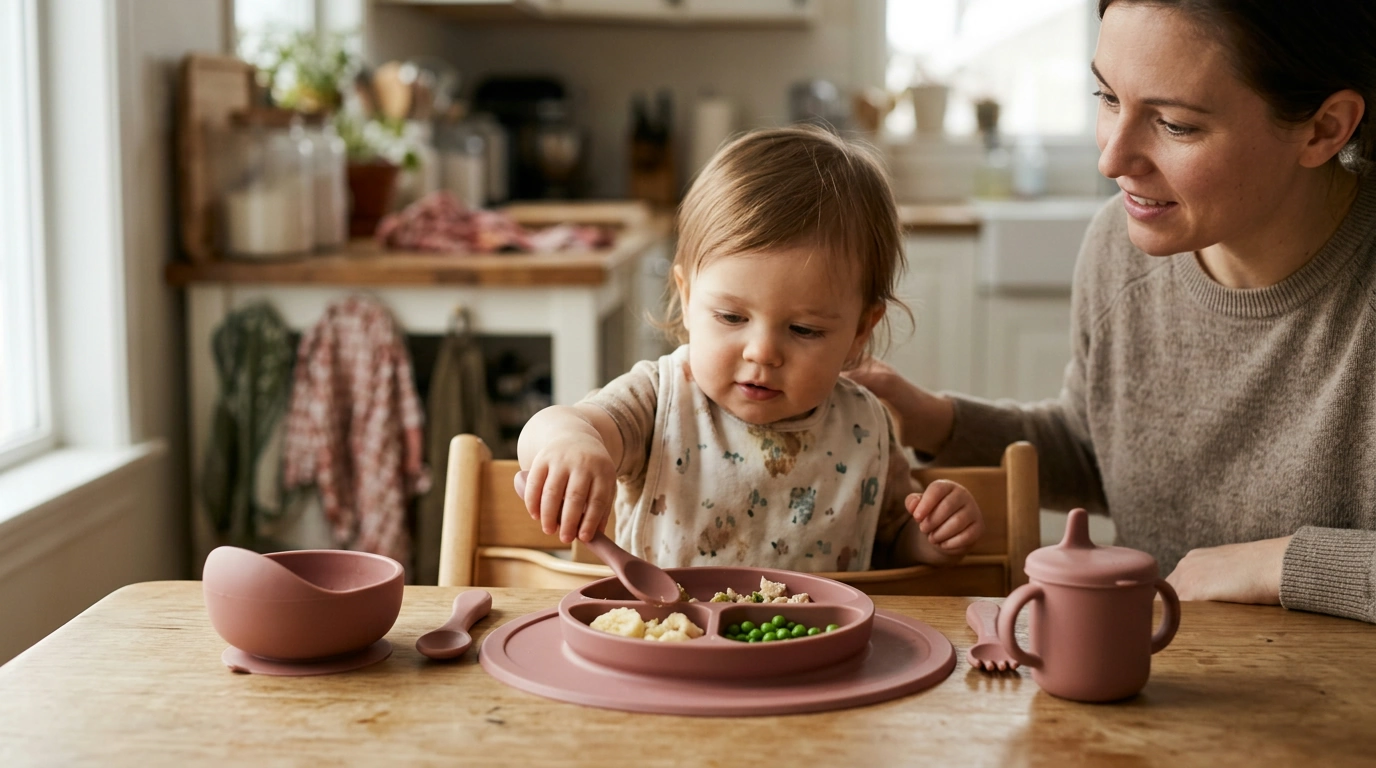
Feeding a baby or toddler involves more than putting food on the table. You may need a bowl for a spoon-fed meal, a plate for several foods, or a cup for a seated snack. Keeping those basics together can make it easier to set up for the moment without getting out every dish you own.
Our 5pcs Silicone Baby Feeding Set with Suction Plate, Bowl, Spoon, Fork & Snack Cup brings those five pieces into one setup. It won’t make meals mess-free, and your child won’t need every piece at once. The useful question is which piece fits what you’re serving—and which skill your child is ready to practice.
A plate can give you room to offer several foods separately. A bowl makes sense for foods you’re serving with a spoon. Between meals, a snack cup offers another way to serve an appropriate snack while your child is seated. The spoon and fork give your child opportunities to explore utensils with your help; holding one, bringing it toward food, and getting food to the mouth are skills that take practice.
| Piece | Everyday use | Helpful habit |
|---|---|---|
| Suction plate | Serving a meal | Place it on a clean, smooth surface and check that it holds before serving. |
| Bowl | Serving foods eaten with a spoon | Offer manageable portions and refill as needed. |
| Spoon and fork | Practicing self-feeding | Stay nearby and allow extra time for exploration. |
| Snack cup | Offering a snack | Seat and supervise your child while they eat. |
We like a coordinated set because it leaves you with a few straightforward choices rather than a single dish you must use for every meal. If today’s food belongs in a bowl, use the bowl. If your child is interested in trying a utensil, offer one alongside your support. The set is a starting point for a routine, not a schedule for reaching milestones.
Self-feeding often starts with exploration. Your child may touch food before trying to pick it up, then show interest in a spoon you’ve loaded for them. As their coordination develops, they can practice scooping or using a fork when it’s appropriate for them and the food you’re serving. You can help without expecting each attempt to end in a bite.
Follow your child’s developmental readiness instead of treating a particular age or utensil as a deadline. The CDC’s infant and toddler nutrition guidance offers information on introducing foods and supporting eating skills. If you have concerns specific to your child’s development, bring them to your pediatrician.
Start with small amounts on the plate or in the bowl, then add more if needed. That gives your child room to practice and can make spills easier to manage. Prepare foods in an age-appropriate way, and stay close throughout the meal. A feeding set can support the routine, but it cannot replace supervision or careful food preparation.
A suction plate is most useful when its base can make good contact with the surface beneath it. A clean, smooth, flat table or tray generally gives it a better chance to grip than one that is textured, uneven, or covered with crumbs. Before adding food, press the plate into place and give it a gentle check. If it shifts easily, try a different suitable surface rather than relying on it to stay put.
Suction is not a promise that a plate cannot tip or be lifted, and it may not work on every high-chair tray. Keep the eating area comfortably within your child’s reach, but don’t set dishes near an edge where they could be pulled down. Even when the plate holds well at the start, continue watching as your child eats and explores.
A simple sequence can take some of the decisions out of a busy day: prepare an appropriate meal, set out only the pieces you need, seat your child, and stay with them while they eat. Afterward, wash the used pieces according to the product’s care instructions. Before putting any piece in a dishwasher, microwave, or sterilizer, confirm that its instructions allow that use.
Use the snack cup for a snack, not as a reason to eat while walking or playing. Children should sit while eating, whether you’re serving a full meal or a few bites between meals. For additional feeding and nutrition guidance, you can also turn to HealthyChildren.org from the American Academy of Pediatrics.
If meal planning is another part of your routine, our Great Meals, Small Budget is a separate option to explore for household meal ideas. Whatever you plan for the rest of the family, choose and prepare your child’s food according to their needs.
When you’re ready to put together the feeding basics, take a look at the five-piece set for its included plate, bowl, spoon, fork, and snack cup, along with its current price. Our team wants the setup to be easy to understand: choose what suits the meal, make space for practice, and expect to stay involved.
No. Suction varies with a tray’s texture, shape, and cleanliness. Test the plate on the intended surface before serving food.
Children develop self-feeding skills at different rates. Offer age-appropriate chances to practice while supervising, and ask a pediatrician about concerns specific to your child.
Refer to the product’s care instructions before using either appliance; don’t assume those uses are approved.




Leave a comment