No-Buy Year Checklist: Save More Without Feeling Deprived

The No-Buy Year Power Checklist: Save More Without Putting Life on Hold
A no-buy year is less about strict restriction and more about designing spending rules that protect what matters: essentials, goals, and peace of mind. A practical checklist approach makes the process clearer—set boundaries you can actually follow, reduce impulse purchases, and build money habits that stick without feeling like every day is a test of willpower.
What a No-Buy Year Is (and What It Isn’t)
A no-buy year is a personal framework for discretionary spending—not a blanket ban on every purchase. Essentials still count: groceries, household basics, bills, health needs, and pre-planned obligations. The point is behavior change: noticing patterns, cutting impulse buys, and strengthening priorities. Progress is measured by consistency and learning, not perfection.
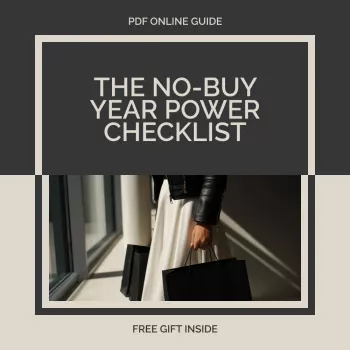
Need help building the structure fast? The No-Buy Year Power Checklist – A Practical eBook Guide is designed to turn a big goal into weekly actions you can repeat.
Who This Works Best For
- Anyone stuck in a cycle of “small purchases” adding up and draining savings.
- People with clutter, unused subscriptions, or frequent online-cart checkout habits.
- Budgeters who want a reset without extreme frugality or shame-based rules.
- Goal-driven savers building an emergency fund, paying off debt, or planning a big purchase.
If your spending feels “invisible” until the end of the month, a no-buy framework makes it visible again. For a grounding approach to budgeting basics, the Consumer Financial Protection Bureau’s budgeting tools are a helpful reference.
The Core Rules: Build a No-Buy Framework That Doesn’t Backfire
Strong rules prevent decision fatigue. Start by defining three types of categories:
- No-buy: completely paused (no “just this once”).
- Low-buy: limited and pre-planned with caps.
- Allowed: essentials and planned expenses.
Then choose a timeframe (full year, 90 days, or month-by-month tightening) and write your exceptions in advance. Finally, add friction to impulse spending: remove saved cards, mute marketing emails, and use a 48-hour waiting rule for any non-essential purchase.
No-Buy vs Low-Buy vs Allowed: Example Rules
| Category | No-Buy | Low-Buy | Allowed (Planned/Essential) |
|---|---|---|---|
| Clothes | No new items | 1 replacement per season if needed | Work uniform replacement if damaged |
| Beauty/Skincare | No backups; use what you own | Replace only when fully finished | Prescription skincare or medical needs |
| Eating out | No takeout | 1 meal out per month | Social event already scheduled |
| Entertainment | No paid apps/impulse rentals | 1 paid activity per month | Library, free community events |
| Home items | No decor/organizers | 1 needed item per quarter | Replacement of broken essentials |
The Power Checklist Method: Simple Steps That Keep Momentum
A checklist turns “I should spend less” into concrete actions you can repeat. Use this sequence to create momentum quickly:
- Start with a baseline: list the last 30–90 days of discretionary purchases and name the patterns (late-night browsing, stress spending, “treat” culture).
- Set three priority goals: a savings target, a debt target, and one lifestyle goal (like less clutter or fewer errands).
- Separate needs from cravings: keep a “replacement list” (true needs) and a “want list” (delayed decisions).
- Weekly check-ins: note triggers, wins, and one adjustment for next week.
- Plan allowed joy: non-shopping rewards—walks, hobby time, cooking nights, movement, community events.
To make “friction” easier, consider setting a personal rule that any want goes on a dated list first. This taps into what behavioral economics shows about impulse decisions and self-control—delaying a choice often changes it. For a deeper overview of the concepts, see the Stanford Encyclopedia of Philosophy entry on behavioral economics.
How to Prevent the ‘Deprivation Bounce-Back’
Backfires usually come from all-or-nothing thinking. A slip is data, not failure. The practical goal is to reduce the frequency and intensity of impulse spending—not to “never want anything again.”
If online subscriptions are part of the leak, review them with a rotation plan—cancel, pause, or swap one at a time. The FTC’s guide to negative option subscriptions can help you spot and manage recurring charges.
What to Track (So the Results Are Obvious)
Using the eBook: The No-Buy Year Power Checklist
A structured checklist makes the rules easier to follow and reduces the mental load of constant decisions. The No-Buy Year Power Checklist – A Practical eBook Guide helps define category boundaries, write exceptions ahead of time, and turn a big goal into weekly, doable actions. It also works for shorter resets (30/60/90 days) using the same framework.
For many people, the point isn’t “never buy anything fun”—it’s buying on purpose. When the pause works, purchases feel better because they’re planned. If you’re practicing intentional spending, add “cool-off” time before non-essentials like New Balance 550 Sneakers or a comfort buy like the Cute Apple House Kitten Plush – Soft Detachable Cat Plush Toy.
Common Pitfalls and Quick Fixes
FAQ
Can a no-buy year include essentials and replacements?
Yes. Define essentials (bills, groceries, health needs) and use replacement-only rules for categories like toiletries or clothing; writing exceptions in advance helps prevent impulse loopholes.
What’s the difference between a no-buy and a low-buy?
A no-buy pauses a category entirely for a set time. A low-buy allows limited, pre-planned spending with caps, such as one meal out per month or one replacement item per season.
How do you handle birthdays, holidays, and social events during a no-buy year?
Plan a small annual gifting budget, prioritize experiences or handmade gifts, and treat event spending as a pre-approved category rather than a spur-of-the-moment exception.















Leave a comment