Manual Pasta Maker Set: Roll, Cut & Cook Fresh Noodles
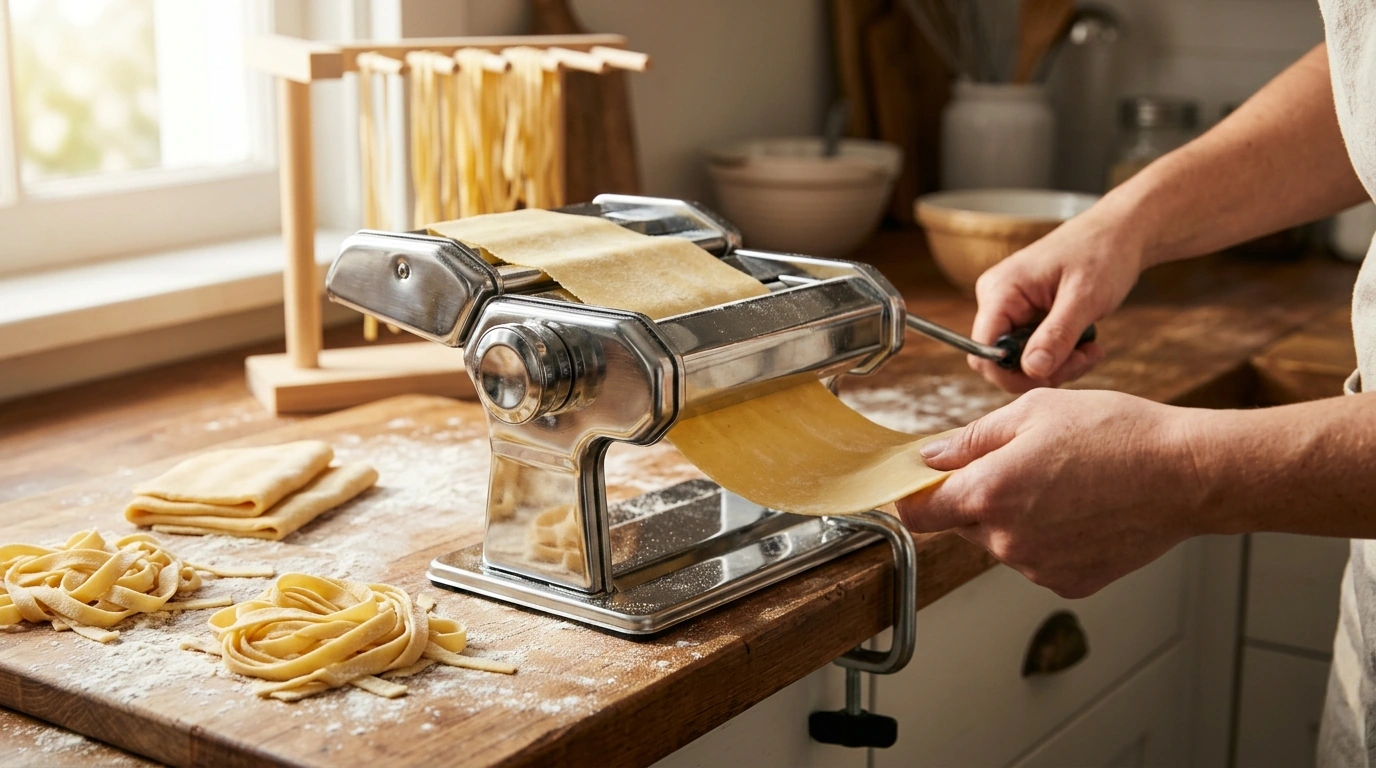
Manual Pasta Maker Machine Set: Fresh Noodles at Home With Simple, Hands-On Control
A manual pasta maker set turns basic pantry ingredients into fresh sheets, ribbons, and noodles with full control over thickness and texture. With a steady hand crank and a few smart habits (resting dough, light flouring, and gentle thickness changes), it’s easy to move from rustic sheets to weeknight spaghetti without hauling out an electric appliance.
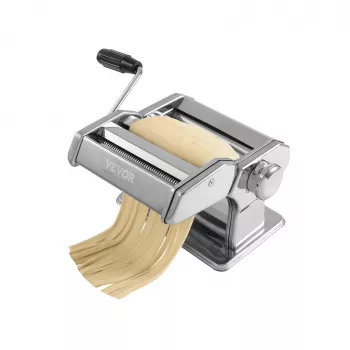
If you’re ready to start, the Manual Pasta Maker Machine Set is a simple, compact option for rolling and cutting fresh pasta at home—great for pasta nights, meal prep, and learning what “perfect dough” feels like by touch.
What a Manual Pasta Maker Set Does (and What It Doesn’t)
- Rolls pasta dough into even sheets using adjustable thickness settings.
- Cuts sheets into common noodle shapes when a cutter attachment is included (varies by set).
- Relies on hand-crank power: quiet, no motor, and easy to store.
- Best for traditional egg pasta, semolina-based doughs, and laminated sheets for filled pasta.
- Not ideal for very wet batters, gluten-free doughs that crumble easily without binders, or extremely stiff doughs unless rested well.
What’s Typically Included in the Set
- Rolling unit with an adjustable thickness dial for consistent sheets.
- Hand crank that fits into the drive socket for rolling and cutting.
- Clamp for securing the machine to a countertop (stability matters for even cranking).
- Cutting rollers (commonly spaghetti/fettuccine-style) if the set includes a cutter module.
- Care and handling basics: dry brushing, minimal moisture, and proper storage to avoid residue buildup.
Quick Setup for Stable, Smooth Cranking
- Choose a sturdy counter edge; avoid flexible tables that wobble under clamp pressure.
- Clamp tightly so the machine does not shift while feeding dough.
- Keep a lightly floured landing zone (board or sheet pan) for finished sheets and cut noodles.
- Set up a drying area: a rack, clean dowels, or floured towels to prevent sticking after cutting.
- If the dough tears or looks ragged, reduce thickness steps and add rest time rather than forcing it thinner.
Small helpers make pasta night smoother, too. If you’re gifting the setup, a fun add-on like the Cute Apple House Kitten Plush – Soft Detachable Cat Plush Toy can keep little hands occupied while dough rests and noodles dry.
Dough Basics That Work Well With Manual Rollers
- Aim for a firm, cohesive dough: too wet sticks to rollers; too dry cracks at thinner settings.
- Rest the dough (wrapped) to relax gluten and hydrate flour evenly, improving smooth passes through rollers.
- Divide dough into smaller portions to avoid overloading the rollers and to keep the surface from drying out.
- Use flour sparingly during rolling; excess flour can create dry seams and dusty noodles.
- For filled pasta, keep sheets slightly thicker than for ribbon noodles to reduce blowouts during sealing.
Consistency starts with measuring. For a quick refresher on flour measurement methods, see King Arthur Baking’s guide to measuring flour.
Common Problems and Fast Fixes
| Issue | Likely Cause | Fix |
|---|---|---|
| Dough sticks to rollers | Dough too wet or rollers have residue | Dust dough lightly with flour; run a dry cloth/brush on rollers; rest dough briefly |
| Sheet tears or holes appear | Dough too dry or rushed thickness changes | Mist lightly and knead in tiny amounts of water; step down thickness gradually; rest dough |
| Edges fray or look jagged | Uneven hydration or too much bench flour | Rest longer; fold sheet in thirds and re-roll a few passes at the same setting |
| Noodles clump after cutting | Not enough flour or humidity too high | Toss with a small amount of flour/semolina; separate strands and dry briefly before cooking |
| Uneven thickness | Inconsistent feeding or machine shifting | Keep sheet centered; maintain steady crank speed; tighten clamp |
Step-by-Step: Rolling Sheets and Cutting Noodles
- Start at the widest setting; flatten dough into a rough rectangle so it catches evenly.
- Feed dough through, then fold (a simple letter fold) and repeat a few times to build a smoother, more uniform sheet.
- Decrease thickness one notch at a time; run the sheet through each setting until you reach your target thinness.
- For cutting, lightly flour both sides of the sheet and trim into manageable lengths.
- Run the sheet through the cutter at a steady pace; immediately separate and dust strands to prevent sticking.
For extra technique ideas and shape inspiration, Serious Eats’ fresh pasta basics offers helpful visuals and variations to try once you’re comfortable with the roller.
Shape Ideas Beyond Spaghetti: Making the Most of the Set
Cleaning and Care for Long-Term Performance
For food safety when storing fresh pasta or dough, follow time-and-temperature guidance from USDA Food Safety and Inspection Service.
Who This Set Fits Best
If you’re building a “host-ready” routine beyond the kitchen, an everyday carry item like the Elegant Structured Crocodile Pattern Leather Shoulder Bag – Soft Texture can be a handy companion for farmers market runs and ingredient pickups.
Manual Pasta Maker Machine Set at a Glance
FAQ
Can a manual pasta maker roll dough for ravioli and lasagna?
Yes. Roll sheets to the thickness you need, keeping ravioli sheets slightly thicker than ribbon noodles for stronger seals. For lasagna, roll and cut sheets to size, then use them fresh (or par-cook only if your recipe specifically calls for it).
Why does dough keep sticking to the rollers?
Most often, the dough is a bit too wet or the rollers have a light residue buildup. Rest the dough, dust lightly with flour or semolina, and clean the rollers with a dry brush before continuing.
Is it safe to wash a manual pasta machine with water?
Usually, no—most machines are designed to be cleaned dry. Let dough bits dry completely, brush them away, then wipe the outside with a barely damp cloth and dry it thoroughly; follow any manufacturer care instructions if provided.














Leave a comment