Impactful Leadership Traits: Clarity, Trust, and Purpose
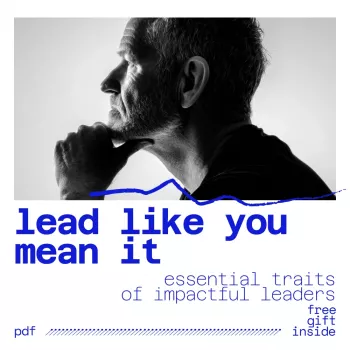
Lead Like You Mean It: Essential Traits of Impactful Leaders
Impactful leadership is less about titles and more about consistent behaviors that build trust, clarity, and momentum. Purpose-driven leaders align decisions with values, communicate with intent, and create environments where people can do their best work. The traits below offer a practical way to strengthen leadership presence in day-to-day moments—meetings, feedback, priorities, and change.
What “impactful” leadership looks like in practice
Impact shows up in outcomes and in the quality of the environment people experience while producing those outcomes. In practical terms, impactful leaders create clarity so people know what matters now, what success looks like, and why it matters. They build trust through consistency—words, decisions, and actions align over time.
They also balance results with relationships, raising performance without sacrificing psychological safety. They make decisions in uncertainty by gathering input, choosing a direction, and revisiting it when evidence changes. Finally, they develop others—investing in capability and judgment rather than creating dependency.
Purpose and values that guide decisions
Purpose-driven leadership starts with a purpose statement that is simple enough to repeat and specific enough to guide trade-offs. When priorities collide, values become decision filters: what gets protected, what gets cut, and what never gets compromised.
Work feels coherent (instead of fragmented) when everyday tasks connect to meaningful outcomes—customer impact, operational reliability, community benefit, or team growth. Under pressure, integrity matters most: communicate constraints, admit mistakes early, and avoid “moving goalposts” that undermine confidence.
For a structured way to translate these ideas into repeatable habits, explore Lead Like You Mean It: Essential Traits of Impactful Leaders | Leadership Traits Guide for Modern, Purpose-Driven Leaders. It’s designed to be applied in real scenarios—trade-offs, feedback, and change—not just admired in theory.
Self-awareness and emotional regulation under pressure
Self-awareness is the hinge point of leadership: it shapes how a leader reacts, what they reinforce, and how safe others feel speaking up. Start by noticing triggers—situations that create defensiveness, impatience, or avoidance. When a trigger hits, a brief pause before responding can prevent reactive leadership and raise decision quality.
Another high-leverage practice is separating intent from impact. Good intent doesn’t erase a harmful impact; leaders strengthen relationships when they listen for how messages land, then adjust without defensiveness. Many of these skills map closely to emotional intelligence competencies discussed by Harvard Business Review.
Finally, emotional regulation requires recovery habits. Sleep, boundaries, and decompression routines reduce burnout-driven leadership—when urgency becomes the default and patience disappears. Sustainable leadership is a performance strategy, not a luxury.
Communication that creates alignment
Clear communication reduces rework, confusion, and friction. It begins with setting expectations early: scope, timelines, decision rights, and what “good” looks like. In tense or ambiguous situations, communicate the “why” before the “what”—it increases buy-in and makes trade-offs easier to accept.
Feedback is another alignment tool when it’s clean and specific: observations, impact, and clear next steps. Meetings should also be run with intention: a short agenda, explicit outcomes, named owners, and a quick recap at the end. And perhaps most overlooked—asking better questions uncovers blockers, assumptions, and hidden risks before they become surprises.
Small professional supports can reinforce these habits in daily life: a reliable carry option for notebooks and devices (like the Elegant Structured Crocodile Pattern Leather Shoulder Bag – Soft Texture) and comfortable footwear for long days moving between conversations (like New Balance 550 Sneakers).
Trust, accountability, and psychological safety
Trust grows when commitments are kept—and when changes are explained quickly when priorities shift. Delegation is crucial here: delegate outcomes (not just tasks) and give people room to solve problems. That room signals confidence and builds capability.
Accountability also requires directness. Address issues directly and early; ambiguity and gossip loops erode morale. Reward learning and candor by encouraging early flagging of risks and mistakes. Psychological safety supports this environment, and the American Psychological Association highlights how safe climates enable healthier, higher-performing teams.
Trait-to-Behavior Guide for Day-to-Day Leadership
| Trait | What it looks like | Simple weekly practice |
|---|---|---|
| Clarity | Priorities are explicit; trade-offs are named | Share top 3 priorities + what is not being done this week |
| Courage | Delivers hard messages respectfully; makes timely decisions | Have one direct conversation that has been avoided |
| Empathy | Seeks context; listens without rushing to fix | Ask: “What’s the hardest part right now?” and reflect back what was heard |
| Accountability | Owns outcomes; sets measurable expectations | End meetings with owners + deadlines; follow up in writing |
| Adaptability | Adjusts approach when data changes; learns openly | Run a 15-minute retrospective: keep, stop, start |
Empathy, in particular, is not “being soft”—it’s being accurate about what others are experiencing so decisions fit reality. The Center for Creative Leadership describes empathy as a learnable leadership capability that improves connection, judgment, and influence.
Decision-making and resilience in change
Change tests leadership because it compresses time and raises stakes. A simple decision framework helps: define the problem, list options, name risks, and choose criteria before debating solutions. Clarify decision rights as well—who recommends, who decides, and who executes—so momentum doesn’t stall in endless alignment.
Putting the traits into a 30-day leadership cadence
A practical guide to develop these traits
FAQ
What are the most important traits of an impactful leader?
Clarity, integrity, self-awareness, communication, empathy, accountability, and adaptability are foundational. The difference-maker is consistency: people trust leaders whose behaviors reliably match their words.
How can a leader become more purpose-driven at work?
Define a simple purpose, connect goals to values, and communicate the “why” behind priorities and trade-offs. Use purpose as a filter to decide what gets attention now and what can wait.
How long does it take to build leadership traits?
Noticeable change can happen in 30 days with focused practice and clear feedback loops. Deeper trust and automatic habits usually develop over months through consistent follow-through.















Leave a comment