Calm Your Mind: Guided Audio Meditation for Anxiety
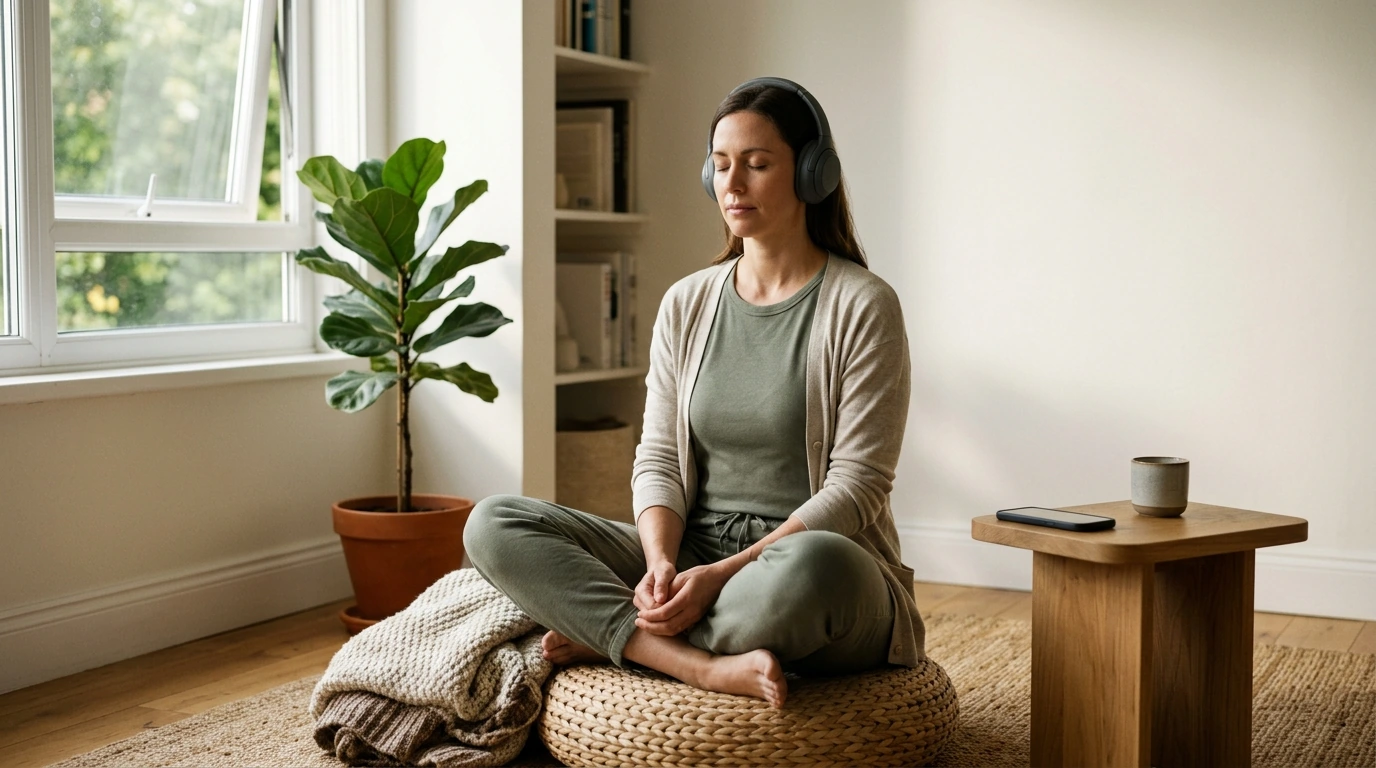
Calm Your Mind: Guided Meditation Audio Course for Anxiety Relief
Racing thoughts and constant tension can make it hard to rest, focus, or feel present. A guided meditation series offers structured, repeatable practices that support calmer breathing, steadier attention, and a more grounded response to stress—especially when used consistently. This overview explains how an audio course can fit into daily life, what to expect from a session, and how to build a simple routine that supports anxiety relief.
Mindfulness and meditation are widely discussed as practical tools for stress support, with major health organizations describing benefits like improved emotional regulation and reduced stress reactivity when practiced regularly. For additional background, see the American Psychological Association’s overview of mindfulness (APA) and Mayo Clinic’s guide to meditation for stress management (Mayo Clinic).
What a guided meditation series can do for anxious thoughts
Anxiety often comes with a “too much at once” feeling—too many thoughts, too many sensations, and too many decisions. A guided series can help by narrowing the next step to something simple and doable.
- Creates a predictable, step-by-step practice so the mind has fewer decisions to make when feeling overwhelmed.
- Uses voice guidance and timing to reduce drifting into worry loops.
- Trains attention to return to an anchor (breath, body sensations, sound) without self-criticism.
- Encourages nervous system downshifting through slower breathing and relaxed body scanning.
- Supports better emotional labeling (noticing sensations and thoughts as experiences rather than emergencies).
Over time, the goal isn’t “never feel anxious.” It’s building a more workable relationship with anxious sensations—recognizing them sooner, responding more skillfully, and recovering faster after stress hits.
Inside the Calm Your Mind audio course
Calm Your Mind: Guided Meditation Series | Audio Course | Anxiety Relief Meditation is built as a series so the practice feels familiar faster. Familiarity matters when anxiety spikes—your brain already knows what’s coming next, so it can settle into the routine with less resistance.
- Designed as a series format: easier to follow than one-off tracks because it builds familiarity over time.
- Audio-first approach: can be used with eyes closed, lying down, seated, or while winding down before sleep.
- Practical focus on anxiety relief: grounding, breath pacing, and gentle reframing of intrusive thoughts.
- Fits common schedules: short sessions for busy days and longer sessions for deeper decompression.
- Works well for beginners: guidance reduces uncertainty about what to do when the mind wanders.
Quick view: common session styles and when to use them
| Session style | Best time to use | What it supports |
|---|---|---|
| Breath-led guidance | During acute stress or before a difficult task | Slower breathing, reduced physical tension |
| Body scan grounding | Evening wind-down or after work | Releasing muscle holding, better sleep readiness |
| Thought-observation practice | When stuck in worry or rumination | Less identification with anxious thoughts |
| Compassion-focused guidance | After an emotional trigger or self-criticism | Softer inner dialogue, emotional recovery |
How to use the series for steady results
Guided meditation works best as a “small, often” habit. The nervous system responds to repetition—short practices done consistently can be more stabilizing than occasional long sessions.
- Start small: 5–10 minutes daily is often more sustainable than long sessions done rarely.
- Pair it with a consistent cue (after brushing teeth, lunch break, before bed) to make it automatic.
- Choose one posture that feels safe and comfortable; discomfort can become a distraction.
- Use headphones when possible to reduce environmental interruptions and improve immersion.
- If anxiety spikes mid-session, shift to a simpler anchor: feel feet on the floor, lengthen the exhale, or open eyes and look around.
If you like pairing calming audio with a cozy wind-down environment, comfortable items can reinforce the “it’s safe to relax” signal—such as Birkenstock Women’s Black Suede Slippers for Fall/Winter Comfort for evening routines or a soft comfort object like the Cute Apple House Kitten Plush – Soft Detachable Cat Plush Toy for decompression breaks.
A simple 7-day routine to build momentum
This week-long structure keeps the bar low while still creating forward movement. Repeat the week if you want; a calm routine often grows through cycles, not intensity.
For an extra anxiety-buffering layer during the day, a short walk after a session can help “lock in” the reset. Comfortable, supportive footwear can make that habit easier to keep, such as New Balance 550 Sneakers if you prefer a casual, everyday option.
Common obstacles—and what helps
If you’d like a deeper overview of structured mindfulness programs that build skills over time, the National Center for Complementary and Integrative Health provides a helpful introduction to Mindfulness-Based Stress Reduction (MBSR) (NCCIH).
Who this approach is best for (and when to get extra support)
Getting started today
FAQ
How often should guided meditation be used for anxiety relief?
Daily or near-daily practice tends to work best, even if it’s brief. Starting with 5–10 minutes a day is a realistic baseline, and you can increase time when it feels supportive rather than forced.
What if guided meditation makes anxiety feel worse at first?
This can happen, especially if the body is keyed up and silence feels unfamiliar. Try shorter sessions, keep your eyes open, and use grounding anchors like feeling your feet and lengthening the exhale; if distress keeps rising, pause the practice and consider professional support.
Can this audio course be used before sleep?
Yes—breath-led or body-scan tracks can be a helpful wind-down, especially with low volume and a comfortable posture. If you fall asleep during a session, that can be completely fine; you can also practice earlier if you want to stay awake through the full track.















Leave a comment