Brass Dual-Handle Deck-Mount Sink Faucet Guide
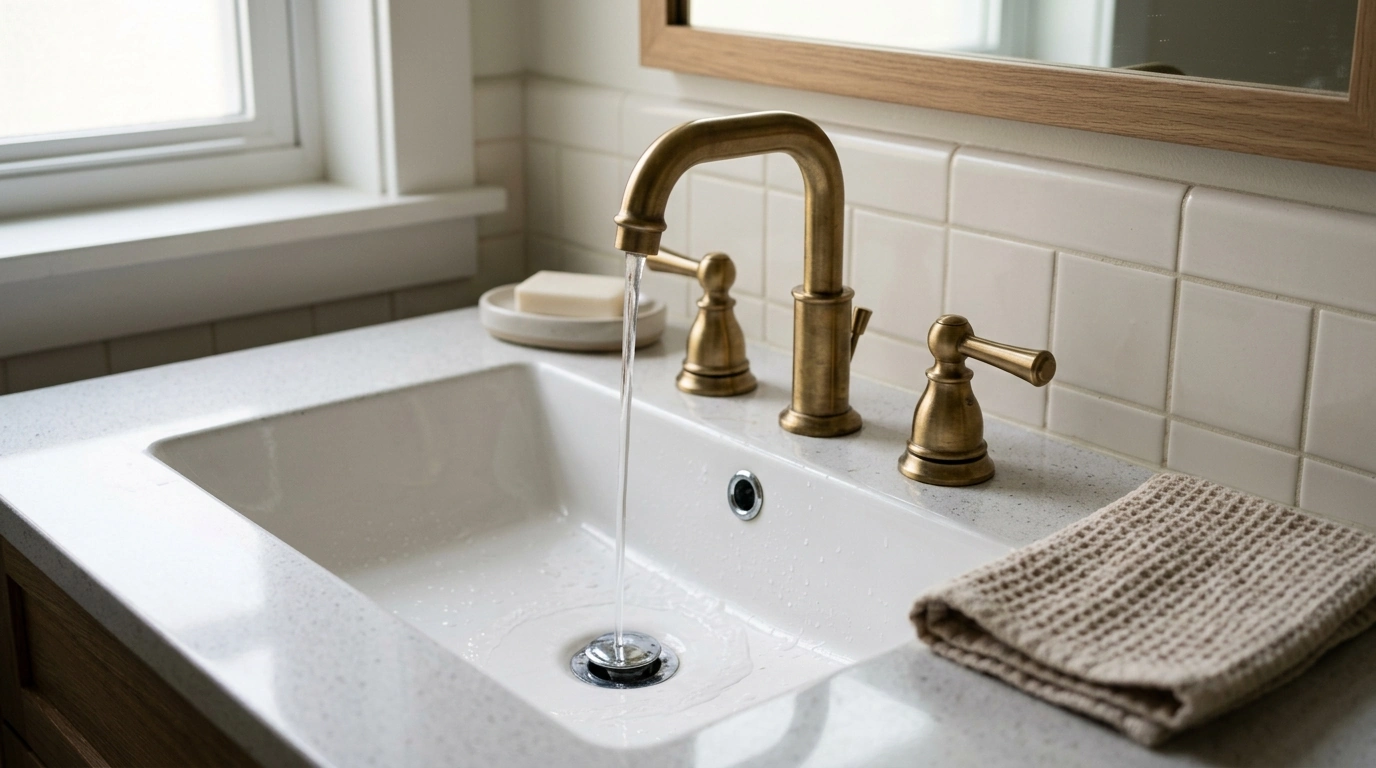
Integrated Brass Sink Faucet with Dual Handles: a solid, predictable upgrade
A sink faucet should feel solid every day, control temperature predictably, and install without surprises. Our integrated brass, deck-mounted faucet keeps things straightforward with separate hot and cold handles, a clean all-in-one layout, and a durable metal body that suits everyday bathrooms, utility sinks, and compact wash areas.
If you’re replacing a worn faucet or outfitting a guest bath, a dual-handle setup helps you get repeatable results—especially when multiple people use the same sink and everyone wants the water “just right” without fiddling.
What makes a dual-handle faucet a dependable daily choice
Dual handles remain a go-to option because they’re intuitive and consistent. Instead of blending everything through one lever, you can adjust hot and cold independently and keep your preferred mix from day to day.
- Separate hot and cold handles make it easier to dial in a comfortable temperature without sudden swings.
- Clear left/right control helps guests and kids understand the setup quickly.
- Dual-handle designs are a practical match for homes that prefer a classic, familiar feel over one-handle mixing.
- Deck-mount installation keeps everything anchored to the sink or countertop for a tidy footprint.
If you’re trying to reduce water waste from over-adjusting, it also helps to pair your faucet choice with water-smart habits and compatible components. The U.S. EPA’s WaterSense program is a useful reference for practical guidance on water-efficient products and everyday conservation.
Brass construction: why it matters under the sink
Under-sink conditions are tougher than they look: moisture, temperature shifts, and frequent use can expose weak materials fast. A brass-built body is widely valued for staying stable in wet environments and holding up through years of on-and-off cycles.
- Brass bodies are valued for long-term durability and stability in wet environments.
- A heavier, metal-built faucet typically feels more secure at the base and during handle operation.
- Brass is commonly chosen for fixtures because it holds up well to regular temperature changes and daily use.
- Pairing a brass faucet with proper shutoff valves helps protect the fixture and makes future maintenance simpler.
If the faucet will be used for drinking water at a bathroom sink, it’s also worth understanding material safety standards used in the industry. NSF’s overview of NSF/ANSI 61 explains how drinking-water system components are evaluated for health effects.
Deck-mount fit checklist before ordering
Deck-mount faucets are designed to clamp and seal through holes in the sink deck or countertop. Before you buy, a few quick measurements help you avoid returns and last-minute adapter runs.
Quick compatibility checklist
| What to check | Why it matters | What to confirm |
|---|---|---|
| Mounting holes / spacing | Ensures the faucet base and handles seat correctly | Number of holes and center-to-center spacing on the sink/countertop |
| Countertop or deck thickness | Determines whether mounting hardware can clamp securely | Thickness at the mounting area and any sink deck lip depth |
| Handle clearance | Prevents handles from hitting walls/backsplash or soap trays | Space behind and to the sides of the handle swing area |
| Supply line compatibility | Avoids leaks and extra adapters | Hot/cold shutoff valve type and connection size (match to the faucet lines) |
| Spout reach and height | Improves comfort and reduces splashing | Distance from faucet center to where water should hit the basin |
One practical tip our team uses: aim for the water stream to land close to the drain, not on the slope of the basin. That single detail can make the difference between a sink that feels calm and one that splashes every time you wash your hands.
Installation basics and a leak-free first week
You don’t need a complicated routine to get a clean install—just a careful, even approach so seals compress properly and threaded connections don’t get stressed.
Where this integrated deck-mount faucet fits best
In-stock picks from our team
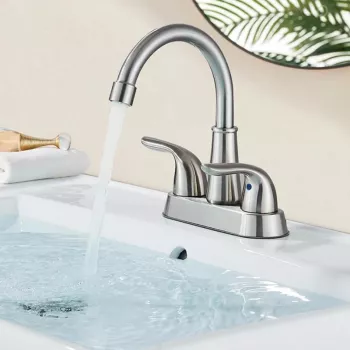
- Integrated Brass Sink Faucet with Dual Handles – Hot & Cold Water Deck Mount (34.67 USD)
- 4 in 1 Nail Rhinestone Gel (2.47 USD)
- Cute Apple House Kitten Plush – Soft Detachable Cat Plush Toy (30.51 USD)
Product details at a glance
| Item | Price | Availability |
|---|---|---|
| Integrated Brass Sink Faucet with Dual Handles – Hot & Cold Water Deck Mount | 34.67 USD | In stock |
FAQ
Will this deck-mount faucet fit my sink?
To confirm fit, measure your sink or countertop hole count and spacing for a dual-handle layout, check the deck thickness where the hardware clamps, and make sure there’s enough room behind the faucet for handle rotation. Also verify your shutoff valves and supply connections match the faucet’s hot/cold hookups so you won’t need unexpected adapters.
Are dual handles better than a single handle for hot and cold water?
Dual handles are often preferred for precise, repeatable temperature control and a familiar left/right operation that guests understand quickly. Single-handle faucets can be faster for one-handed use, but dual handles can feel more predictable when you want small adjustments without overshooting.
How do I prevent leaks after installing a new faucet?
Tighten mounting and water connections evenly, use the correct seals, and avoid cross-threading fittings. After your first test run, check each connection point again after 24 hours of normal use to catch slow drips early, and make sure your shutoff valves fully close and aren’t seeping.













Leave a comment