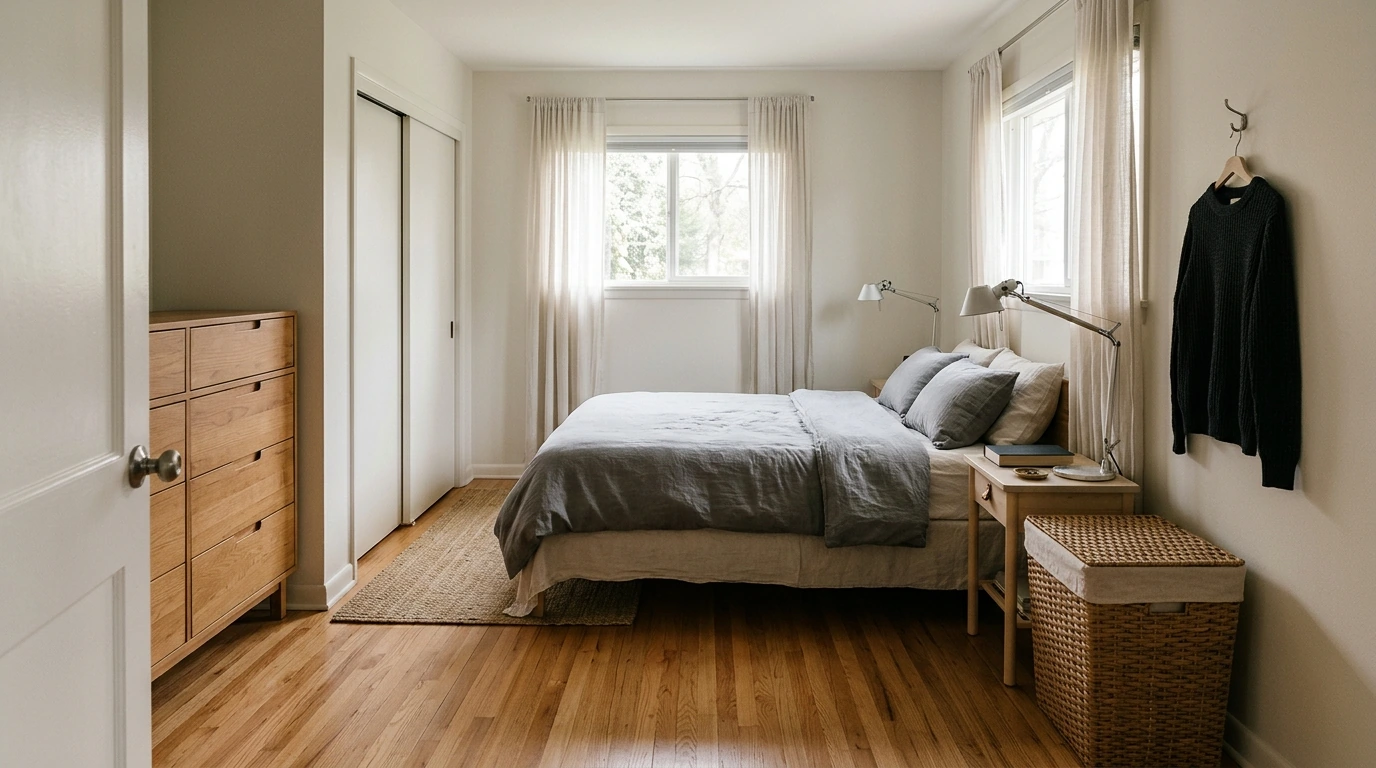
A bedroom is easier to care for when you can reach the floor, wipe surfaces without moving piles, and put everyday items away in seconds. Start with the layout, then give what remains a practical home. You can keep our How to Arrange Your Bedroom for Easy Cleaning Checklist handy as a digital companion while you work through the room. For more guidance, see Kuranda Dog Beds® | Elevated, Chew Proof, Easy to Clean.
Walk the routes you take from the door to the bed, closet, and drawers. If you have to step around shoes, a basket, or a small table, move it before you reconsider the larger furniture. A clear path makes it easier to carry laundry, put things away, and bring in a vacuum or broom. For further reading, see Does Your Dog Need an Orthopedic Bed? | Joint Support & ….
Before shifting a bed or dresser, open the nearby doors and drawers. Make sure you can still reach what is inside without squeezing past another piece of furniture. A layout you can use comfortably matters more than a symmetrical one. If a laundry hamper belongs along your usual route, give it a deliberate spot beside the route rather than in the middle of it.
Look at each piece of furniture and ask what it does for you. A chair used mainly for discarded clothes may be less useful than a hook for clothes you will wear again and a hamper for laundry. Removing one unnecessary piece can also reveal a floor edge that was difficult to clean.
Under-bed storage can keep occasional items out of the way, but only if you can pull the containers out and return them without a struggle. Leave yourself access to vacuum or sweep around the bed and other furniture. You do not need an empty room; you need a room whose floor you can clean without a major rearrangement.
| Area | Check | Simple adjustment |
|---|---|---|
| Walkway | Can you cross it without stepping around items? | Move loose items to a designated home. |
| Bedside | Can you wipe the surface in one pass? | Keep daily essentials; relocate the rest. |
| Closet entrance | Can you reach what you use most? | Move occasional items away from the front. |
| Floor edges | Can you reach them with a vacuum or broom? | Lift movable bins off the floor or group them in an accessible spot. |
Decide what earns a place on the nightstand, dresser, and desk. A lamp, a book you are reading, and a few daily essentials may be all you need at bedside. Papers and accessories that have no regular use there can go to a more appropriate home. The goal is not a bare surface; it is one you can wipe without first sorting a pile.
A tray can make a few related items easy to lift together. Use one where it helps, but do not add containers simply to preserve things you no longer want. If you keep personal-care supplies in the bedroom, group them near where you use them. For example, our 4 in 1 Nail Rhinestone Gel belongs with your other nail supplies rather than loose among bedside essentials. Keeping categories together makes it clearer what needs putting away.
Notice where clothes actually land. Place the hamper close enough to that spot that using it is the easy option, and set aside a separate hook or shelf for clothes you intend to wear again. If you routinely set a bag or keys on the dresser, give them a defined place instead of expecting yourself to break the habit overnight.
Try a brief reset before you leave the room: return loose items, put clothing in its place, and clear the floor. When it is time for a fuller clean, clear surfaces first, dust or wipe them, then clean the floor. Follow the care instructions for your furniture and finishes. The CDC’s home-cleaning guidance offers general advice on cleaning surfaces; choose methods appropriate to the materials in your room.
You do not have to empty the bedroom to improve it. Work through one zone at a time: walkway, floor, surfaces, then storage. Our $2.99 digital How to Arrange Your Bedroom for Easy Cleaning Checklist can guide those decisions as you go. At each stop, ask whether you can reach the area, clean it, and reset it easily.
After a week, look for items that keep returning to the same inconvenient spot. That pattern is useful information. Move their storage closer to where you use them, or decide whether they need to stay in the bedroom at all. We find that a workable home for everyday items does more to preserve a cleanable layout than a routine that is too demanding to keep.
Keep a clear route between the door, bed, and storage. Limit extra floor-standing furniture, and leave enough access to sweep or vacuum around what remains.
No. Keep what you use regularly, then move or contain the rest so you can wipe the surface quickly.
Notice where clutter collects and give those items a practical home nearby. If they do not need to be in the bedroom, move them to where they belong.






Leave a comment