8L Evaporative Air Cooler (65W) with Remote for Dry Heat
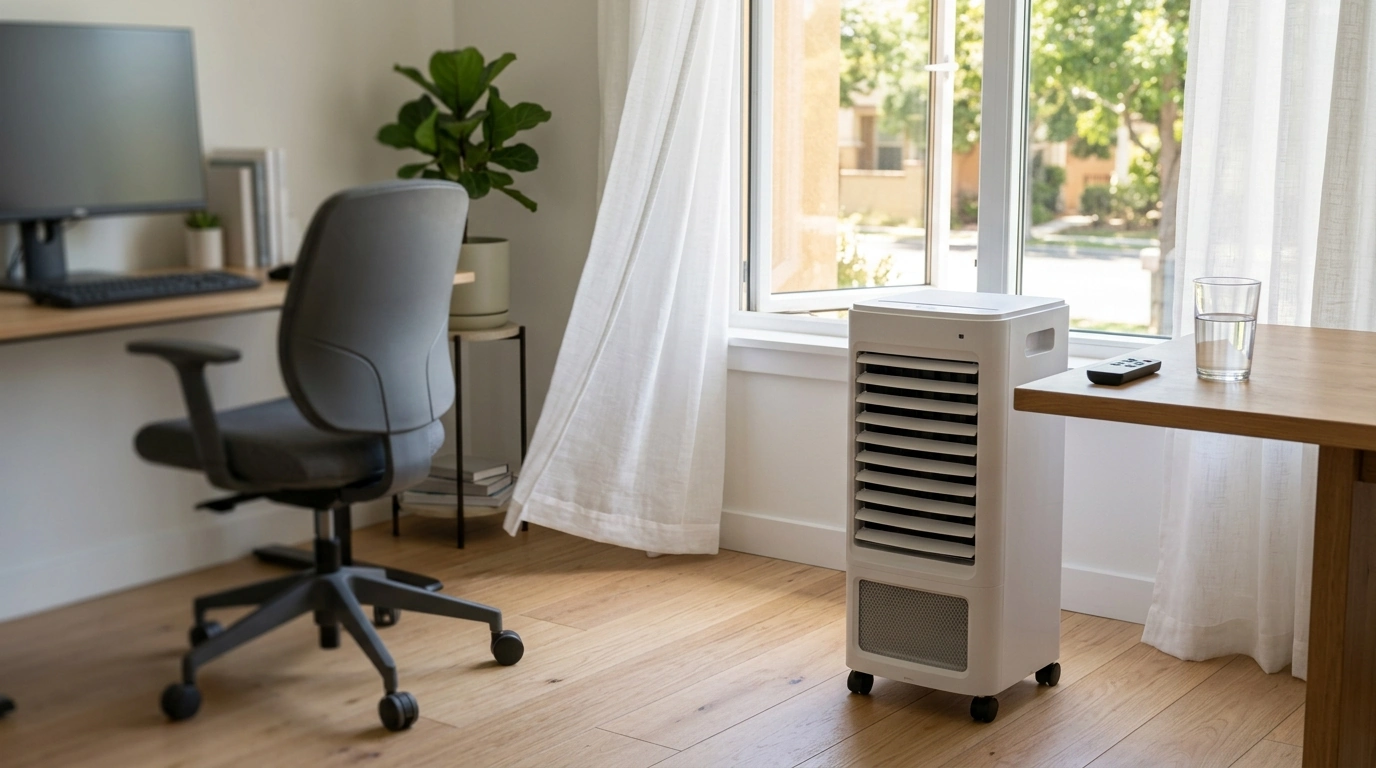
Practical Cooling for Dry, Hot Days: 8L Portable Evaporative Air Cooler Fan (65W) with Remote Control
Evaporative air coolers are designed for the kind of heat that feels harsh but doesn’t always justify installing or running full air conditioning. By combining steady airflow with water evaporation, they can make a room feel more comfortable while adding a touch of moisture—especially helpful in dry climates or spaces where typical fans leave the air feeling parched. This 8L portable unit pairs a low-power 65W motor with multiple modes, remote control convenience, and a built-in humidifier function for bedrooms, home offices, and living spaces where you want targeted relief rather than whole-home refrigeration.
What an evaporative air cooler does (and when it works best)
An evaporative air cooler pulls warm air through water-soaked cooling media. As water evaporates, it absorbs heat, and the air coming out feels cooler and more refreshing than a standard fan. It’s a different experience than air conditioning: rather than sealing a room and mechanically chilling it, an evaporative cooler delivers a cool breeze that works best when the space can “breathe.”
- Uses moving air across wet media to lower perceived temperature through evaporation
- Performs best in hot, dry conditions and in well-ventilated rooms
- Feels like a cool breeze (not sealed-room refrigeration)
- Can help reduce dryness versus standard fans by adding humidity
- Not ideal in very humid climates where evaporation is limited
Quick overview of the 8L 65W portable cooler
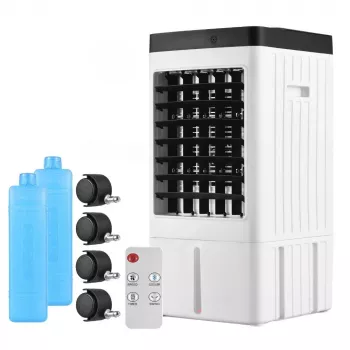
This style of cooler is built for day-to-day usability: a larger tank to reduce refill interruptions, a power draw that stays modest, and controls that make it easier to fine-tune comfort while working or winding down at night. For the product page and current availability, see 8L Portable Evaporative Air Cooler Fan with Remote Control and Humidifier – 65W.
| Feature | What it means for daily use |
|---|---|
| 8L water tank | Fewer refills during the day; better for overnight use when set to a steady mode |
| 65W rated power | Lower electricity use than many portable AC units; suitable for longer runtimes |
| Remote control | Convenient changes to speed/mode without getting up |
| Evaporative cooling + humidifying | Cooling breeze with added moisture for drier rooms |
| Portable design | Move it to the room that needs cooling most |
Cooling performance expectations
Evaporative cooling is heavily influenced by the room and how you use it. The best approach is “personal” or “zone” cooling: aim the airflow toward where people are sitting, sleeping, or working rather than trying to drop the temperature of an entire home.
- Place the unit near a doorway or window to encourage fresh-air exchange
- Cooling effect depends on humidity, room size, and air circulation
- Positioning matters: direct airflow toward occupants for best comfort
- Colder water (and ice packs if the model supports them) can boost the initial cooling sensation
- Over time, continuous operation increases humidity; occasional ventilation helps maintain comfort
For additional guidance on improving comfort with fans and ventilation habits, the U.S. Department of Energy’s Energy Saver Guide is a useful reference.
Controls, modes, and daily convenience
Small usability features tend to matter most during real life—when you’re trying to fall asleep, stay focused on a call, or cool down after coming in from outdoors. Remote control operation can be especially helpful in bedrooms and home offices where changing speed or mode shouldn’t require getting up repeatedly.
- Remote control helps fine-tune comfort during sleep or work sessions
- Multiple fan speeds balance airflow with noise preferences
- Mode changes can fit different needs (steady for work; gentler for nighttime)
- A larger tank supports more consistent performance with fewer interruptions
- Portability supports zone cooling to avoid cooling unused rooms
Humidifier function: comfort benefits and when to use it
In dry regions (or in air-conditioned spaces that feel overly dry), adding a bit of moisture can make the air feel easier on your throat, skin, and eyes. That said, it’s smart to avoid over-humidifying any room with limited airflow.
- Helpful in dry climates or air-conditioned rooms that feel “crispy”
- Can reduce the “dry fan” feeling during long use
- Monitor indoor humidity if your space is already humid or poorly ventilated
- For bedrooms, moderate settings plus ventilation can prevent a damp-feeling room
- If sensitive to humidity (allergies or mold concerns), keep air moving and avoid over-saturating the space
For moisture and mold prevention best practices, see the EPA’s guidance on moisture control and cleanup.
Water tank, refilling, and runtime tips
Maintenance and hygiene for fresh airflow
Energy use and noise: what to expect from 65W
| Option | Best for | Limitations |
|---|---|---|
| Evaporative air cooler | Hot, dry rooms; spot cooling with added moisture | Less effective in humid conditions; needs ventilation and water |
| Standard fan | Air movement and personal comfort | Does not reduce air temperature; can feel dry over time |
| Portable air conditioner | Stronger cooling in sealed rooms | Higher power use; exhaust setup; typically louder and heavier |
Who this cooler suits
More in-stock picks
FAQ
Does an evaporative air cooler work in humid weather?
It works less effectively as humidity rises because evaporation slows down. For best results, use it in hot, dry conditions and keep some ventilation (like a cracked window or open doorway) to help moisture and heat exchange.
How often should the water tank be cleaned?
A quick rinse every few days is a practical routine for frequent use, with a deeper clean about once a week depending on water quality and runtime. If you won’t use it for several days, empty and dry the tank to prevent odors.
Can it run all night?
Yes, it can run overnight if the tank is filled before bed. For sleep comfort, use a lower fan setting and allow some ventilation so the room doesn’t feel overly humid by morning.











Leave a comment