7L Stainless Vertical Manual Sausage Stuffer (5 Nozzles)
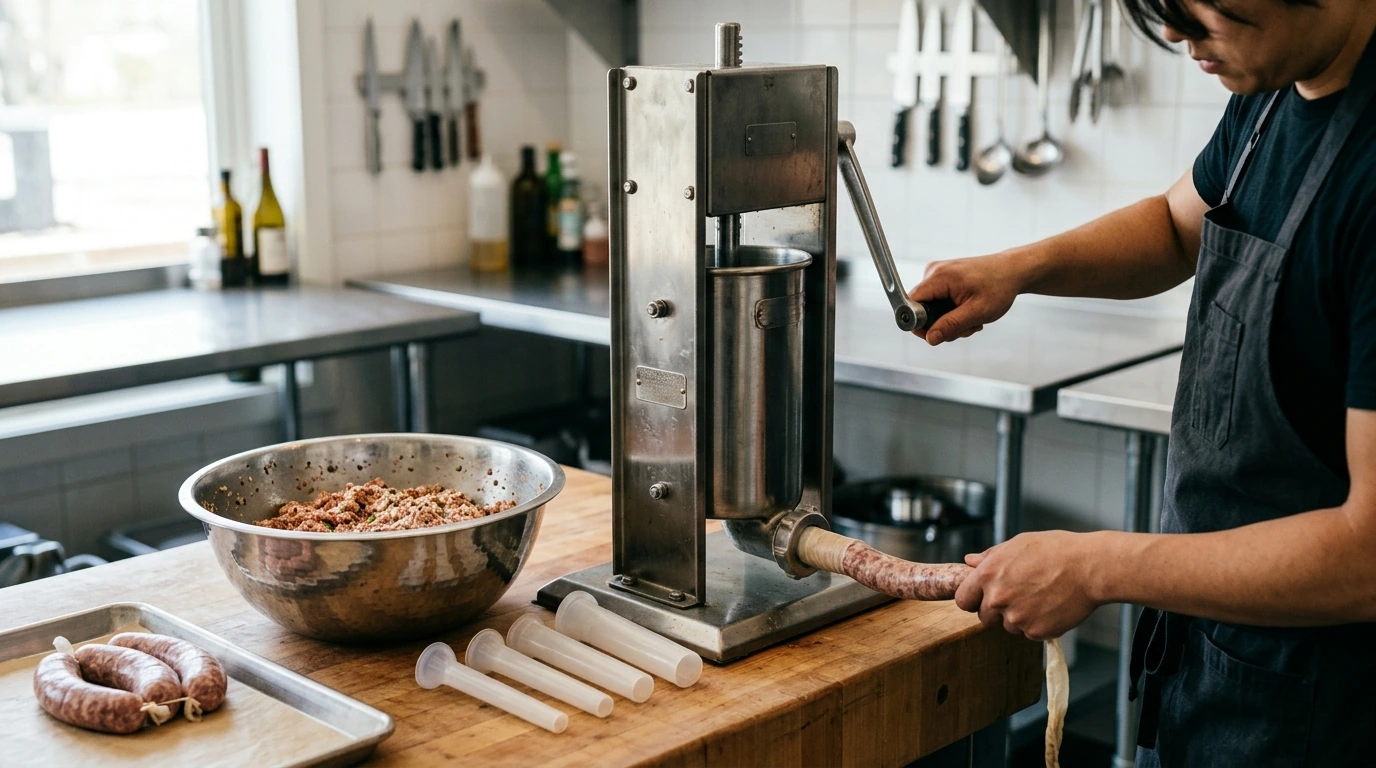
7L Manual Vertical Sausage Stuffer in Stainless Steel with 5 Nozzles
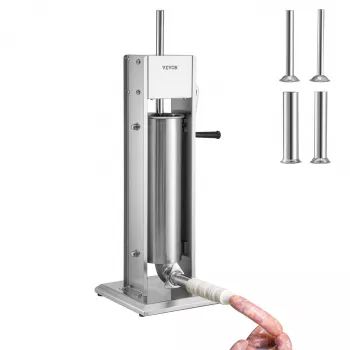
A manual vertical sausage stuffer is a practical upgrade for anyone making fresh links in batches—offering steady pressure, cleaner filling, and better control than improvised methods. This 7L stainless steel model is sized for both serious home cooks and light commercial prep, with five nozzle options to match different casings and styles.
What This Sausage Stuffer Is Designed to Do
This style of stuffer is built around one goal: pushing seasoned meat mixture into casings smoothly and consistently, without the stop-and-go mess that often comes with makeshift tools.
- Fill natural or collagen casings with consistent pressure to reduce blowouts and air pockets
- Handle larger batches with a 7L capacity to minimize refills during prep
- Use a vertical, countertop-friendly footprint that keeps the work area organized
- Support multiple sausage sizes with five included nozzles
If you’re ready to move beyond funnels and piping bags, the 7L Manual Sausage Stuffer Stainless Steel Vertical Maker with 5 Nozzles for Home & Commercial Use is designed for repeatable results from batch to batch.
Key Build Features for Daily Use
When sausage making becomes a regular routine, the small design choices matter: stability, cleanup, and how predictable the fill feels when the mixture is cold and dense.
- Stainless steel construction supports food-contact durability and easier cleanup than painted metals
- Vertical cylinder layout helps keep the mixture moving downward with less mess at the rim
- Manual crank operation provides fine control over speed—useful for delicate casings or mixed textures
- Wide base and stable stance help reduce wobble when the mixture is dense or very cold
Quick Specs and In-the-Box Items
| Feature | What to expect | Why it matters |
|---|---|---|
| Capacity | 7L | Fewer refills when making larger batches |
| Orientation | Vertical stuffer | More stable feed and a smaller footprint |
| Operation | Manual crank | Control over fill rate and pressure |
| Material | Stainless steel body | Durability and simpler sanitation routines |
| Nozzles | 5 stuffing tubes | Match different casing sizes and sausage styles |
Choosing the Right Nozzle for the Sausage Style
Nozzle size has a big impact on how the stuffing process feels. A better match means less strain on the casing and less fighting with pressure changes as you crank.
- Smaller tubes work best for breakfast links, snack sticks, and narrow casings
- Medium tubes suit most fresh sausages (Italian-style, bratwurst-style, chorizo-style) in common casings
- Larger tubes are helpful for thicker sausages or when using larger diameter casings
- A properly matched tube reduces casing stress, lowers the risk of splitting, and helps maintain an even fill
As a practical rule: if you’re pushing hard to move the mixture and the casing feels like it’s inflating too fast, step down one nozzle size and slow the crank. The goal is a steady, firm fill—not a stretched casing.
Home vs. Light Commercial Use: What to Expect
A 7L chamber is a sweet spot for cooks who want real batch capacity without jumping to powered equipment. It’s large enough to support repeatable production while still being approachable for weekend work.
- For home kitchens: ideal for weekend batches, freezer prep, and experimenting with spice blends and grind sizes
- For pop-ups or small prep rooms: manual operation can keep output steady without relying on power availability
- A 7L chamber supports batch consistency—useful when repeating the same recipe for multiple runs
- When speed is critical, prepping mixture and casings ahead of time has a bigger impact than cranking faster
Planning your workflow is what makes a manual stuffer feel “fast”: chill the mixture, stage casings in water, and portion your meat mix so refilling is quick and clean.
Setup Tips for Smoother Stuffing
A few small habits can dramatically reduce air pockets, uneven links, and casing failures—especially when you’re working with cold, sticky sausage mixes.
- Chill the meat mixture and keep it covered; colder mixture flows more predictably and stays safer
- Soak and rinse natural casings thoroughly, then keep them in clean water until use
- Pack the cylinder firmly to limit trapped air; stop and tamp gently if a large gap forms
- Start with a slow crank to seat the mixture into the tube before sliding on the casing
- Pinch and guide the casing while cranking to keep a consistent density and avoid overstuffing
If you’re also building out your kitchen library for batching and budgeting meals, Great Meals, Small Budget can pair nicely with freezer planning once your sausage output increases.
Cleaning and Food-Safe Handling
Clean equipment is not only about appearance—it affects flavor, shelf life, and safety. Disassemble and wash right after stuffing so fats and proteins don’t dry onto internal surfaces.
For additional food safety guidance when handling fresh sausage, review the USDA’s recommendations at USDA FSIS — Sausage and Food Safety. For cleaning and sanitizing fundamentals in food prep environments, the FDA Food Code (2022) is a solid reference.
Common Troubleshooting
FAQ
Can a manual sausage stuffer handle dense mixtures?
Yes. Dense mixtures are workable with firm packing, a steady crank speed, and keeping the mixture cold; slow, consistent pressure helps prevent blowouts and reduces strain.
How is a vertical stuffer different from a horizontal one?
Vertical models usually take up less counter space and feed downward, while horizontal models can be easier to mount on some surfaces. For most users, stability, cylinder size, and easy cleaning matter more than orientation.
How many pounds of meat fit in a 7L stuffer?
It varies by recipe density, but a practical range is roughly 12–16 pounds of sausage mix. Very chunky mix-ins and air gaps can reduce usable volume, while finely ground mixtures tend to pack more efficiently.













Leave a comment