4-Mode High-Pressure Water Flosser With 360° Nozzle Guide
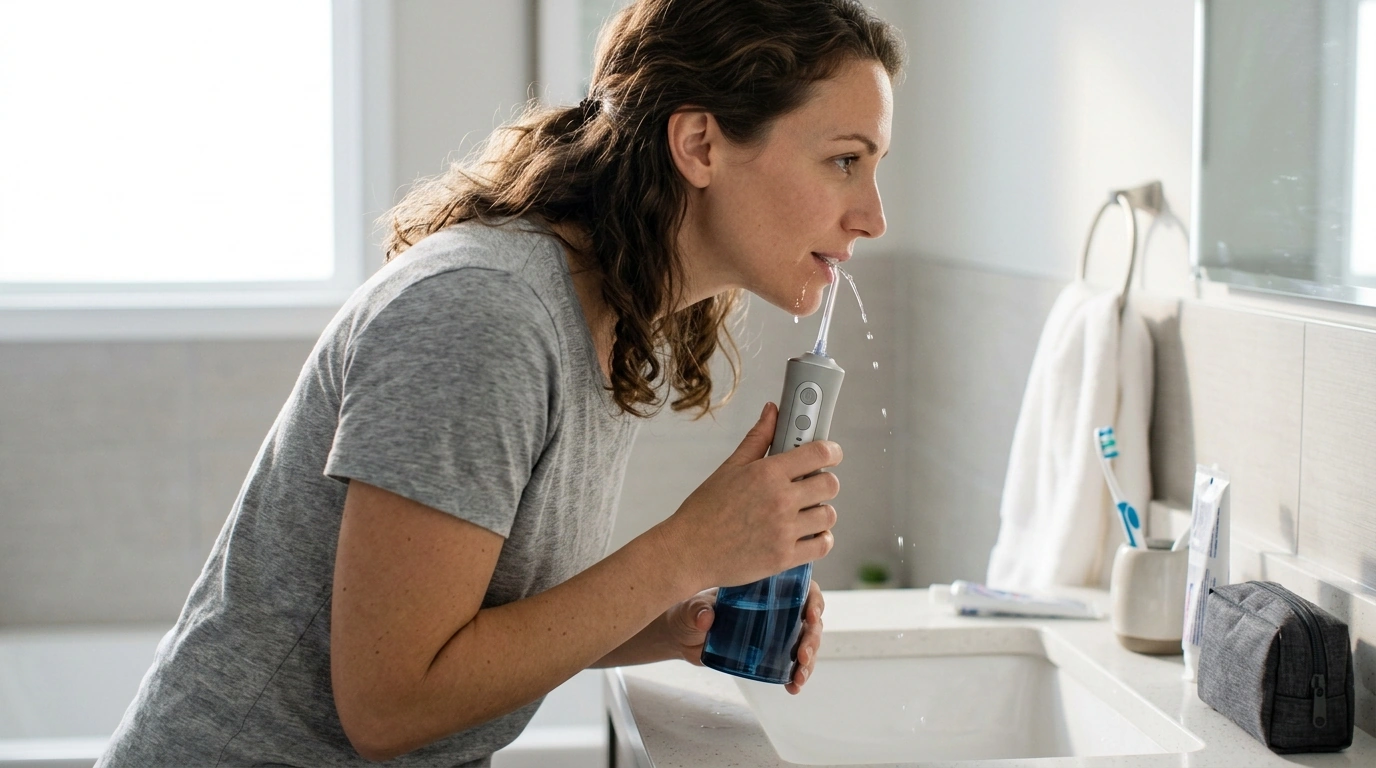
High Pressure Water Flosser with 4 Modes & 360° Nozzles: Daily Cleaning Made Easier
A high-pressure water flosser can reach along the gumline and between teeth where brushing may miss. With multiple modes and a 360° rotating nozzle, it’s designed to adapt to sensitive gums, orthodontic work, and everyday plaque removal—at home or on the go.
Like any oral-care tool, results come down to consistency and technique. The goal is simple: make between-teeth cleaning easier to stick with, especially on busy days or after meals when string floss feels inconvenient.
What a high-pressure water flosser does (and what it doesn’t)
A water flosser uses a targeted stream to help dislodge food debris and reduce plaque along the gumline and between teeth. It can be especially helpful around braces, implants, bridges, crowns, and tight contacts where traditional flossing may feel awkward or time-consuming.
It’s not a replacement for brushing. Think of it as a strong supporting player: use it after brushing or after meals to help clear what’s left behind. Better outcomes typically come from choosing an appropriate mode, aiming correctly, and using it regularly rather than blasting at maximum pressure once in a while.
For broader oral-care guidance, resources from the American Dental Association and the National Institute of Dental and Craniofacial Research offer helpful reminders on daily hygiene habits.
Key features that matter: pressure, modes, and 360° nozzles
Not all water flossers feel the same. Three features tend to make the biggest difference in day-to-day use:
- Pressure strength: Higher pressure can improve debris removal, particularly in hard-to-reach areas like back molars or around orthodontic hardware. The “best” pressure is the one you can use comfortably and consistently.
- Multiple modes: A range of modes lets you ease in gently and adjust as your gums adapt. This matters for new users and anyone with sensitivity.
- 360° rotating nozzle: Rotation helps aim the stream without twisting your wrist into awkward angles. That can improve coverage along the gumline and on inner tooth surfaces where visibility is limited.
Best practice: start on the gentlest setting that still feels effective, then increase only if comfortable and if your dentist hasn’t advised otherwise.
Understanding the 4 cleaning modes (and when to use each)
Four modes give you flexibility for different days and different mouths—especially if you alternate between “quick clean” and “deep clean” routines.
Mode guide: comfort, purpose, and best use cases
| Mode | Best for | Tip for results |
|---|---|---|
| Gentle/Soft | Sensitive gums, beginners, post-dental work (when approved by a dentist) | Angle the stream at ~90° into spaces between teeth; keep pressure low for the first week |
| Normal/Daily | Most daily cleaning routines | Trace the gumline slowly, pausing briefly between teeth |
| Strong/Power | Stuck debris, tight contacts, heavy buildup areas | Avoid lingering on one spot; reduce intensity if gums bleed persistently |
| Pulse/Massage | Gum stimulation and comfort-focused routines | Use after a normal clean pass for a short finishing cycle |
Nozzles and tips: getting the most from 360° rotation
A rotating nozzle isn’t just a convenience feature—it can improve your aim and reduce the “guesswork” that leads people to skip hard areas. Use the rotation to keep the tip aligned as you move around molars, behind braces, and along inner surfaces.
- Aim at the gumline, not into the gums: Point the stream where the tooth meets the gum, then glide tooth by tooth.
- Go gentle on sensitive spots: If an area feels tender, lower the pressure and keep moving rather than holding the jet in place.
- Keep tips hygienic: Replace tips as recommended by the manufacturer, and avoid sharing tips between users.
How to use it correctly (step-by-step routine)
A simple routine makes water flossing feel less messy and more effective. The steps below are easy to repeat, even when you’re in a hurry.
If you’re comparing home-care options for gum health, reviews like those summarized by Cochrane often note that consistency and correct technique matter as much as the tool itself.
Who benefits most from a multi-mode water flosser
Care, cleaning, and simple troubleshooting
A solid pick for daily use: High Pressure Water Flosser with 4 Modes & 360° Nozzles
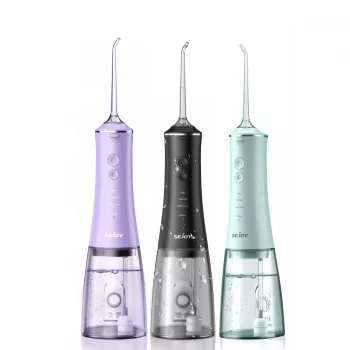
If daily flossing is the step that slips, a flexible water flosser can make the routine feel more doable. The High Pressure Water Flosser with 4 Modes & 360° Nozzles is built around four pressure patterns plus a 360° rotating nozzle to help you reach back teeth and trace the gumline with less awkward angling.
For a couple of other in-stock everyday items, browse the 4 in 1 Nail Rhinestone Gel (a small, easy add-on) or the gift-friendly Cute Apple House Kitten Plush – Soft Detachable Cat Plush Toy.
FAQ
Is a high-pressure water flosser safe for sensitive gums?
It’s generally safe when you start on a gentle mode and aim the stream along the gumline rather than directly into the gums. If discomfort continues, reduce intensity and check with a dentist—especially if sensitivity is severe or persistent.
Can a water flosser replace string floss?
Many people use a water flosser as an alternative or a supplement, particularly for braces and gumline cleaning. Some still prefer string floss for certain very tight contacts, so the best choice depends on what you’ll use consistently.
How often should the nozzle tips be replaced?
Follow the manufacturer’s schedule for hygiene and performance. Replace sooner if a tip looks worn, becomes clogged, or no longer maintains steady flow.












Leave a comment