3-Ton Triple Bag Air Jack: Fast Lift, Stable Footprint
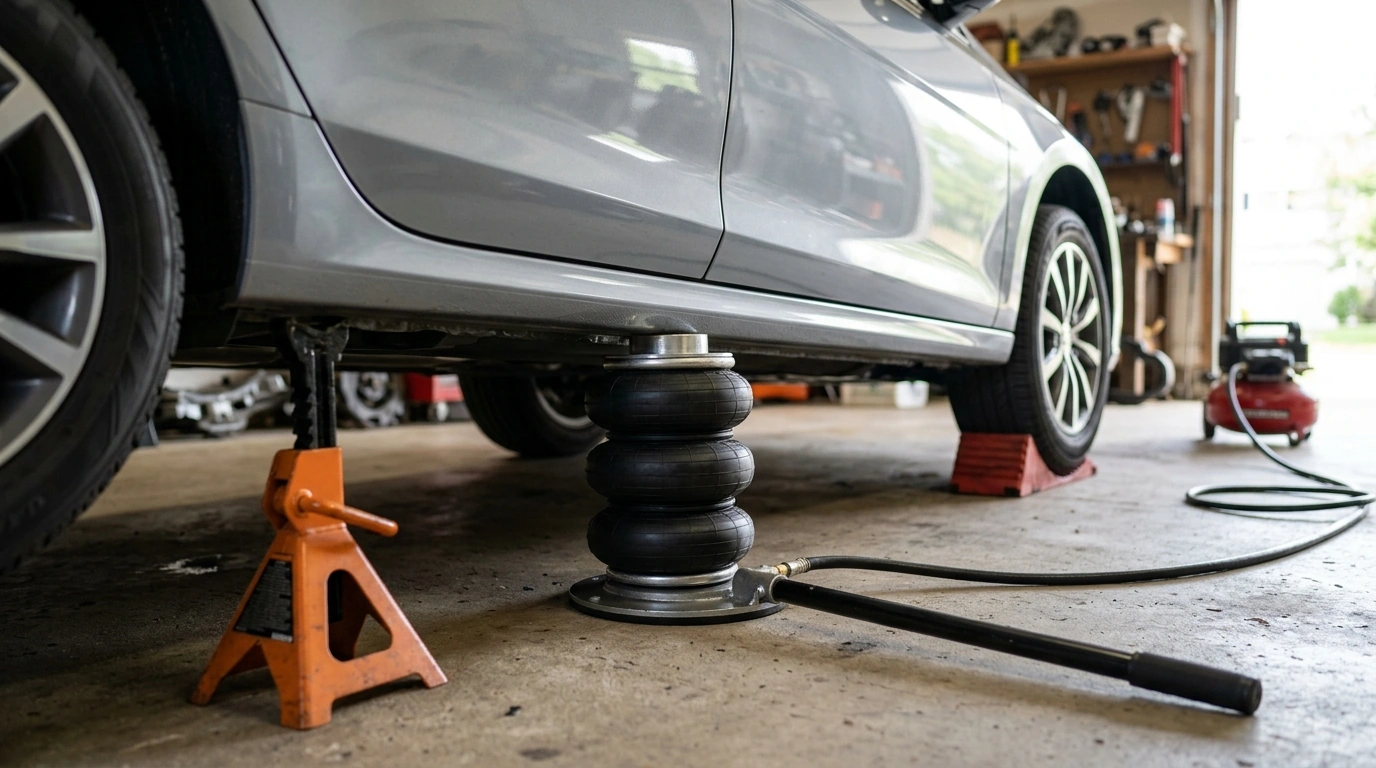
3-Ton Triple Bag Air Jack with Fast Lift & Adjustable Handle: Quick Lifting with a Wide, Stable Footprint
A triple-bag air jack is designed for quick lifting with stable support on a wide footprint—useful for roadside tire changes, garage work, and lifting vehicles where a conventional jack may struggle on uneven ground. Instead of manual pumping, the jack inflates using compressed air, helping you get a wheel off the ground faster and with less effort. This guide covers what to expect from a 3-ton triple bag air jack, how to use it safely, and what to check before lifting.
What a triple bag air jack is built for
Triple-bag air jacks use compressed air to inflate stacked air bags and raise a vehicle with minimal manual effort. The “triple-bag” design typically improves lift height and stability compared with single-bag styles, while keeping a broad base that can feel more planted on imperfect pavement.
- Uses compressed air to inflate stacked air bags and raise a vehicle with minimal manual pumping
- Triple-bag design helps improve lift height and stability compared with single-bag designs
- Common use cases: tire swaps, emergency roadside lifting, light underbody inspection, and assisting with jack stand placement
- Works best on reasonably level surfaces with a solid base; a support plate or mat can help on softer ground
For general roadside guidance, review tire-changing safety recommendations from NHTSA, and for workplace-style best practices, see overview resources from OSHA.
Key features that matter day-to-day
Specs only help if they make real-world lifting easier and safer. A 3-ton rating can be a great fit for many passenger vehicles and light trucks, but only when used within limits, on appropriate points, and with proper support after lifting.
- 3-ton rated capacity: suitable for many passenger vehicles and light trucks when used correctly and within limits
- Fast-lift inflation: aims to reduce time under load and speed up wheel changes
- Adjustable handle: improves positioning under the vehicle and can reduce bending and awkward angles
- Wide lifting base: helps resist sinking and improves stability on imperfect pavement
- Compact storage profile: convenient for trunk storage or a small garage shelf (measure storage space before buying)
Quick spec checklist to confirm before lifting
| Item to verify | Why it matters | What to look for |
|---|---|---|
| Capacity rating | Prevents overload and instability | 3-ton rating and clear labeling |
| Minimum lift height | Ensures it fits under the jacking point | Compare to vehicle ground clearance |
| Maximum lift height | Determines if the wheel can clear the ground | Enough lift for tire removal |
| Air connection/valve type | Compatibility with compressor line | Standard fittings or included adapters |
| Base footprint | Stability and sink resistance | Wide base; consider adding a mat on soft ground |
Product option for quick lifting
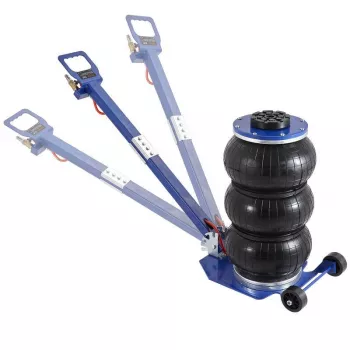
If you’re looking for a dedicated air-lift solution for tire changes and garage tasks, consider the 3-Ton Triple Bag Air Jack with Fast Lift & Adjustable Handle, designed to speed up lifting while maintaining a wide, stable footprint.
Safe setup and lifting steps
Air jacks can lift quickly, which makes setup discipline even more important. Take a few extra seconds to prevent rolling, shifting, or lifting from the wrong point.
- Park on a level surface, engage the parking brake, and place wheel chocks on the opposite end from the lift.
- Locate approved jacking points from the vehicle manual; avoid thin floor pan areas and plastic trim.
- Center the air jack under the jacking point; keep the handle positioned so hands stay away from pinch zones.
- Inflate gradually and watch for shifting; stop immediately if the jack begins to lean or creep.
- Once the vehicle is raised, support with properly rated jack stands before any work near or under the vehicle.
- Deflate slowly when lowering to prevent sudden drop; keep feet and tools clear.
Even for a simple tire swap, treat the lift as temporary. The safest workflow is “lift, place stands, then work,” especially if you’ll be reaching into the wheel well or underbody.
Air supply and compatibility checks
A triple-bag air jack is only as reliable as the air supply feeding it. Before trusting it in a driveway (or on the shoulder), confirm your compressor and fittings are ready.
- Confirm the compressor can deliver adequate pressure and airflow for efficient inflation; slower compressors may still work but can extend lift time.
- Inspect hoses and fittings for leaks before the first use; even small leaks can reduce lifting performance.
- Avoid using damaged quick-connects or kinked hoses, which can cause uneven inflation.
- Keep the air line routed away from sharp edges, hot exhaust components, and moving parts.
Where it shines—and where to use a different tool
Care, storage, and long-term reliability
Common mistakes to avoid
More in-stock picks to round out your setup
- Great Meals, Small Budget (a practical add-on for travel, camping, or emergency preparedness planning)
- Cute Apple House Kitten Plush – Soft Detachable Cat Plush Toy (a comfort item for long trips or keeping kids occupied)
FAQ
Can a 3-ton triple bag air jack lift an SUV or light truck?
Often yes, because you’re typically lifting one end or one corner—not the entire vehicle—but you must stay within the jack’s rated capacity and use the vehicle’s approved jacking points. Always stabilize the vehicle with properly rated jack stands after lifting and never exceed the rating.
Does an air jack replace jack stands?
No. An air jack is for lifting, not for supporting a vehicle while you work; always use appropriately rated jack stands for any work near or under the vehicle.
What surface is best for using a triple bag air jack?
Use level, firm ground whenever possible. On asphalt softened by heat, gravel, or dirt, add a stable base plate or mat, and stop immediately if the jack shifts or creeps during inflation.















Leave a comment