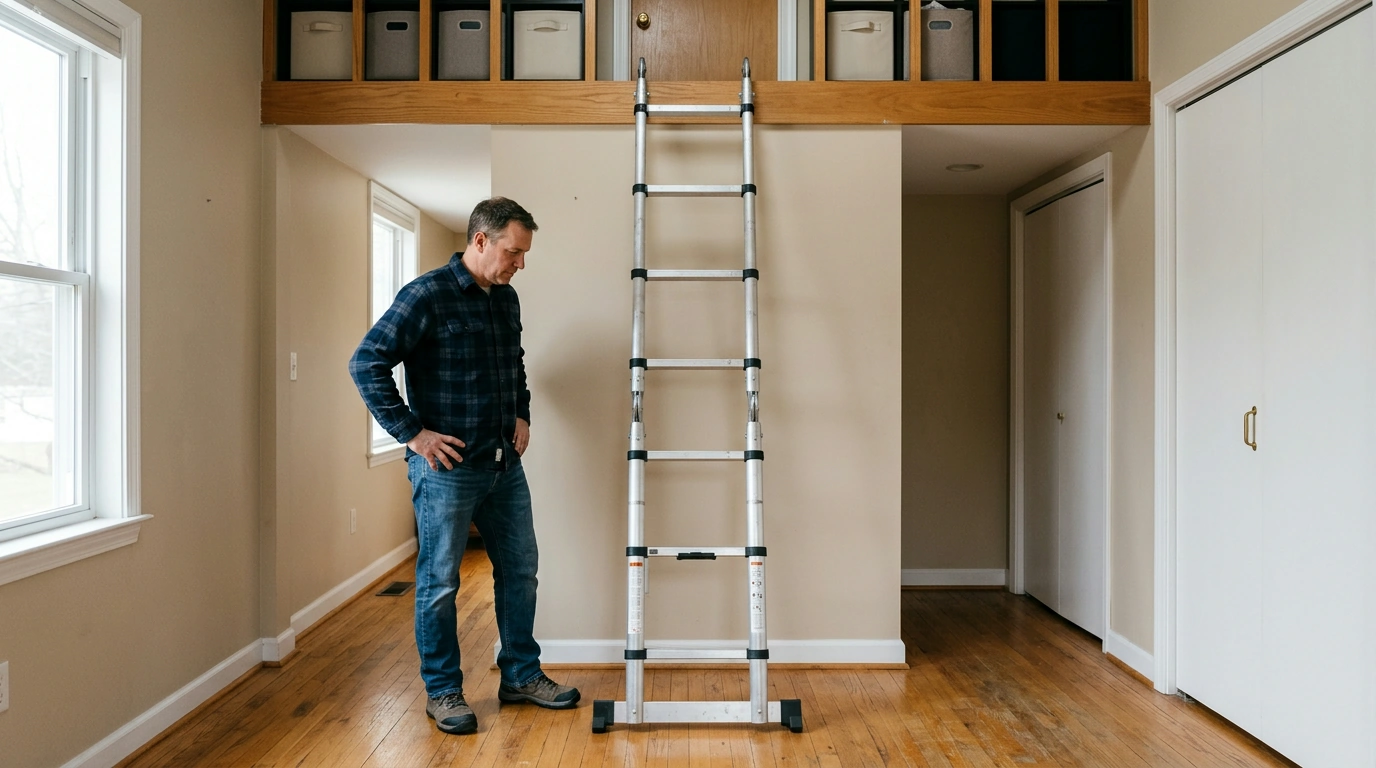
Occasional projects can call for a ladder even when you have little room to store one. Our 12.5ft Telescoping Ladder extends for use and collapses afterward, with one-button retraction to begin the closing process. The useful question is not simply whether it reaches 12.5 feet: it is whether you can set it up correctly, reach your task from a permitted standing position, and store it without damage when you are done.
A telescoping ladder may be practical for suitable household jobs, such as reaching an accessible storage area, when the task and setup fall within the ladder’s instructions. Its compact storage design can be appealing if a full-length extension ladder would be difficult to keep at home. Still, “collapsible” does not tell you whether it will fit your closet, vehicle, or shelf. Measure your intended storage space and compare it with the ladder’s listed collapsed dimensions before you buy.
Our featured option is the 12.5ft Telescoping Ladder with One-Button Retraction. Use its product page to review current specifications, availability, and purchase details. If you are planning other household routines alongside a project, we also carry Great Meals, Small Budget; it is a separate product, not ladder equipment or safety guidance.
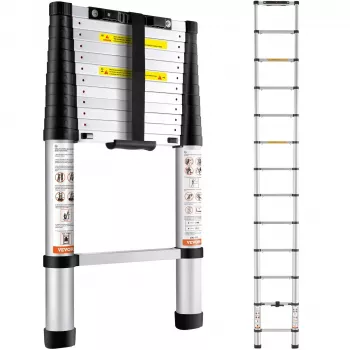
The button offers a convenient way to start collapsing the ladder after use. It does not make closing a hands-free task or replace the procedure in the product instructions. Always climb down before retracting it. Remove tools from the ladder, make sure other people are clear, and keep your hands away from moving sections and pinch points. Then retract it exactly as directed.
Give yourself time to close and put away the ladder without rushing. Whether you are extending it for a short task or retracting it afterward, pay attention to how its sections move and follow its labels and instructions. Do not assume that every telescoping ladder extends, locks, or closes in the same way.
The stated 12.5ft length describes the ladder, not the height at which you can safely stand or the height you can safely reach. Before deciding it is long enough, identify the work area and the support surface available for setup. Then account for the setup angle and standing positions permitted by the manufacturer. If you cannot reach the work while staying within those limits, choose different equipment rather than standing higher or stretching farther.
A telescoping ladder is not automatically appropriate for every elevated task. Work that calls for a different ladder type, sustained movement, or a more secure work platform needs equipment suited to that job. These quick checks can help you decide whether to proceed:
| Check | What to confirm | Why it matters |
|---|---|---|
| Working height | You can reach the task while standing only where the instructions permit. | Ladder length is not the same as safe reach. |
| Placement | The ladder can rest on firm, level ground against a suitable support. | A stable setup is essential before climbing. |
| Load limit | The marked duty rating covers you, your tools, and your materials. | Items you carry count toward the load. |
| Condition | Sections, feet, and locks pass the checks in the instructions. | Damaged or improperly engaged parts can make use unsafe. |
| Storage | The collapsed ladder fits the spot where you intend to keep it. | Measuring is more reliable than guessing. |
Read the ladder’s labels and instructions before its first use, and inspect it before each climb. Look for damage or anything that prevents its sections, feet, or locks from working as directed. If a part appears damaged or a section does not lock properly, do not climb. Check the marked load limit as well, including the weight of tools and materials you will carry.
Set the ladder on firm, level footing against a suitable support surface, at the angle specified for that ladder. Before stepping on it, confirm that every extended section is properly locked. While climbing and working, maintain three points of contact and keep your body positioned so you do not have to overreach. Move the ladder instead of leaning to finish a task outside your comfortable reach.
Access to an upper level requires particular care; do not assume every telescoping ladder is suitable for it. Follow the manufacturer’s instructions and applicable ladder-safety guidance for that use. For broader guidance, see the American Ladder Institute’s ladder safety resources. The OSHA stairways and ladders standard also provides requirements for covered workplace use.
Once the task is finished, climb down and clear the area before retracting the ladder according to its instructions. Keep tools and bystanders out of the way, and keep your hands clear of moving sections. Clean and dry the ladder as the manufacturer directs, then store it where it will not be struck, crushed, or otherwise damaged. A designated storage spot makes it easier to inspect the ladder and put it away carefully each time.
If the task, setup location, and storage space all work for you, visit our 12.5ft Telescoping Ladder product page for current availability and purchase details.
It depends on the task, setup, and permitted standing position. The stated ladder length is not your safe working reach, so use the product instructions to decide whether you can reach the work safely.
No. Climb down first, clear the area, keep your hands away from moving sections, and retract the ladder only as its instructions direct.
Inspect its condition, confirm that extended sections are locked, check the marked load limit, and set it on firm, level ground against a suitable support.




Leave a comment