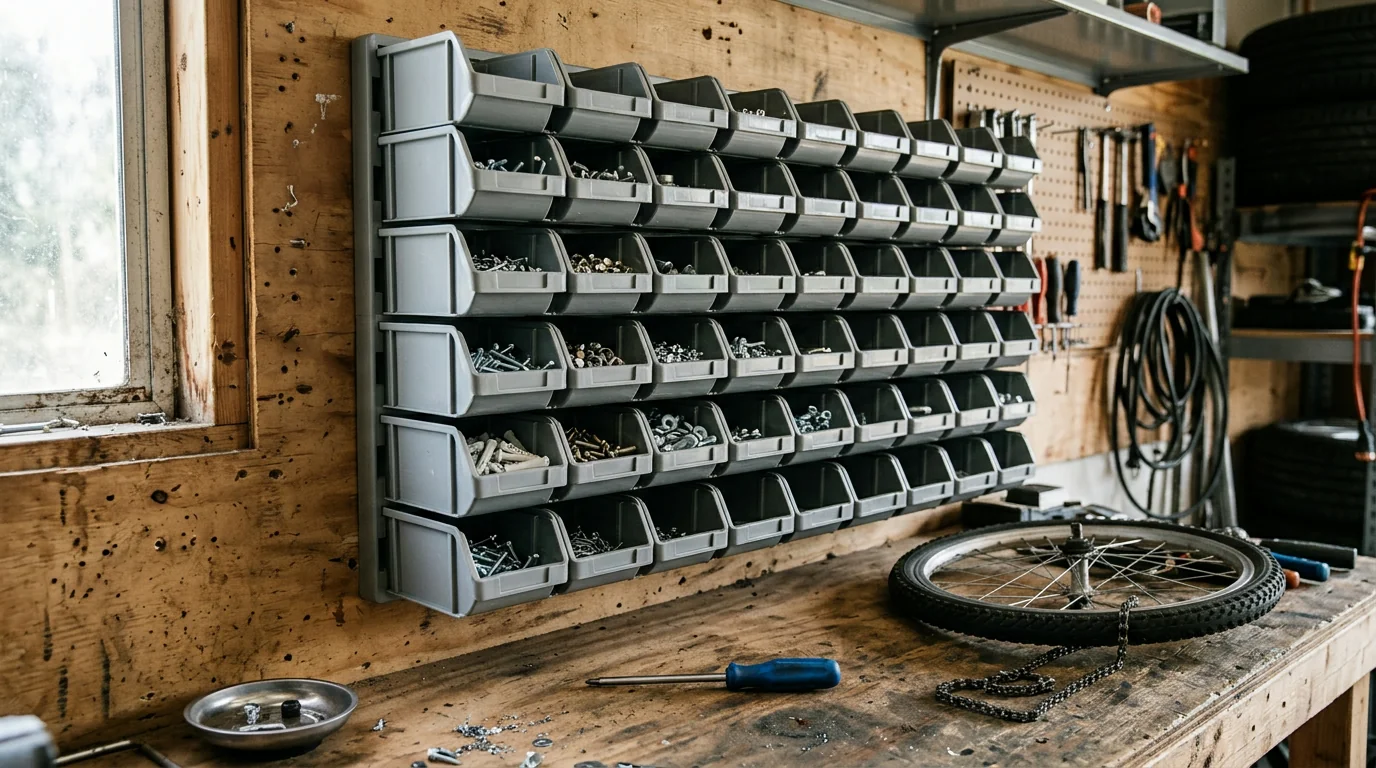
Give frequently used small parts a dedicated place with a wall mounted storage bins organizer. Instead of leaving fasteners scattered across your workbench or tucked into mixed containers, you can sort them into separate spaces near the projects where you use them.
Whether you are repairing a bicycle, hanging a shelf, or working on a craft project, a simple sorting system can help you find supplies and keep your work surface clear.
A wall-mounted organizer puts vertical space to work without taking up valuable room on your bench. Choose a location close to your usual work area, and you can keep everyday supplies within reach while leaving the tabletop available for tools and projects.
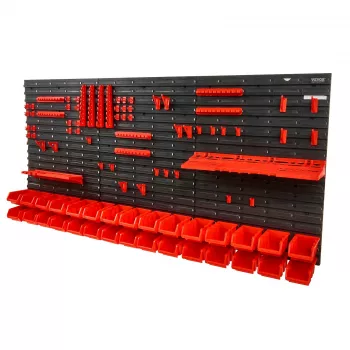
Our Wall Mounted Storage Bins Organizer with 30/48 Bins gives you two bin-count options to consider. Before ordering, check the available configuration on the product listing and decide how many separate spaces your supplies need.
Use the bins to sort screws, nuts, washers, anchors, and other small workshop supplies. Keeping these items apart can make it easier to find the right piece and see when a frequently used supply is running low.
Start by counting the categories you want to separate, rather than estimating how many individual pieces you own. If you work with a modest range of fasteners, the 30-bin option may provide enough places to group similar supplies. If you prefer to separate more types, sizes, or project materials, consider the 48-bin option.
Neither bin count tells you how much any individual bin can hold, so review the current configuration details and pricing on the product listing before you choose. Plan around the supplies you actually use, with room to adjust your system as projects change.
| Storage need | Suggested approach |
|---|---|
| A smaller range of parts | Consider the 30-bin option and group similar supplies together. |
| More categories to sort | Consider the 48-bin option for more separate storage spaces. |
| Frequently used fasteners | Place them where they are easy to identify and reach. |
| Occasional project supplies | Assign separate bins to keep them from mixing with everyday items. |
For example, you might keep common wood screws and wall anchors in easy-to-reach positions, with specialty hardware in other bins. If several people share the workspace, agree on a layout everyone can follow.
Before filling the organizer, spread out your small parts and sort them by type, size, or project. Separate items that look similar but serve different purposes, such as machine screws and wood screws. You can also set aside damaged or mismatched pieces so they do not get mixed back into your usable supplies.
Add clear labels where appropriate. A short description such as “small washers” or “picture hooks” can be enough to help you return items to the right place. For fasteners that differ only slightly in size, a more specific label can save time when you start your next repair.
Keep picture-hanging hardware separate from automotive fasteners, and give small craft supplies their own spaces if you use the same workspace for several hobbies. Leave a few bins unassigned when possible, so you can reorganize without undoing the whole system.
If your projects also include nail art, our 4 in 1 Nail Rhinestone Gel is another option to explore. Keep product containers and chemicals stored according to their own label instructions rather than assuming they belong in an open parts bin.
Choose a suitable wall location near your work area, where the organizer will not obstruct doors, walkways, or equipment. Check that you can comfortably identify and reach the bins you plan to use most often.
Follow the product’s mounting instructions and use mounting hardware appropriate for the wall surface. Before loading the bins, verify that the organizer is secure. Load it carefully, avoid overloading individual bins, and keep heavy items and hazardous materials stored according to their own safety instructions.
Good organization also supports a safer work area by helping you keep loose parts off surfaces where you handle tools. For broader workshop precautions, consult OSHA’s guidance on hand and power tools.
At the end of each project, return unused parts to their assigned bins instead of leaving them on the bench. A quick reset makes the next job easier and helps prevent similar fasteners from becoming mixed together.
Periodically review your supplies, consolidate duplicates when useful, and update labels as your projects change. Our team invites you to view the organizer and select the available option that suits your workspace and the number of categories you want to sort.
You can sort small workshop supplies such as screws, nuts, washers, and anchors. Keep hazardous materials and heavy items stored according to their own safety instructions.
Choose based on how many categories you want to keep separate. Consider 30 bins for a smaller range of parts or 48 bins for more categories, and check the listing for available configurations.
Choose a suitable wall near your work area that does not obstruct doors or walkways. Follow the mounting instructions and use hardware appropriate for the wall surface.




Leave a comment