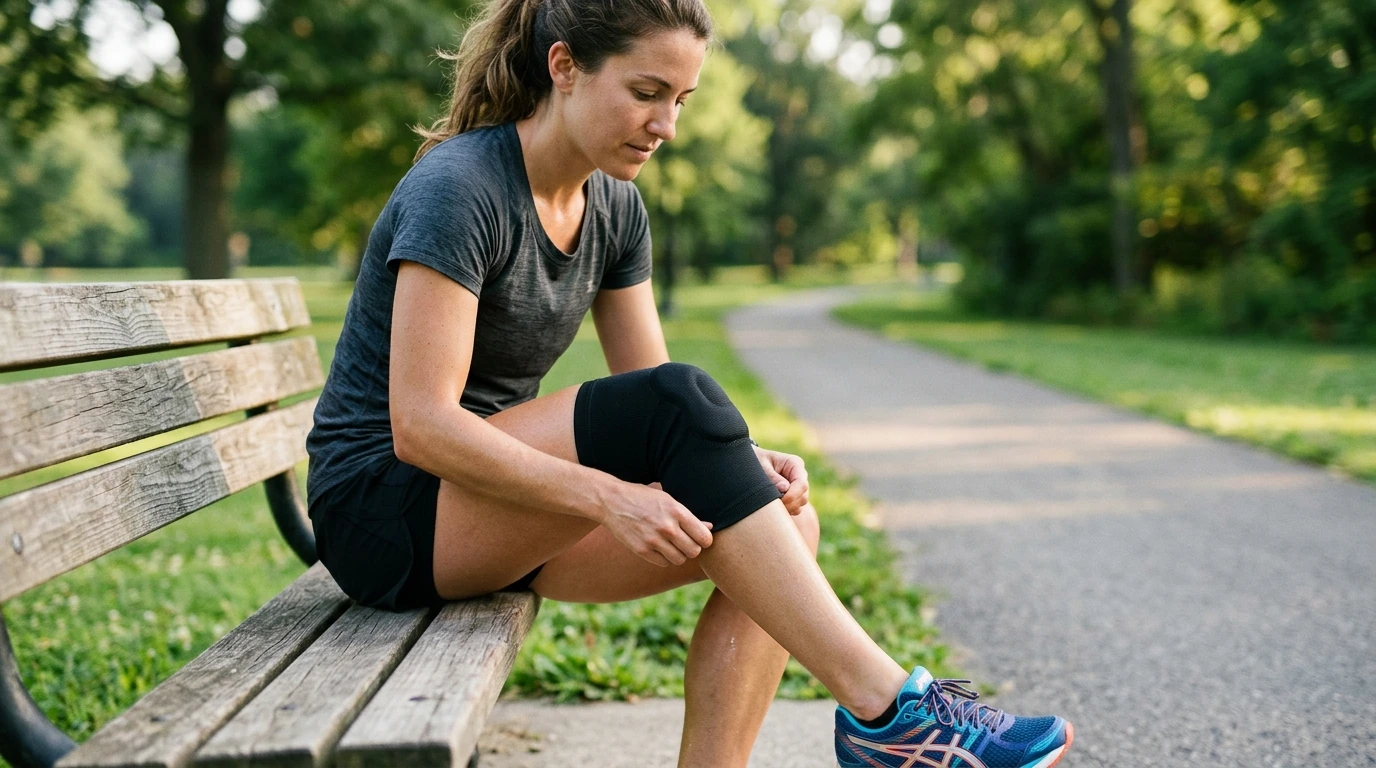
Knee discomfort has a way of showing up right when training consistency matters most—during runs, squats, stair climbs, and the day-after soreness that makes simple movement feel heavier than it should. Compression knee sleeves are a straightforward, low-fuss layer of support designed to help joints feel steadier and warmer through motion. This style adds a patella sponge pad to cushion and guide the kneecap area, making it a practical option for running, sports, and post-workout recovery routines.
A compression sleeve is designed to provide an even, snug wrap around the joint so your knee feels more “contained” when you’re moving. For many active routines, that can translate into better comfort cues and a more confident stride or squat pattern—especially once fatigue shows up.
If you’re dealing with ongoing or worsening symptoms, it can help to review trusted guidance like the AAOS overview of patellofemoral pain syndrome or the Mayo Clinic’s knee pain summary to understand common patterns and red flags.
The kneecap area can take repeated stress during running, jumping, and high-rep leg training. A patella sponge pad adds targeted cushioning at the front of the knee, where irritation often concentrates during repetitive bending and straightening.
Compression sleeves are most helpful when you want a bit of added structure and warmth, not when you’re trying to “mask” a serious issue. In our experience helping customers choose everyday support gear, a patella-pad sleeve is often a good fit for:
Getting the fit right is the difference between “supportive” and “annoying.” You’re aiming for snug, even compression—never numbness, tingling, or a pulse-y pressure feeling. Also, the patella pad should sit centered over the kneecap area so it cushions without digging in.
| Step | What to look for | Adjust if needed |
|---|---|---|
| Put it on before activity | Even compression with no sharp edges | Smooth wrinkles; reseat higher on the leg |
| Center the patella pad | Pad sits over the kneecap area | Rotate/slide sleeve until centered |
| Do 5–10 bodyweight knee bends | Stable feel, no pinching behind the knee | Pull up slightly; redistribute fabric |
| Wear-test for 20 minutes | Comfort stays consistent; no tingling | Size up or limit wear duration |
| Post-workout check | No deep marks that linger; knee feels supported | Reduce tightness or take breaks from wearing |
For broader safety guidance on knee injuries and symptoms that should be checked out, see NIH MedlinePlus: Knee injuries and disorders.
Many people find that compression and warmth improve comfort and provide a steadier feel during runs, especially when fatigue changes mechanics. Fit matters: it should feel supportive without numbness or tingling, and training load still needs to be managed. If pain is sharp, swelling is significant, or the knee gives way, get medical evaluation.
The patella pad should be centered over the kneecap area so it cushions the front of the knee without digging into the tendon below. If it rides up or down during movement, reseat the sleeve higher, smooth wrinkles, and adjust until the pad stays centered through a few knee bends.
For recovery, wear it in short, comfortable blocks (like a cooldown, light walking, or errands) and reassess how it feels after 20–30 minutes. Remove it if you notice tingling, cold toes, or increasing discomfort, and avoid relying on it all day.


Leave a comment