AI Content Monitoring for Kids: A Safety Guide
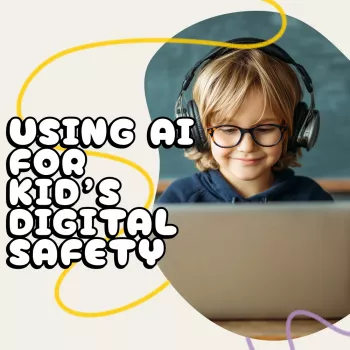
Harnessing AI to Protect Young Minds: A Practical Digital Safety Guide for Parents, Teachers, and Schools
Children learn, play, and socialize online—often faster than adults can track new apps, platforms, and risks. AI can help by spotting harmful patterns, flagging unsafe content, and supporting early intervention, but it works best when paired with clear policies, privacy safeguards, and consistent human judgment. This guide breaks down what AI content monitoring can (and cannot) do, how to set it up responsibly across home and school settings, and how to build a safety culture that protects students without eroding trust.
What “digital safety” includes for young people today
Digital safety is broader than blocking a few websites. It spans what kids see, who contacts them, how they behave (and are treated) online, and how technology affects their wellbeing.
- Content risks: self-harm material, sexual content, violence, hate speech, extremist recruitment, and age-inappropriate media.
- Contact risks: grooming, coercion, impersonation, scams, and strangers moving conversations to private channels.
- Conduct risks: cyberbullying, harassment, sharing intimate images, doxxing, and harmful challenges.
- Privacy risks: oversharing, location exposure, data collection by apps, and leaked accounts.
- Wellbeing risks: sleep disruption, compulsive use, social comparison, and escalating conflict in group chats.
Authoritative child-safety organizations recommend combining prevention, reporting pathways, and age-appropriate education. For practical references, see UNICEF’s child online protection guidance and the American Academy of Pediatrics Family Media resources.
How AI supports online safety without replacing adult oversight
AI monitoring is best viewed as an early-warning and triage system—helpful for scale and speed, but not a final decision-maker.
- Pattern detection: identifies recurring signals (keywords, image cues, rapid escalation in tone) that humans may miss across many channels.
- Prioritization: routes the most urgent concerns first (for example, self-harm indicators) to designated adults for review.
- Context clues: uses surrounding conversation signals to reduce false alarms compared with simple keyword lists.
- Trend monitoring: highlights emerging slang, new risky apps, or sudden spikes in bullying incidents.
- Human-in-the-loop decision-making: adults confirm, document, and respond; AI provides signals, not final judgments.
The most reliable systems are paired with trained reviewers and clear response standards—so a flagged phrase becomes a careful conversation, not an automatic punishment.
Common AI monitoring features and what to look for
Not all tools are built the same. When evaluating AI content monitoring, focus on capabilities that improve accuracy while reducing unnecessary access to private information.
- Multi-modal coverage: text + images + video frames + links + metadata (time, frequency, account changes).
- Age-appropriate controls: different thresholds for elementary, middle, and high school contexts.
- Configurable alert categories: self-harm, bullying, sexual exploitation, violence, drugs, hate speech, and predation indicators.
- Explainability: clear reason codes (what triggered the alert) to support fair review and documentation.
- Role-based access: limits who can view alerts, with audit logs to deter misuse.
- Integration options: school devices, learning platforms, and reporting workflows (counselor, safeguarding lead).
| Feature | Why it matters | Safeguard to require |
|---|---|---|
| Self-harm risk signals | Flags urgent wellbeing concerns early | Crisis response protocol and trained reviewers |
| Cyberbullying detection | Finds repeated harassment across channels | Restorative response + documentation standards |
| Grooming indicators | Detects manipulation patterns and secrecy cues | Escalation path to safeguarding lead and reporting guidance |
| Image safety checks | Helps detect explicit imagery or exploitation risk | Strict access controls, minimal retention, and legal compliance review |
| Admin dashboards | Centralizes trends and actions | Audit logs, least-privilege permissions, and periodic access reviews |
Privacy, consent, and boundaries that keep monitoring ethical
Safety tools can backfire if they feel like surveillance. Ethical monitoring starts with a narrow purpose and strong boundaries.
- Set a purpose: define the specific harms being reduced and the circumstances for reviewing flagged content.
- Use data minimization: collect only what is needed for safety; limit retention periods and automate deletion where possible.
- Transparency for families and students: plain-language notices about what is monitored, what is not monitored, and who sees alerts.
- Consent and legal alignment: coordinate with district policies and local regulations, especially for minors’ data and school-issued devices.
- Avoid “always-on” overreach: separate academic oversight from safety triggers; focus on risk-based alerts rather than broad surveillance.
- Bias and fairness checks: evaluate false positives that may disproportionately affect certain groups; refine thresholds and reviewer training.
For exploitation concerns or urgent reporting guidance, families and schools can reference the NCMEC CyberTipline resources.
Implementation playbook for parents: a calm, consistent setup
If you want a structured, printable reference for home routines and school coordination, consider Harnessing AI to Protect Young Minds eBook (download).
Implementation playbook for teachers and schools: policy to practice
Responding to alerts: what to do in the first 10 minutes
When emotions run high, having a comfort routine can help younger students regulate before they talk. Some families keep a calming item available during difficult conversations, such as the Cute Apple House Kitten Plush – Soft Detachable Cat Plush Toy.
Using the eBook as a shared resource across home and school
FAQ
Does AI monitoring read every message a child sends?
Most tools are designed for risk-based detection rather than constant human reading of every message. AI scans for patterns and categories that suggest harm, then alerts designated adults for limited review under clear rules and access controls.
How accurate are AI content monitoring tools for self-harm and bullying?
Accuracy varies, and false positives and false negatives are possible. The safest approach is to treat AI as an early-warning signal, tune thresholds over time, and require human review before any decision or disciplinary action.
What should a school policy include before turning on AI monitoring?
A strong policy defines purpose and scope, assigns roles and escalation steps, limits data retention, and sets strict access controls with auditing. It should also include family notification practices and training requirements for reviewers.















Leave a comment