Wooden Market Stand Playset: Supermarket Role Play
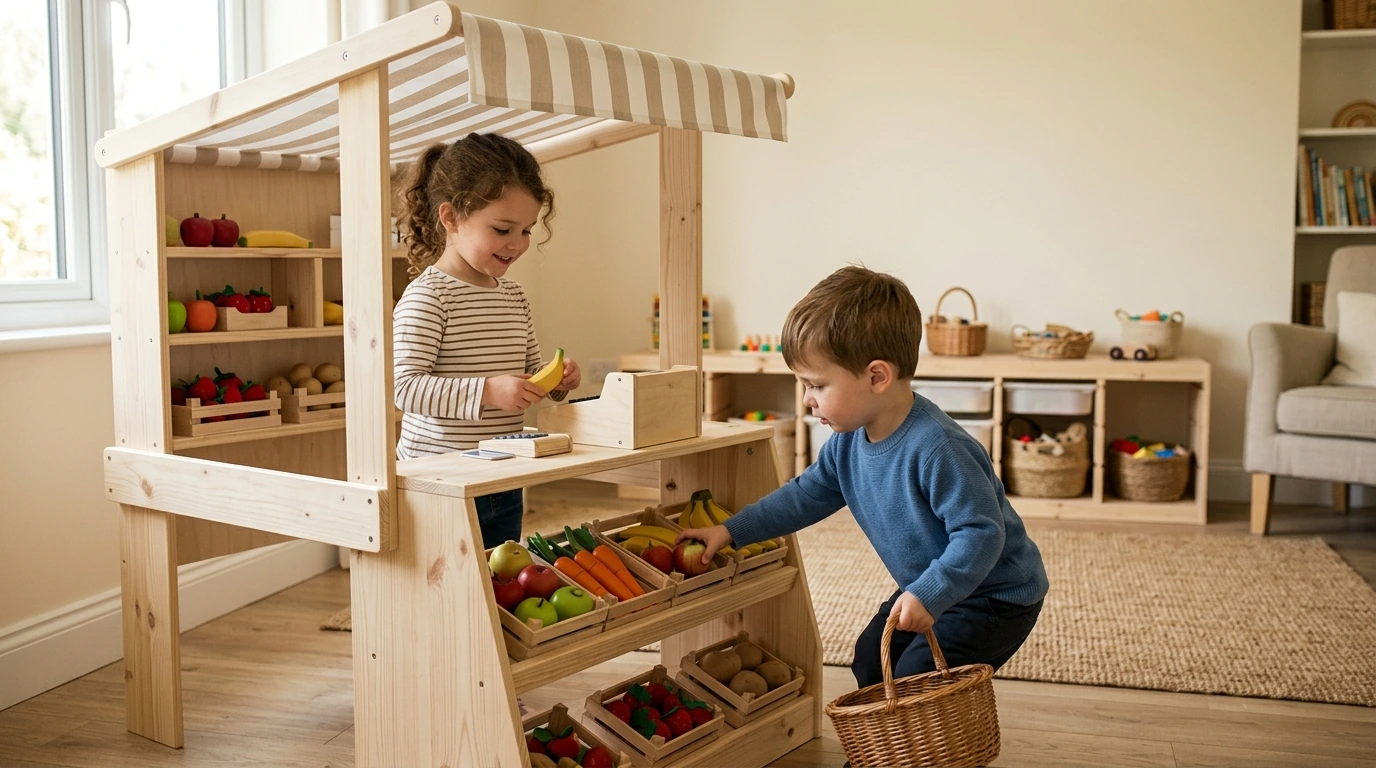
Wooden Toy Shop Playset for Kids: Supermarket Market Stand for Everyday Role Play
A wooden market stand turns pretend shopping into a hands-on activity that builds communication, early math, and social skills. This playset brings the feel of a small supermarket into a playroom with accessories that inspire cashier, shopper, and shopkeeper games for solo or group play. For families looking for a sturdy, screen-free “destination toy,” a market stand can become a daily go-to: open the shop, stock the shelves, ring up a customer, then reset it with a new theme tomorrow. For more guidance, see Little Tikes® 3-in-1 Garden to Table Market Pretend ….
Why a Play Shop Stand Becomes a Favorite
Pretend stores are endlessly replayable because kids can run the same “grocery trip” with fresh twists each time. A wooden stand also gives role play a real “place,” which helps children stay in character longer and organize their ideas. For further reading, see Grocery Store Kid Toy.
- Encourages imaginative scenarios like grocery runs, farmers market days, and “open/closed” shop routines
- Supports language growth through role play: greetings, questions, polite requests, and storytelling
- Builds early numeracy with counting items, sorting, comparing quantities, and simple “paying” games
- Strengthens social skills such as turn-taking, sharing roles, and negotiating rules
- Invites screen-free play that can be reset daily with new “inventory” or themes
Child development organizations consistently point to play as a powerful way to learn social-emotional skills and self-regulation. For more on why play matters, see the American Academy of Pediatrics’ guidance on the power of play.
What’s Included and How Kids Use It
A market stand-style layout naturally cues kids to “browse,” “choose,” and “pay,” which makes it easy to jump into play without much setup. Kids can take turns standing behind the counter, setting out goods, and helping “customers” find what they need.
- Market stand layout designed for pretend browsing, serving customers, and organizing goods
- Accessories for stocking shelves, creating shopping lists, and practicing pretend checkout
- Open-ended pieces that work for many games: grocery store, bakery counter, café, or produce stand
- Easy prompts for parents: “Can you find three apples?” “How much for two bananas?” “What’s on today’s special?”
Quick Guide: Play Ideas by Skill
| Skill | Simple Game | What to Say |
|---|---|---|
| Counting & quantities | Stock and count items | “Let’s put 5 items on the shelf.” |
| Sorting & categories | Group by type or color | “Can you sort fruits and veggies?” |
| Language & manners | Customer and cashier role play | “Hello! How can I help you today?” |
| Problem-solving | Restock and organize | “We’re out of milk—what should we do?” |
| Social skills | Take turns running the shop | “Your turn to be the cashier.” |
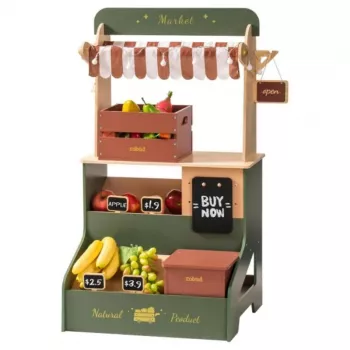
To bring the playroom supermarket to life, the Wooden Toy Shop Playset for Kids – Supermarket Market Stand with Accessories for Role Play creates a dedicated “storefront” that kids can return to day after day.
Who It’s Best For
This kind of playset shines when kids love copying the routines they see in real life. It also works well for mixed ages because younger children can focus on simple pretend actions (handing items over, filling a bag), while older children can add rules, prices, and more detailed stories.
- Toddlers and preschoolers who enjoy pretend kitchens, dolls, or vehicle play and want a new “world” to explore
- Siblings and playdates: multiple roles keep several children engaged at once
- Gift occasions where a bigger, durable toy is preferred over single-use gifts
- Kids who like to mimic real routines—shopping, paying, packing, and serving
If you’re tracking skills that typically emerge by age—like taking turns, using short sentences, and following multi-step directions—the CDC’s developmental milestones are a helpful reference point for setting realistic expectations during play.
Setup, Space, and Everyday Use
A little planning makes store play feel calmer and more inviting. The goal is to create a defined “shop zone” so kids can start quickly and clean up without frustration.
- Place the stand near a wall or in a corner to create a defined “store zone” and reduce clutter spread
- Rotate accessories weekly to keep play fresh (e.g., “produce week,” “bakery week,” “sale week”)
- Add household safe props: paper bags, reusable shopping tote, empty clean boxes for “inventory”
- Create a simple routine: open sign, stocking time, shopping time, checkout, and closing cleanup
For quieter solo play, adding a small “shop mascot” can help kids narrate stories and practice friendly customer service. The Cute Apple House Kitten Plush – Soft Detachable Cat Plush Toy can become a pretend shopper, café guest, or the “manager” who checks today’s specials.
Care, Safety, and Durability Notes
Play-based learning works best when kids feel safe, unhurried, and in control of the story. The NAEYC’s resources on play and learning offer useful perspective on keeping play open-ended and child-led.
A Playset That Grows with New Themes
FAQ
What age is a wooden market stand playset suitable for?
Most wooden market stand playsets are a great fit for toddlers through early elementary ages, since the play can be as simple or as detailed as your child wants. Adult supervision is important if the set includes smaller accessories, and it’s best to confirm any specific age guidance on the product page.
How can this playset help with learning and development?
Role play supports language (greetings, questions, and storytelling), early math (counting items, comparing quantities), and social skills (taking turns and sharing roles). Simple games like “buy three apples” or “your turn to be the cashier” build confidence while keeping the activity fun and self-directed.
How do you keep all the accessories organized?
Use a small labeled bin or basket near the stand and make “closing time cleanup” part of the routine. Keeping small pieces together after play and rotating a portion of accessories each week can also reduce clutter and make it easier for kids to find what they need.













Leave a comment