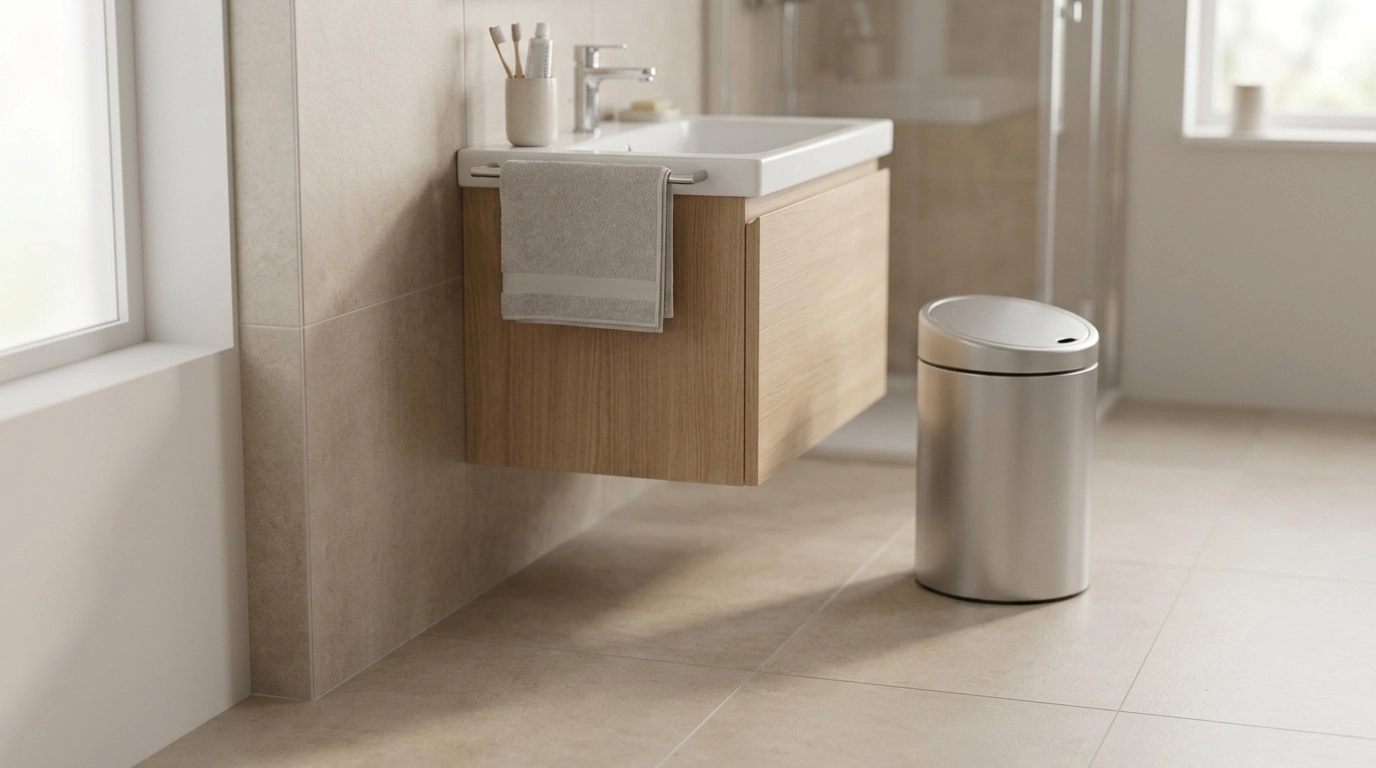
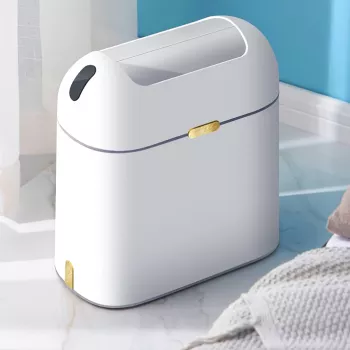
A compact touchless trash can can make everyday cleanup feel simpler—especially in small bathrooms and busy kitchens where hands are often wet, messy, or full. This 9L smart sensor bin is designed to open without contact, fit neatly beside a vanity or under a counter edge, and support more mindful waste habits with a tidy, enclosed design.
A 9L (about 2.4-gallon) capacity sits in a sweet spot for “daily-use” spaces: big enough to be practical, small enough to tuck into corners where a larger can feels bulky. In bathrooms, it keeps disposal simple during routines like brushing, skincare, and quick wipe-downs. In kitchens, it’s handy for light waste—think packaging, coffee pods, tea bags, and small prep scraps.
Reducing unnecessary hand-to-surface contact can be a helpful habit in shared homes. For a broader refresher on clean-hands practices, the CDC’s guidance on hand hygiene is a solid reference: https://www.cdc.gov/cleanhands/index.html.
Touchless bins are built around one simple win: you can toss waste without reaching for a lid. That matters when you’re handling raw ingredients, cleaning products, or personal-care waste. The “open-and-close” cycle also tends to be smoother than a flip-top lid, which can feel less jarring in a quiet bathroom or an open-plan kitchen.
To get the most out of a sensor lid, treat placement like part of the setup. Give the lid overhead clearance and keep the sensor facing an area where people approach intentionally (not where someone constantly passes by).
A smaller, closed-lid trash can can subtly reinforce cleaner routines—especially when it’s easy to use. With a 9L size, the goal is less “store it for a week” and more “empty it before it becomes a problem.” That rhythm often helps reduce odor buildup, sticky residue, and the temptation to double-bag.
If you’re building a more intentional disposal routine at home, the EPA’s waste-reduction basics are a useful overview: https://www.epa.gov/recycle.
This is where a 9L touchless can often feels most “just right.” It’s ideal for tissues, cotton pads, floss picks, wipes (follow local guidance for disposal), and small packaging. A closed lid also helps the room feel tidier—especially in powder rooms where the bin is always visible.
In the kitchen, it shines as a secondary bin: near the coffee station, beside a prep area for light scraps, or near a pantry for packaging. If you frequently toss wet-heavy waste (like juicy produce scraps), plan to empty it more often to keep odors under control.
A compact sensor bin is also a good match for lint, dryer sheet packaging, cotton swabs, and everyday clutter that accumulates where people get ready or fold laundry.
| Task | How often | Why it helps |
|---|---|---|
| Empty the bin | Daily to every few days (room-dependent) | Prevents odors and reduces bag tears from overfilling |
| Wipe lid and rim | 1–2× weekly | Keeps residue from interfering with closing and keeps surfaces cleaner |
| Clean interior | As needed / weekly for kitchens | Reduces lingering smells and helps liners sit flat |
| Check placement | After reorganizing the room | Avoids unwanted sensor triggers from doors, towels, and traffic |
Check the product’s liner guidance first, but small bathroom liners that sit neatly inside the rim usually work best. Avoid excess bag material draping over the edge, since it can snag during opening and closing.
Yes, typical bathroom humidity is generally fine. Keep the can away from direct shower spray, wipe off condensation when needed, and keep the sensor area clean and dry for consistent performance.
Reposition the bin away from swinging towels or doors and avoid aiming the sensor toward reflective surfaces. If pets or frequent foot traffic pass directly in front, shift it to a calmer spot where motion is more intentional.


Leave a comment