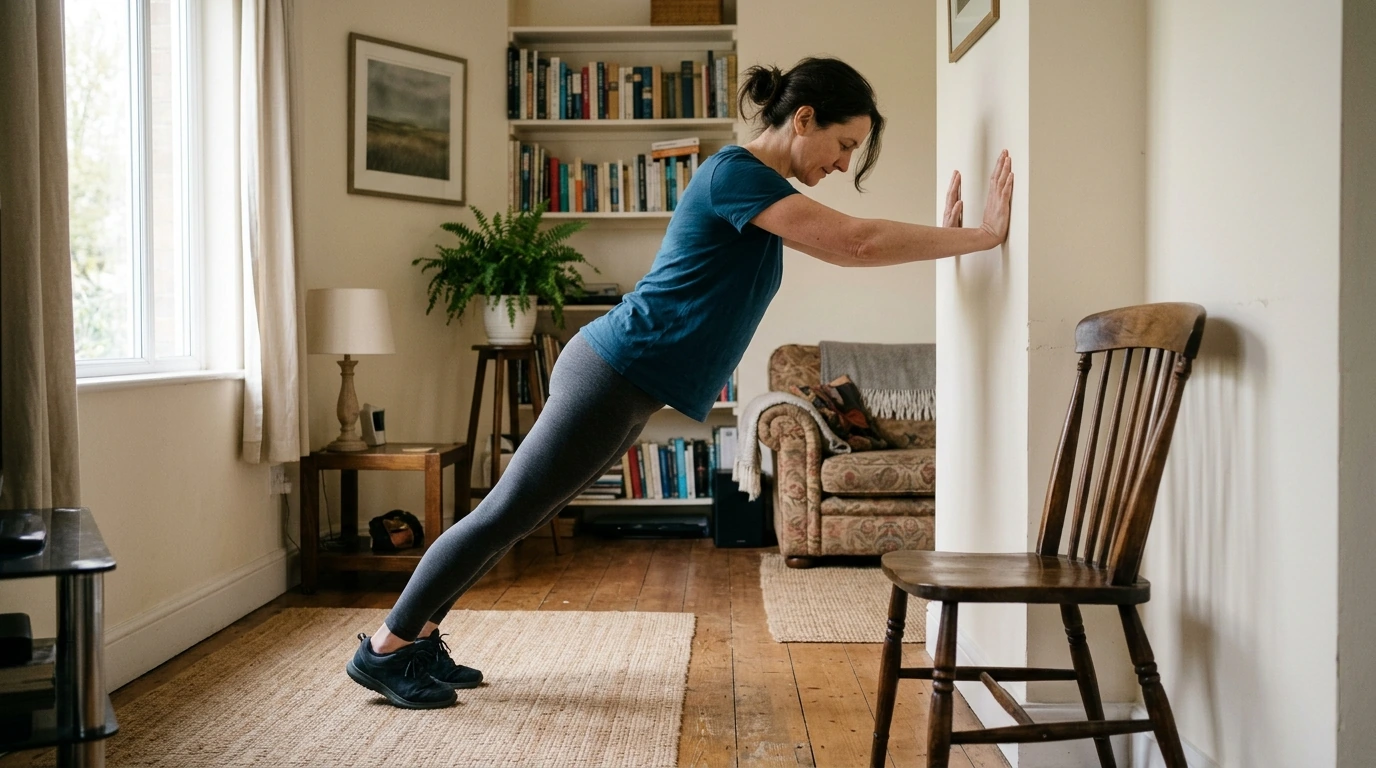
Building strength at home can begin with a little space, a few controlled movements, and a routine you can return to. You don’t need to turn every session into an intense workout. A manageable start gives you room to practice, learn how movements feel, and build consistency over time.
Our digital guide, Strength Made Simple, is designed for beginners who want an approachable home-training reference. It focuses on easy exercises and includes a bodyweight training checklist to support your new movement habit.
A familiar space can make a new routine feel less intimidating. You can practice at a time that works for you, take breaks when you need them, and use your own body weight as resistance. A sturdy chair, an open patch of floor, and a clear wall may be enough to get started with the movement ideas below.
Early on, focus on moving with control rather than trying to do as much as possible. A few comfortable repetitions can give you a chance to notice your posture and breathing. Consistent practice matters more than chasing quick results or pushing through an exhausting session.
Your starting point is personal. A movement that feels manageable for someone else may need an adjustment for you, and that’s okay. Give yourself permission to begin slowly and build confidence as you go.
Our Strength Made Simple beginner workout guide is a digital fitness eBook for people interested in building strength at home. Its beginner-workout focus and bodyweight training checklist make it a straightforward reference when you want to establish a routine.
The guide is listed at $5.99 and is a digital download, not a physical book. You can view the product page to learn more and decide whether it fits the way you want to train.
Before you begin, clear enough space to move without bumping into furniture. Start with a few minutes of gentle movement, such as walking around your room or marching comfortably in place. The goal is to ease into activity, not tire yourself out before your strength work begins.
Next, choose a few manageable bodyweight movements. Try a small number of repetitions at a pace that lets you stay in control. Rest between efforts until you feel ready to move again, and keep breathing rather than holding your breath.
The following ideas are illustrative suggestions for a beginner routine; they are not a confirmed list of exercises in the eBook.
| Movement | Area of focus | Beginner approach |
|---|---|---|
| Chair sit-to-stand | Legs and hips | Use a stable chair and move slowly. |
| Wall push-up | Chest and arms | Keep the body aligned and adjust foot position for comfort. |
| Glute bridge | Hips and glutes | Lift only as high as feels comfortable. |
Choose a range of motion you can control comfortably. For example, you might stand up from a chair slowly or bend your elbows only as far as feels comfortable during a wall push-up. Stop if a movement causes pain. You can find additional movement instructions through the NHS strength exercises guide.
You don’t have to do every movement in the table at once. Pick options that suit your space and current ability, and leave enough time to practice without rushing. A short session that feels manageable can be a useful first step.
Choose times you can repeat, whether that means a short session before work or a movement break on a quieter afternoon. Put those times on your calendar and record completed sessions in a notebook or on your phone. Tracking can help you see the routine you’re building, even when progress feels gradual.
As movements become more comfortable, you can gradually add a repetition or make a small adjustment that feels manageable. Change one thing at a time so you can notice how your body responds. Allow recovery time between challenging sessions, and remember that a rest day is part of a sustainable routine.
If you have an injury, a health concern, or questions about which movements are appropriate for you, consult a qualified health or exercise professional before starting. They can help you adapt your approach to your needs.
For a broader activity goal, the CDC recommends that adults do muscle-strengthening activities at least two days a week. If you’re just beginning, start at a pace you can manage and work toward a consistent schedule.
If you’re looking for a straightforward home-training reference, Strength Made Simple brings a beginner focus and a bodyweight checklist together in a digital format. Our team recommends starting with comfortable movement and giving your routine time to become familiar. Visit the product page to explore the guide.
You may also want to plan meals alongside your new routine. For a separate kitchen resource, explore our Great Meals, Small Budget product.
Yes. Strength Made Simple is presented as a beginner workout guide focused on easy exercises for building strength at home.
No. It is listed as a digital download fitness eBook.
Start at a manageable pace and allow time for recovery. The CDC recommends that adults do muscle-strengthening activities at least two days a week.






Leave a comment