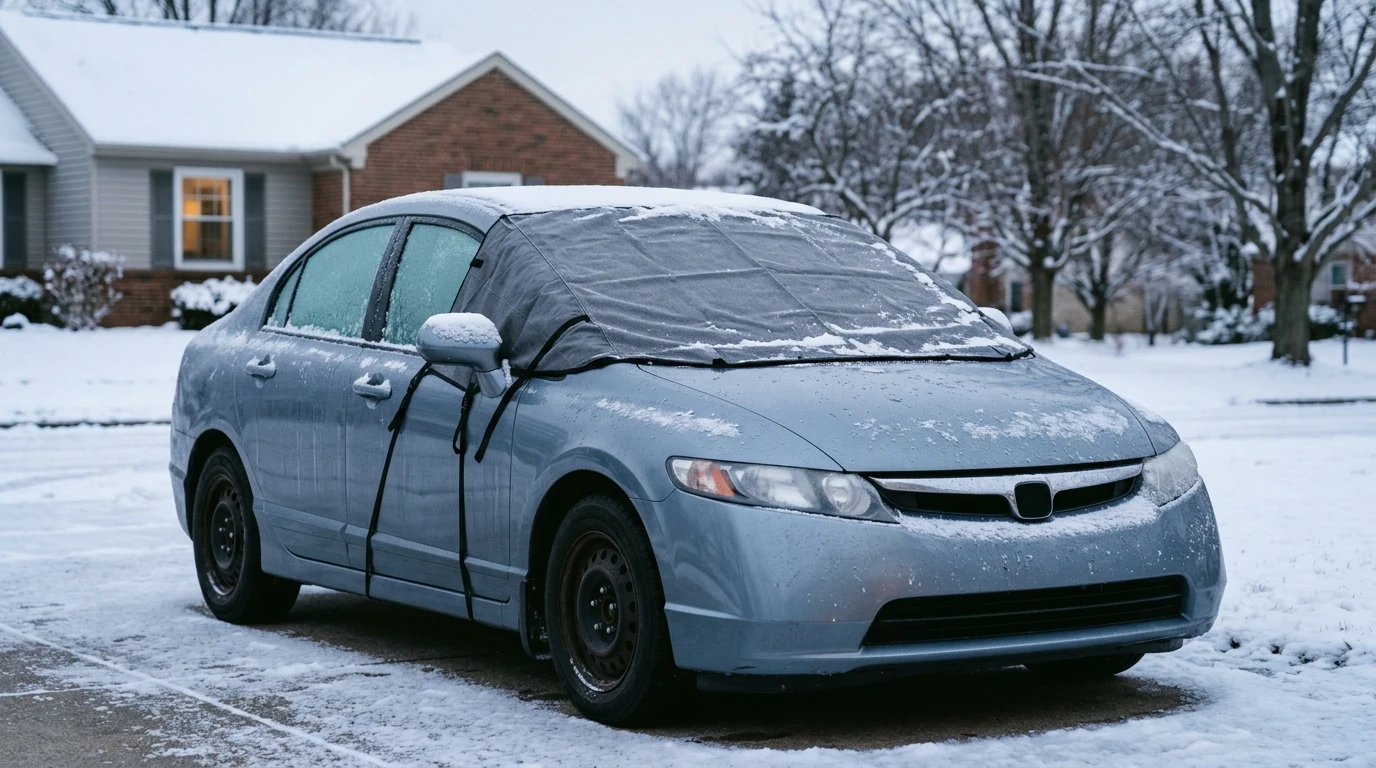
A windshield covered in frost can turn a quick departure into a scraping session. On sunny days, a parked car can feel uncomfortably warm before you even get in. Our Car Windshield Snow Protector – All-Season Cover for Frost, Ice, and Sun Protection gives you an all-season way to cover the windshield while your vehicle is parked. The useful habit is simple: put the cover on before the weather arrives, then remove it and check the whole vehicle before you drive.
A windshield cover puts a layer between parked glass and falling snow, frost, or direct sunlight. Depending on the conditions and how well it fits your vehicle, that layer may make your next departure easier. It is not a promise that the glass underneath will be completely clear, nor will it keep every part of the car free of snow or ice.
The distinction matters on a rushed morning. Even if the covered windshield needs little attention, side windows, mirrors, lights, and the roof may still need clearing. You need a full view before pulling out, not just a clear patch in front of the driver’s seat. For more winter-driving preparation, see the NHTSA’s winter driving tips.
If an overnight freeze is expected, put the cover on when you park rather than waiting until frost has formed. The same advance planning helps when snow is forecast. In summer, you can make covering the windshield part of your routine for an uncovered parking spot. In every season, the cover comes off before you drive.
| Condition | Before parking | Before driving |
|---|---|---|
| Frosty night | Place the cover on a clean windshield before temperatures drop. | Remove it, then check every window and mirror for remaining frost. |
| Snow in the forecast | Cover the windshield before snowfall begins. | Clear snow from the roof, lights, mirrors, and other glass as well. |
| Sunny parking spot | Cover the windshield while the vehicle is parked. | Remove and stow it before driving; use normal ventilation to make the cabin comfortable. |
A cover is one part of preparing the vehicle, not a substitute for safe visibility. Weather can also change while you are parked. Before heading out during a winter event, review local conditions and advisories; the National Weather Service winter weather safety guidance is a useful starting point.
The easiest routine begins when you arrive. Park, make sure the windshield area is safe to handle, and position the cover according to its instructions. Take a moment to confirm that it sits securely before walking away. Doing this at the end of a trip is usually simpler than trying to deal with fresh snow or frost just as you need to leave.
When it is time to go, remove the cover carefully. If it has frozen to the vehicle, do not yank it free; loosen it gently instead. Then inspect the windshield rather than assuming it is ready. Use appropriate defrosting or scraping wherever ice remains, and check that the wipers can move freely before turning them on.
Give the cover a designated place in your vehicle so you are not deciding where to put it during a busy departure. If it is wet when removed, keep it away from items you want to stay dry and let it dry when practical before storing it for an extended period. A manageable removal routine makes it more likely you will use the cover again.
Start with your windshield, not an assumption that every cover fits every car. Review our product details for size and compatibility, then compare them with your vehicle before ordering. A cover that suits your windshield and is straightforward for you to use is more valuable than one you rarely take the time to put on.
Next, consider where you usually park. Overnight outdoor parking may make frost and snow your main concerns. An uncovered work lot could leave the vehicle exposed for hours, while a spot in direct afternoon sun may make a parked-windshield cover appealing in warmer weather. Your everyday parking pattern should guide how often you expect to use it.
Finally, be realistic about timing. A cover is most useful when you are willing to put it on before conditions develop and remove it before every trip. If mornings are especially busy, keep your other departure essentials organized, too. For example, planning meals ahead with Great Meals, Small Budget can be another way to simplify the day—though it will not replace checking your vehicle before you leave.
Before driving, run through four checks: remove and stow the cover; clear all glass and mirrors; brush snow off the vehicle, including the roof and lights; and confirm that the wipers can move freely. Take the extra time needed if conditions have changed since you parked.
If an all-season cover fits your routine, view our Car Windshield Snow Protector and review its current product details before ordering. Our team wants you to have a simpler start without overlooking the most important step: leaving with a clear view.
Yes. An all-season cover is intended for use while parked in cold weather and sun. Confirm that it fits your vehicle, and always remove it before driving.
Not necessarily. It may reduce buildup on the covered area, but exposed glass, mirrors, and other surfaces can still need clearing.
Yes. Put it on before snowfall or freezing conditions begin, following the product’s positioning instructions.




Leave a comment