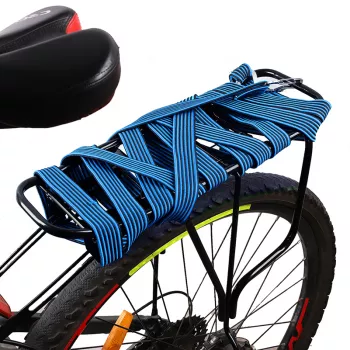
A loose bag can turn a short ride into a series of stops and readjustments. An elastic luggage strap offers a simple way to hold a suitable item on a bike rack, but the strap is only one part of a secure setup. The load also needs a stable place to sit, safe attachment points, and enough clearance from moving parts. Here’s how we recommend deciding whether a strap makes sense and testing your load before you ride.
A strap works best with an everyday item that already rests securely on your bike, such as a small bag sitting flat on a rear rack. It can help hold that item in place as its size changes from trip to trip. It cannot replace a rack, support an item that hangs off the bike, or make an unbalanced load safe.
Our High Elastic Rubber Bike Luggage Strap with Metal Buckle is an option if you want a removable fastening method. Before choosing it, look at the space around your rack and the item you intend to carry. You should be able to position the strap without forcing it to stretch excessively or routing it close to a wheel.
| What you’re carrying | Check before using a strap | Better approach if the check fails |
|---|---|---|
| A small bag on a rear rack | The bag sits flat and leaves room for secure strap placement. | Use a bag designed to attach directly to the rack. |
| A jacket or other soft item | The item is contained so fabric cannot hang near the wheel. | Put it inside a bag before securing it. |
| A bulky or heavy item | The rack supports the load and the item stays balanced. | Choose cargo equipment suited to the item instead of relying on a single strap. |
Start with the rack, not the strap. Place the item where the rack supports it, then identify secure attachment points that let the strap pass over the load. Don’t fasten it to a brake or shifting cable, a spoke, or any other moving part. If you can’t find a sensible route for the strap, use a different carrying method.
Next, look at the bike from both sides and from behind. Keep the load clear of the wheels, chain, pedals, lights, reflectors, and controls. Consider what could happen when you turn or ride over a bump: an item that looks clear while the bike is parked may shift into an unsafe position once you move.
Check the load itself, too. A soft bag may settle after you secure it, while a rigid object may rock on a narrow rack. If the item needs excessive strap tension to stay put, or its weight makes the bike feel unbalanced when you handle it, don’t force the setup. A strap should help secure an appropriate load, not compensate for one that doesn’t fit.
Set the item in its intended position. Route the strap over it and attach the metal buckle according to the strap’s fastening design, using the secure points you identified. Keep the strap flat wherever possible; a twist can make it harder to position neatly and judge how it bears against the item.
Adjust the strap so the load resists movement without crushing its contents. Make sure no loose end can reach the wheel or drivetrain. Then test the item by gently pushing it from side to side and lifting at its edges. If it slides, tips, or reveals a loose section of strap, reposition it and repeat the test. Don’t treat a quick tug on the buckle alone as a test of the entire load.
Finally, roll the bike a short distance and check the clearances again. Listen for rubbing and notice whether the load changes how the bike handles. If something shifts during your ride, stop in a safe place and inspect it rather than trying to adjust it while moving. For broader riding guidance, see the NHTSA’s bicycle safety resources.
An elastic strap is most useful when your existing carrying setup already suits the item. For an awkward shape, valuable contents, or a heavier load, a properly fitted pannier, cargo bag, or other purpose-built solution may be the better choice. Check your rack’s stated capacity, and don’t assume that adding a strap increases it.
If you’re preparing for a grocery run, decide what you can carry securely before you shop; a full bag can ride differently from an empty one. Our Great Meals, Small Budget can help you plan purchases, but your bike’s carrying setup should determine how much you take home at once. For a suitable load, take a closer look at the High Elastic Rubber Bike Luggage Strap with Metal Buckle and confirm its listed details work for your bike and intended use.
Only if your bike has both secure attachment points and a stable, supported place for the load. Don’t improvise an attachment near wheels, cables, or controls.
It should hold the item against movement without excessive stretch or damage to its contents. Test the load by hand, then recheck it after rolling the bike.
Don’t assume it is. Check the rack’s capacity and choose equipment suited to the item; use another method if the load shifts or won’t stay balanced.



Leave a comment