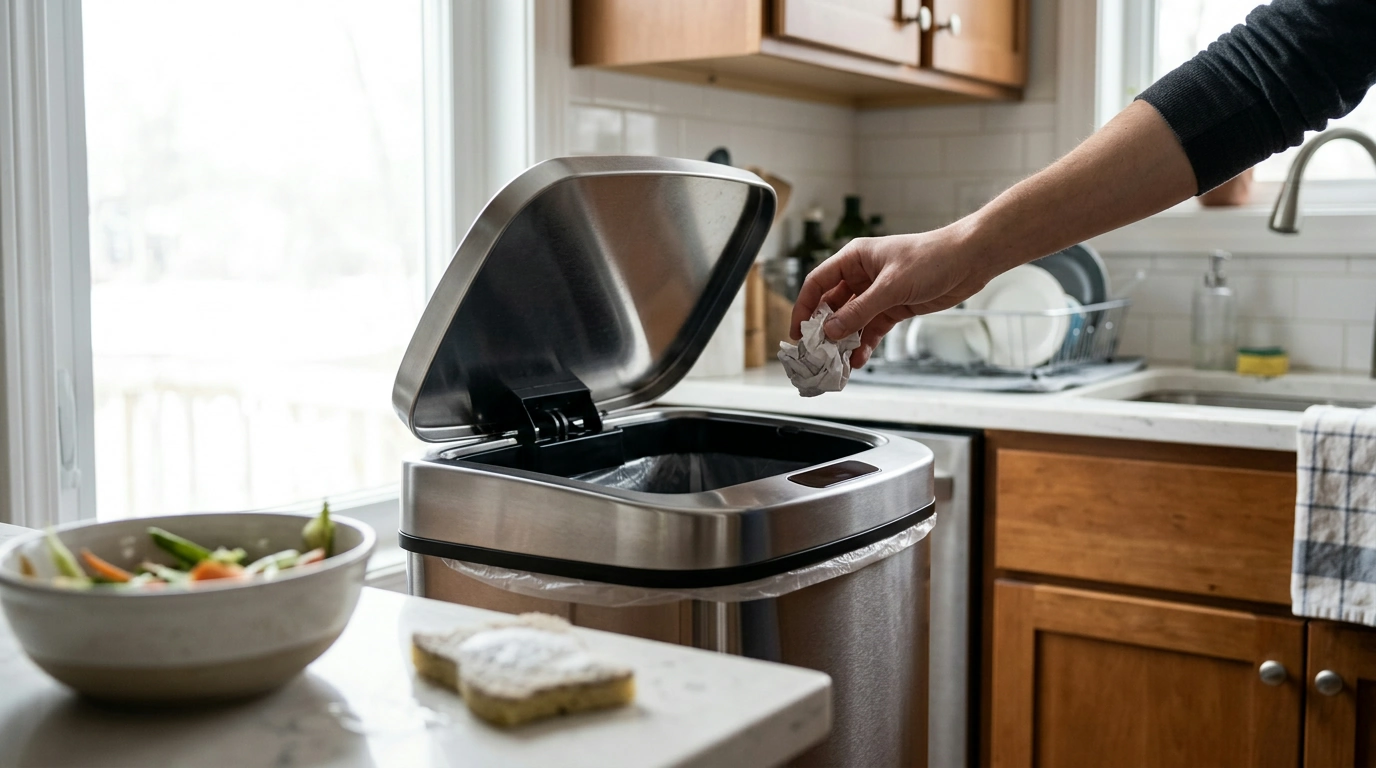
The best touchless trash can for a kitchen is the one that matches your daily waste volume, fits your available floor space, and opens reliably without constant false triggers. In most kitchens, our team recommends focusing on three things: capacity that won’t overflow between takeouts, a sensor that responds quickly when your hands are full, and a lid that seals well to help contain odors.
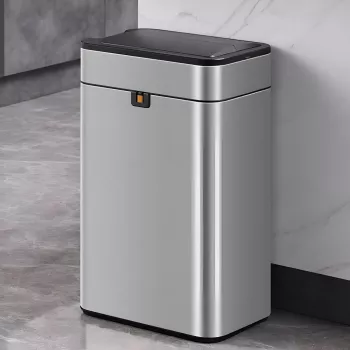
For many households, a larger can (around 13 gallons/50L) works best as a main kitchen trash can. If you cook lightly, live in a smaller space, or want a secondary can for prep waste, a compact touchless can can be a smarter fit—especially if it can tuck beside an island or at the end of a cabinet run without crowding walkways.
Kitchens have traffic, swinging cabinet doors, and pets—so you want a sensor that opens when you intend, not every time someone walks past. Look for a can with a responsive, short-range sensor and a lid that closes promptly after use. A manual open/close option is also useful for longer cleanup sessions when you don’t want the lid cycling repeatedly.
A well-sealed lid and easy-to-wipe surfaces make a big difference day to day. Smooth interiors, removable liners or buckets (when included), and fingerprint-resistant finishes help keep the can looking clean near cooking areas. If you use scented liners or deodorizing inserts, make sure the lid still closes fully without interference.
Battery-powered sensor cans are simple to place anywhere, while rechargeable options reduce ongoing battery swaps. Set the can away from heat sources and direct sunlight to reduce accidental openings and protect the electronics, and leave enough clearance above the lid so it can open freely under counters or overhangs.
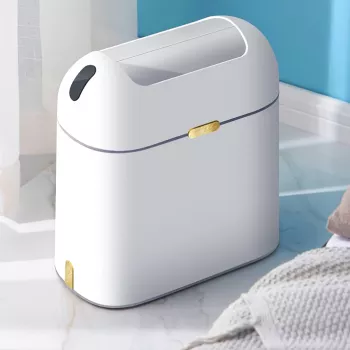
If you’re choosing a smaller touchless option that still works well around food prep, our team put together a practical guide here: 9L Touchless Sensor Trash Can Guide for Small Bathroom & Kitchen.
Move it a few inches away from high-traffic paths, reflective surfaces, and swinging cabinet doors, and avoid aiming the sensor toward open floor space. Keeping the sensor window clean also helps reduce random triggers.





Leave a comment