450RPM Cordless Spin Scrubber: 5 Heads, Extendable Handle
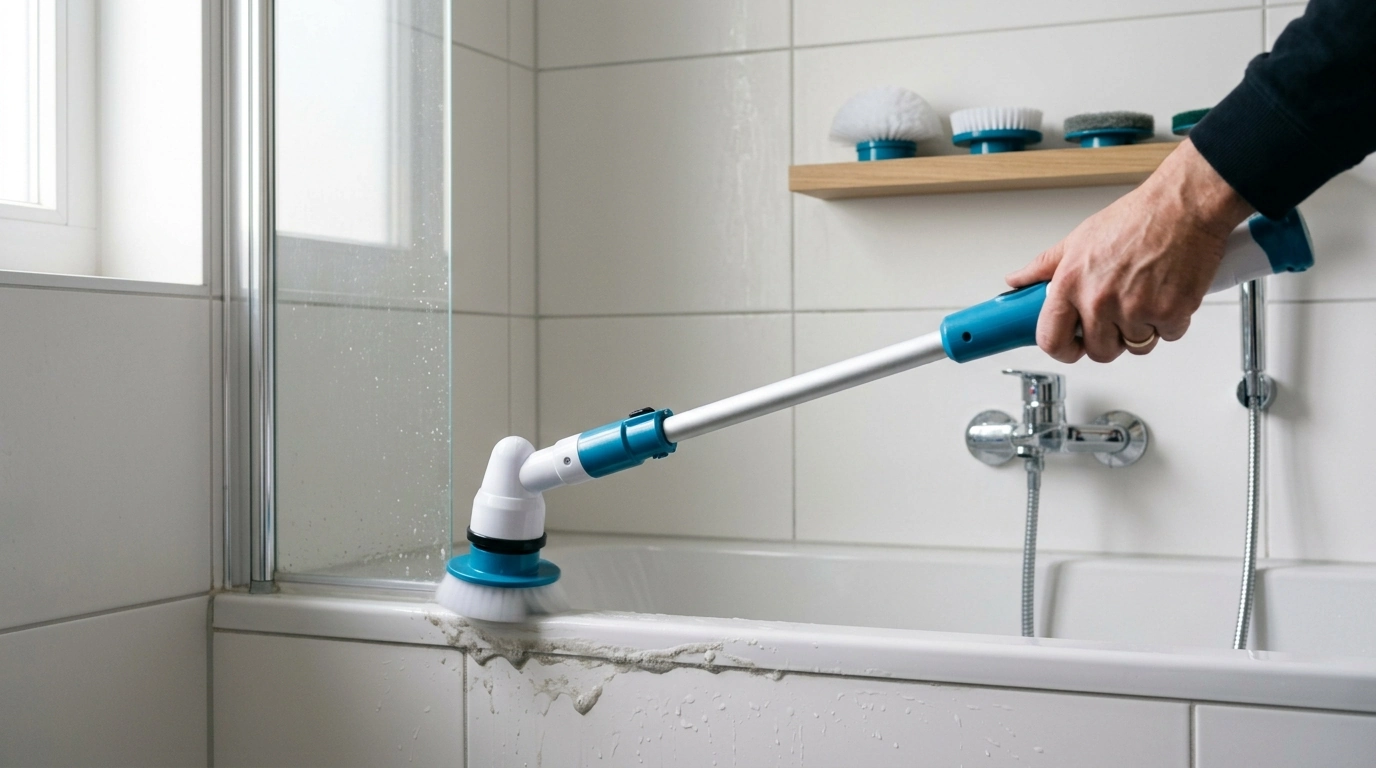
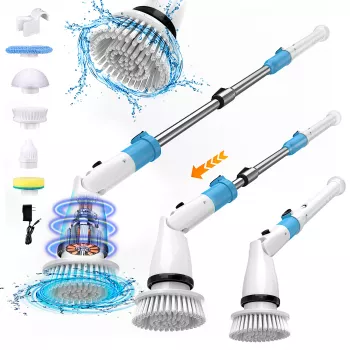
450RPM Cordless Electric Spin Scrubber with 5 Brush Heads & Extendable Handle
A cordless spin scrubber can cut down the time and effort needed for bathrooms, tile, tubs, showers, and kitchen messes—especially when grime builds up in corners and grout lines. This 450RPM model pairs a high-speed rotating head with interchangeable brushes and an extendable handle to help clean more surfaces with less bending and wrist strain.
What this spin scrubber is designed to do
- Use rotating brush action to loosen soap scum, hard-water residue, and stuck-on grime on common household surfaces.
- Reduce manual scrubbing on vertical areas like shower walls and tile, where pressure and repetition can be tiring.
- Reach higher or lower areas using the extendable handle, helping clean without constant kneeling or stretching.
- Switch brush heads based on the surface—broad coverage for flat areas, more focused shapes for edges and tight spaces.
Key features that matter for everyday cleaning
- 450RPM rotation: fast enough to help break up buildup while still being controllable for detail work near fixtures and edges.
- Cordless operation: avoids snagging on shower doors, cabinet corners, and tight bathroom layouts.
- Extendable handle: supports upright cleaning for tubs, shower floors, and wall tile to ease back and knee strain.
- Five interchangeable brush heads: supports different cleaning tasks without switching tools entirely.
- Better technique, better results: pairing the right brush head with the right cleaner and giving it dwell time (letting the cleaner sit) typically beats pressing harder.
Brush heads and where to use them
Getting a “like-new” look is usually less about force and more about matching the brush shape to the job. Wide heads cover open surfaces quickly, while smaller heads focus power into grout lines, corners, and around hardware.
- Match the brush shape to the job: wide heads for speed on open surfaces, smaller or pointed heads for grout lines, corners, and around faucets.
- For delicate finishes, start with the gentlest head and the lightest pressure; let the rotation do the work.
- Avoid abrasive pads/brushes on easily scratched materials unless the manufacturer indicates it’s safe.
Common brush head uses (quick guide)
| Brush head type | Best for | Tips |
|---|---|---|
| Large flat/round brush | Bathtub walls, shower tile, kitchen backsplash | Work in overlapping passes; rinse often to keep bristles clear |
| Dome/rounded brush | Curved tub corners, sinks, rounded fixtures | Use moderate pressure; keep the head moving to avoid streaking |
| Small detail brush | Grout lines, corners, around drains and faucet bases | Pre-spray and let cleaner dwell 3–5 minutes before scrubbing |
| Pointed/cone brush | Tight crevices, tracks, caulk edges (as appropriate) | Use short pulses and gentle pressure near caulk to prevent lifting |
| Soft brush/pad (if included) | More delicate surfaces like glass or polished finishes (as appropriate) | Test a small spot first; avoid gritty cleaners that can scratch |
Where it works best around the home
Because it’s cordless and extendable, this kind of scrubber shines when you’re moving between surfaces and angles—walls, floors, edges, and corners—without changing positions every minute.
- Bathroom: shower walls, tub rims, tile floors, grout, glass doors (with the appropriate head), sink basins, and fixtures.
- Kitchen: backsplash tile, sink edges, stovetop surrounds (when cool), and textured surfaces that trap residue.
- Entry/laundry: utility sinks, floor tile, and areas with tracked-in dirt.
- Outdoor (light duty): patio furniture crevices or grill exterior surfaces (when cool and with appropriate caution around finishes).
How to use it for better results
A spin scrubber works best as part of a simple system: remove grit, apply the right cleaner, give it time, then scrub in controlled passes. For general guidance on routine cleaning and disinfecting, review the CDC’s cleaning and disinfecting recommendations.
- Prep: remove loose debris and rinse or wipe the area so grit doesn’t act like sandpaper.
- Apply cleaner: choose a product compatible with the surface (tile, stone, fiberglass, acrylic).
- Let it dwell: allow the cleaner to sit several minutes so it can break down residue before scrubbing.
- Scrub in sections: keep the head moving, use light-to-moderate pressure, and overlap passes.
- Rinse and inspect: rinse thoroughly, then do a quick second pass on stubborn spots rather than pressing harder.
- Finish: wipe dry for a streak-free look, especially on glossy tile, metal trim, and glass.
If you’re using household chemicals, follow label directions and basic safety practices. The CPSC’s household chemical safety guidance is a solid reference for storage and handling.
Charging, care, and storage
- Rinse brush heads after each use to remove cleaner and loosened grime; let them dry completely before storage.
- Periodically remove trapped hair or fibers from bristles to keep rotation smooth and effective.
- Store the unit and heads in a dry place; avoid leaving damp heads pressed against surfaces where mildew can develop.
- If performance drops, check for clogged bristles, a poorly seated head, or a battery that needs a full recharge cycle.
Safety and surface protection
Shop related items
- 450RPM Cordless Electric Spin Scrubber with 5 Brush Heads & Extendable Handle
- Cute Apple House Kitten Plush – Soft Detachable Cat Plush Toy
FAQ
Is 450RPM enough power for soap scum and grout?
450RPM is typically plenty for routine soap scum and grime, especially when you use a cleaner that targets the buildup and let it dwell for a few minutes first. For grout lines, use a smaller detail-style head and do multiple light passes rather than pressing down hard.
Can it be used on glass shower doors and delicate finishes?
It can, as long as you use the softest head available, light pressure, and a non-abrasive cleaner. Test a small, hidden spot first—abrasive bristles or gritty powders can scratch glass and polished surfaces.
How do the brush heads stay clean and odor-free?
Rinse them thoroughly after each use, wash with mild soap if needed, shake out excess water, and let them air-dry completely before storing. Removing trapped hair and debris regularly also helps prevent odors and keeps the bristles performing well.













Leave a comment