Wooden Swing Set: Dual Swings, Slide, Wall & Chalkboard
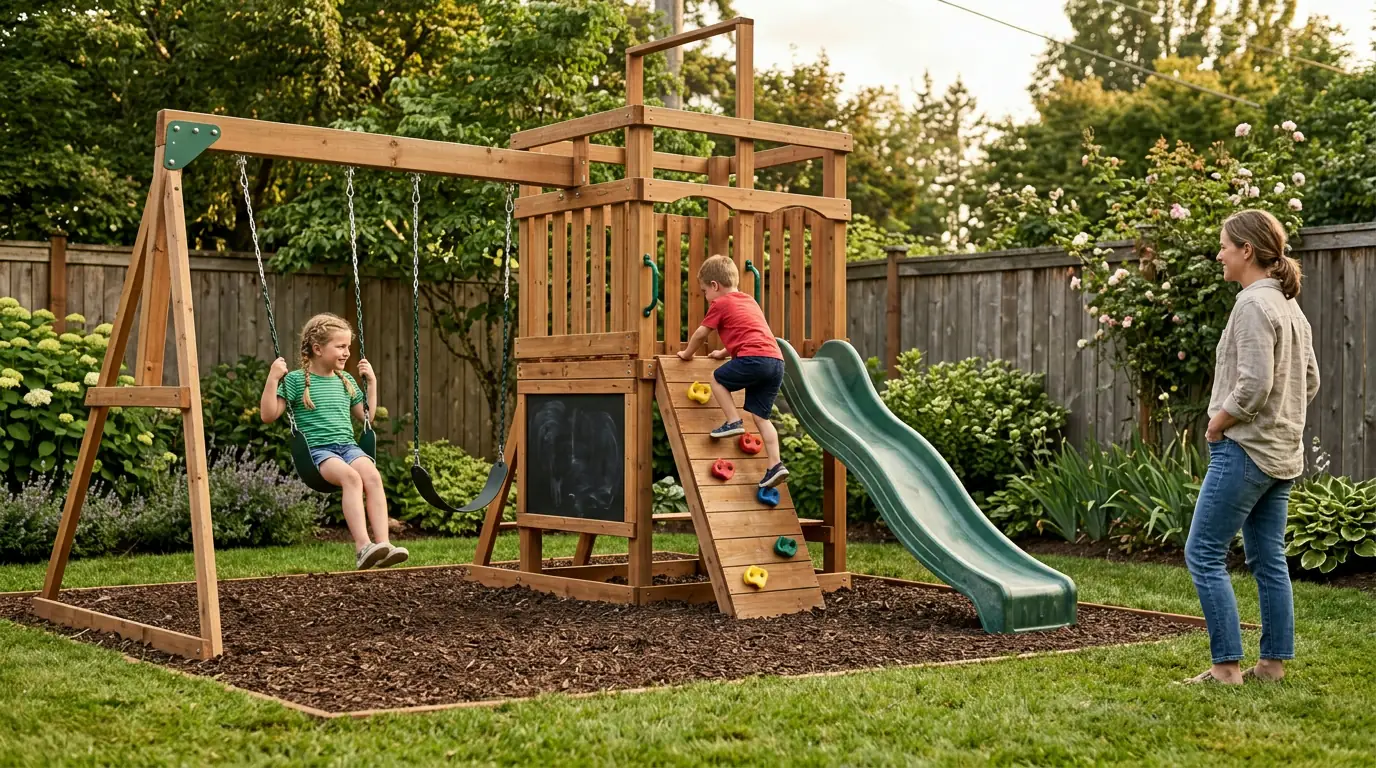
Wooden Swing Set with Dual Swings, Slide, Climbing Wall & Chalkboard for Kids
A backyard playset can combine active play, skill-building, and creative time in one footprint. This wooden set pairs two swings with a slide, climbing wall, and a chalkboard panel—designed to keep play moving while offering a quieter spot for drawing and games. The result is a “do a little of everything” setup that works well for siblings, playdates, and families who want fewer screens and more outdoor minutes.
What this playset includes
- Dual swings for side-by-side play and easier turn-taking
- Slide for quick, repeatable play loops that keep kids engaged
- Climbing wall to build grip strength, balance, and confidence
- Chalkboard panel for drawing, pretend play, and simple learning games
- Wood construction that blends into most backyard spaces and feels sturdy under use
Who it fits best
- Families wanting mixed play styles: active climbing and swinging plus a calmer creative station
- Homes with multiple children who benefit from two swing positions at once
- Caregivers looking for a playset that supports gross motor skills (climbing, sliding, swinging) and imaginative play (chalkboard)
- Backyards where a wood look is preferred over bright plastic structures
Play value by feature
Dual swings
Two swing seats help reduce the “my turn” bottleneck and make parallel play feel effortless. Swinging also supports rhythm, timing, and core stability—plus it’s a simple way to burn energy in short bursts.
Slide
The climb-then-slide routine is a reliable favorite because it’s easy to repeat: climb, sit, slide, run back, repeat. That loop supports coordination and confidence, especially for kids who like predictable movement patterns.
Climbing wall
Climbing encourages route choice and problem-solving (“Which hold next?”) while building upper-body strength and careful foot placement. It’s also a great confidence-builder when kids master a climb that felt intimidating at first.
Chalkboard panel
The chalkboard adds a quieter station that doesn’t feel like “down time.” Kids can play classroom, draw maps, write menus, keep score, or practice letters and numbers—making the playset useful even when they’re taking a break from running and climbing.
Mix-and-match flow
Because there are multiple features, kids can rotate between them without needing a huge yard. That variety helps play stay fresh, especially when siblings have different energy levels.
Safety and placement essentials
Smart placement and simple routines can make outdoor play feel more confident for everyone. Choose a flat area with good drainage, avoid installing over hard surfaces like concrete, and keep clear space around the swing path and slide exit. Impact-absorbing ground cover—such as engineered wood fiber, rubber mulch, or suitable playground mats—can help reduce injury risk during slips or jumps.
Wood playsets should be checked regularly. As boards settle and weather changes, bolts may need re-tightening and surfaces may need a quick touch-up. For broader guidance on backyard and playground safety principles, the CPSC Public Playground Safety Handbook is a helpful reference, and the ASTM F1487 overview outlines common safety performance considerations used across playground equipment.
Quick safety checklist for setup and weekly checks
| Area | What to check | Why it matters |
|---|---|---|
| Swing area | Clear front/back swing path; seats and chains in good condition | Reduces impact hazards and pinch-point wear |
| Slide | Secure attachment points; smooth surface; landing zone clear | Prevents wobble and trip hazards at exit |
| Climbing wall | Handholds secure; no sharp edges; surface not slippery | Improves grip reliability and reduces falls |
| Ground cover | Adequate depth and even coverage | Helps absorb impact during slips or jumps |
| Frame and hardware | Bolts tight; no cracks/splinters; anchors secure if used | Keeps structure stable and reduces injury risks |
Build, materials, and upkeep
- Wood surfaces benefit from periodic inspection for splinters, checking, and weathering—sand and seal as needed.
- Keep the chalkboard usable by storing chalk in a dry container and wiping the surface regularly.
- After heavy rain or seasonal changes, re-check joints and fasteners to maintain stability.
- Consider UV and moisture exposure: position away from constant sprinklers and trim back vegetation to improve airflow.
Making the chalkboard feature shine
- Set up rotating prompts: daily doodle, scavenger hunt clues, simple math challenges, or “pretend café” menus.
- Use the chalkboard as a cooperative play tool: rule lists for games, team scores, or storytelling panels.
- Keep play tidy with a small weather-safe bin nearby for chalk, eraser, and wipes.
- For younger kids, draw simple targets or shapes to turn transitions (climb → slide) into a game.
What to expect from day-to-day use
- Two swings can reduce conflicts and encourage parallel play.
- The climb-then-slide loop tends to keep kids engaged longer than single-feature sets.
- The chalkboard can become a calmer reset zone between active bursts.
- Regular quick checks (about 5 minutes weekly) help keep the set feeling solid and safe over time.
Product details and buying options
- Wooden Swing Set with Dual Swings, Slide, Climbing Wall & Chalkboard for Kids
- Cute Apple House Kitten Plush – Soft Detachable Cat Plush Toy
- New Balance 550 Sneakers
FAQ
How much space is needed around a swing set with a slide?
Leave clear space on all sides, with extra clearance in front of the slide exit and throughout the swing travel path (front and back). Avoid tight placements near fences, trees, patios, or play areas where kids might run through.
What ground cover works best under a wooden swing set?
Common options include engineered wood fiber, rubber mulch, and playground mats designed for impact absorption. Whichever you choose, maintain adequate depth and keep coverage even, especially under swings and at the slide landing zone.
How often should a wooden playset be inspected?
Do a quick weekly check for loose bolts, swing hardware wear, and obvious surface issues. Add a more thorough seasonal inspection to address weathering, potential splinters, and any settling that requires re-tightening.














Leave a comment