Blue Wooden Play Refrigerator with Ice Dispenser for Kids
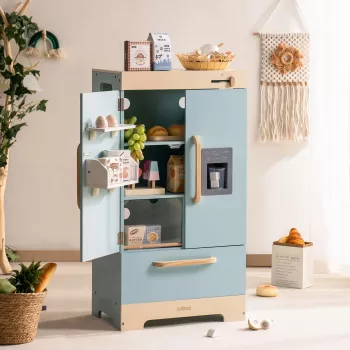
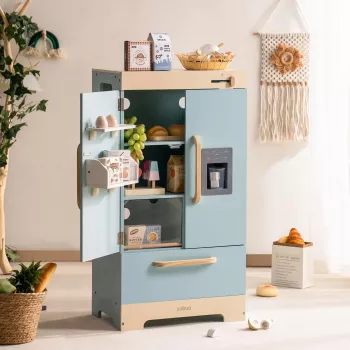
Wooden Kids Play Refrigerator with Ice Dispenser – Blue Toy Kitchen Set
A wooden play refrigerator with an ice dispenser adds a fun “real kitchen” moment to pretend play—opening doors, organizing food, and serving pretend ice. The result is an easy, everyday activity kids return to because it feels familiar and satisfying. Below are practical tips on what to look for, how to set it up for smooth daily play, and how to keep it safe and enjoyable as part of a toy kitchen corner.
Why a play refrigerator becomes a favorite daily toy
A toy fridge quickly turns into the “home base” of a play kitchen. Kids naturally repeat what they see at home—putting groceries away, checking what’s inside, and getting drinks for guests—so the toy supports routines without needing complicated rules.
- Encourages open-ended role play: grocery shopping, meal prep, hosting, and cleanup routines.
- Supports social play: taking turns “getting ice,” stocking shelves, and assigning roles (chef, shopper, guest).
- Builds practical language: naming foods, talking about cold/frozen items, and using polite requests.
- Creates a natural home for toy food storage: less clutter when playtime ends.
Play is also tied to healthy development—especially when kids can explore, imitate, and collaborate. For a helpful overview of why play matters, see HealthyChildren.org (American Academy of Pediatrics) on the importance of play.
Ice dispenser play: small feature, big imagination
The ice-dispenser detail is a tiny “interactive” moment that kids love because it creates a simple, repeatable action with a clear result. That cause-and-effect loop can keep pretend play going far longer than a plain cabinet door.
- Cause-and-effect fun: press/turn/pull to “dispense” pretend ice.
- Boosts storytelling: smoothie shop, lemonade stand, café service, or restaurant scenes.
- Pairs well with props: pretend cups, play fruit, and toy menus for extended play sessions.
- Builds sequencing: choose a cup, place it, dispense, then serve.
What to expect from the Blue Wooden Kids Play Refrigerator set
The Wooden Kids Play Refrigerator with Ice Dispenser – Blue Toy Kitchen Set is designed to anchor a pretend kitchen setup, featuring a charming ice-dispenser detail on the door. Its blue colorway stands out as a “main appliance,” and it works well either as a standalone toy or alongside a play stove, sink, or pantry shelves.
Before setting it into a play corner, it helps to measure your space so the doors can open comfortably without bumping walls, toy bins, or furniture. A few minutes of planning often prevents day-to-day frustration (and protects the toy from hard knocks).
Quick planning checklist (before buying or setting up)
| What to check | Why it matters | Practical tip |
|---|---|---|
| Play space footprint | Ensures doors and kids have room to move | Leave clearance for the door swing and standing space |
| Height and reach | Kids can access shelves without frustration | Aim for easy access to the dispenser and main shelves |
| Toy accessories | More props can extend play time | Keep a small bin of cups/food nearby for quick setup |
| Storage plan | Helps keep play areas tidy | Use the fridge interior as the main “home” for toy food |
Skills this type of toy can support (by play style)
A play refrigerator isn’t just decorative—it can quietly support a range of early skills through everyday pretend routines.
- Fine motor practice: opening/closing doors, placing items on shelves, using the dispenser feature.
- Early math concepts: sorting by type, grouping foods, “shopping lists,” and counting pretend ice cubes.
- Communication: asking for items, offering choices, practicing manners and turn-taking.
- Independence routines: tidy-up habits when the refrigerator becomes the default storage spot for play food.
Safety and durability checks for wooden kitchen play
Wooden toys are often chosen for their sturdiness, but a few simple checks help keep play comfortable and reduce wear over time.
- Finish and edges: look for smooth edges and steady door movement to reduce pinches and bumps during enthusiastic play.
- Hardware check-ins: periodically inspect hinges/handles and tighten if needed as part of routine toy maintenance.
- Accessory sizing: choose age-appropriate accessories; store small pieces out of reach when younger children aren’t supervised.
- Stable placement: set it on a level surface; on slick floors, consider a non-slip mat to reduce shifting.
For additional guidance on toy-related precautions, the U.S. Consumer Product Safety Commission (CPSC) toy safety resources are a reliable place to start.
Easy setup ideas for a “real kitchen” play corner
A thoughtful setup makes the refrigerator feel “alive,” without turning your playroom into a messy prop warehouse.
If the play kitchen is also a cuddle-and-story corner, a soft companion can extend the role play—like serving “ice water” to a stuffed guest. A cozy add-on option is the Cute Apple House Kitten Plush – Soft Detachable Cat Plush Toy.
Care tips to keep it looking good
When it makes a great gift
FAQ
What age is a wooden play refrigerator with an ice dispenser best for?
Many kids enjoy this style of pretend appliance from preschool through early elementary years, especially once they can open doors and organize shelves confidently. Age suitability depends on the child and whether any included accessories are small, so supervision is recommended for younger children.
Does the ice dispenser on a play refrigerator use real water or real ice?
No—this is a pretend-play feature and does not use real water or real ice. Kids typically “dispense” pretend ice pieces into toy cups; check the product listing to see what accessories are included.
How can a play refrigerator be used if there isn’t a full toy kitchen set?
It works great as a standalone toy for grocery store play, a smoothie bar, or a pretend restaurant where kids take “drink orders.” Add simple props like a few play foods and cups, and use the fridge interior as the main storage spot to keep everything together.












Leave a comment